Investigation into the destruction of KK Park II

6 min read

Myanmar Witness

Myanmar Witness's photo

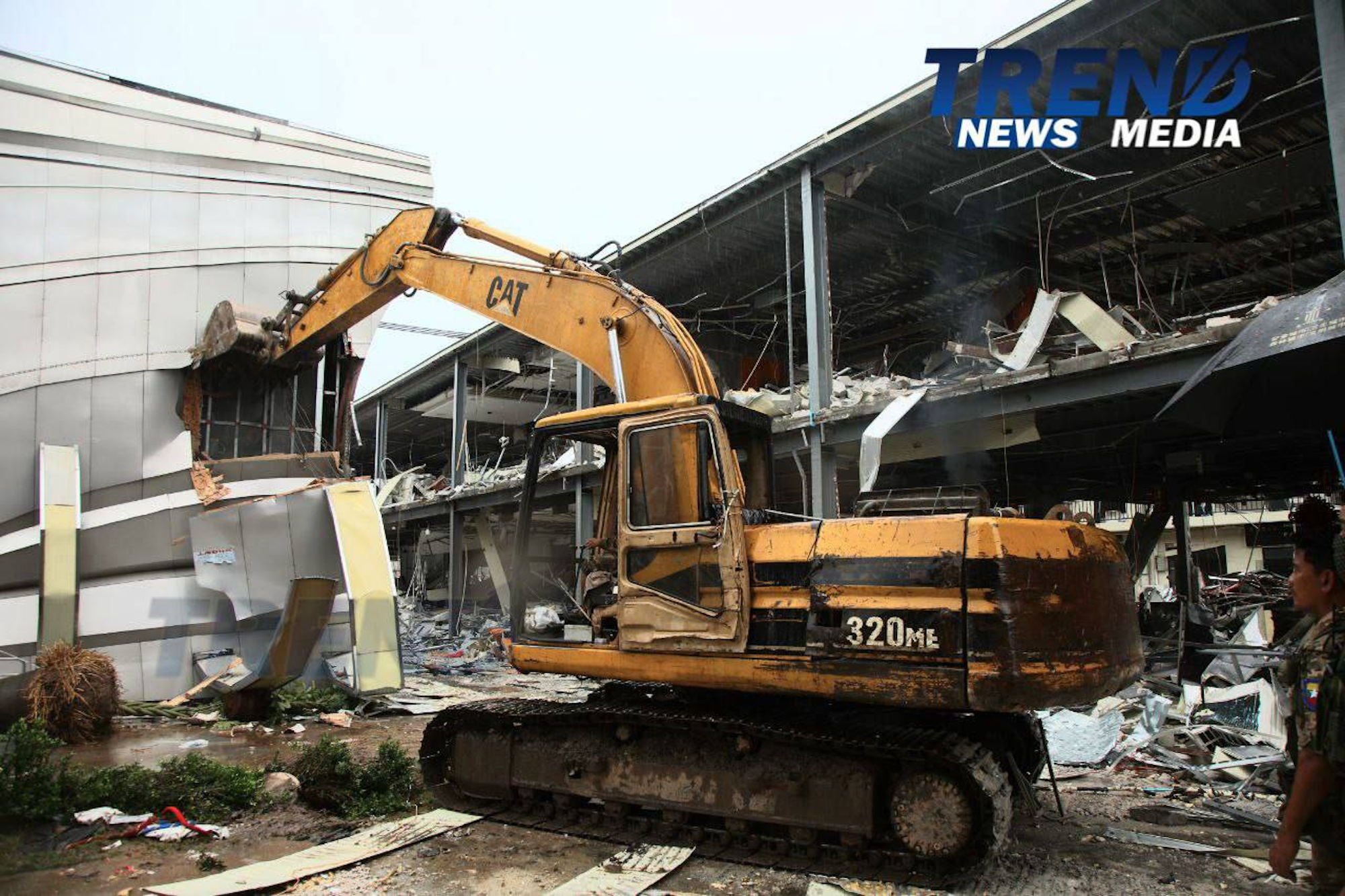
An image, published on 8 November 2025, showing a building in KK Park II [16.628420, 98.569810] being destroyed by an excavator. (Source: Trend News)

Share Article

Myanmar Witness continued its investigation into KK Park following further claims that hundreds of buildings were due to be destroyed within the heart of the scam centre.

On 9 November 2025, the State Security and Peace Commission’s (SSPC) Ministry of Information announced that, following what it described as successful raids, a total of 148 buildings in the complex would be destroyed because the infrastructure had been used for illegal activities by foreign nationals. In a following statement on 19 November 2025, 148 buildings were reported demolished by 17 November 2025. However, Myanmar Witness’s investigation suggests SSPC’s claim that the number of reported demolished buildings are incorrect. 

It is worth highlighting that another statement by the SSPC’s Ministry of Information, released on 11 November 2025, announced the intention to demolish 635 buildings across three different zones in KK Park. The Ministry of Information claimed that KK Park II, referred to by them as KK Park Zone A, consists of 148 buildings. The statement included a map of KK Park, see image below, showing the division of KK Park into three zones. While it was not stated explicitly, the 148 buildings likely refer to the premises destroyed within the KK Park II, given the initial intention was to demolish only this area, and that it contains the same number of buildings.

Following its investigation after the 19 October 2025 reported raid, Myanmar Witness analysed the destruction of the buildings and confirmed that 109 structures were destroyed by 23 November 2025. 

This investigation examines the destruction of the buildings within the KK Park II complex, as well as the methods used. 
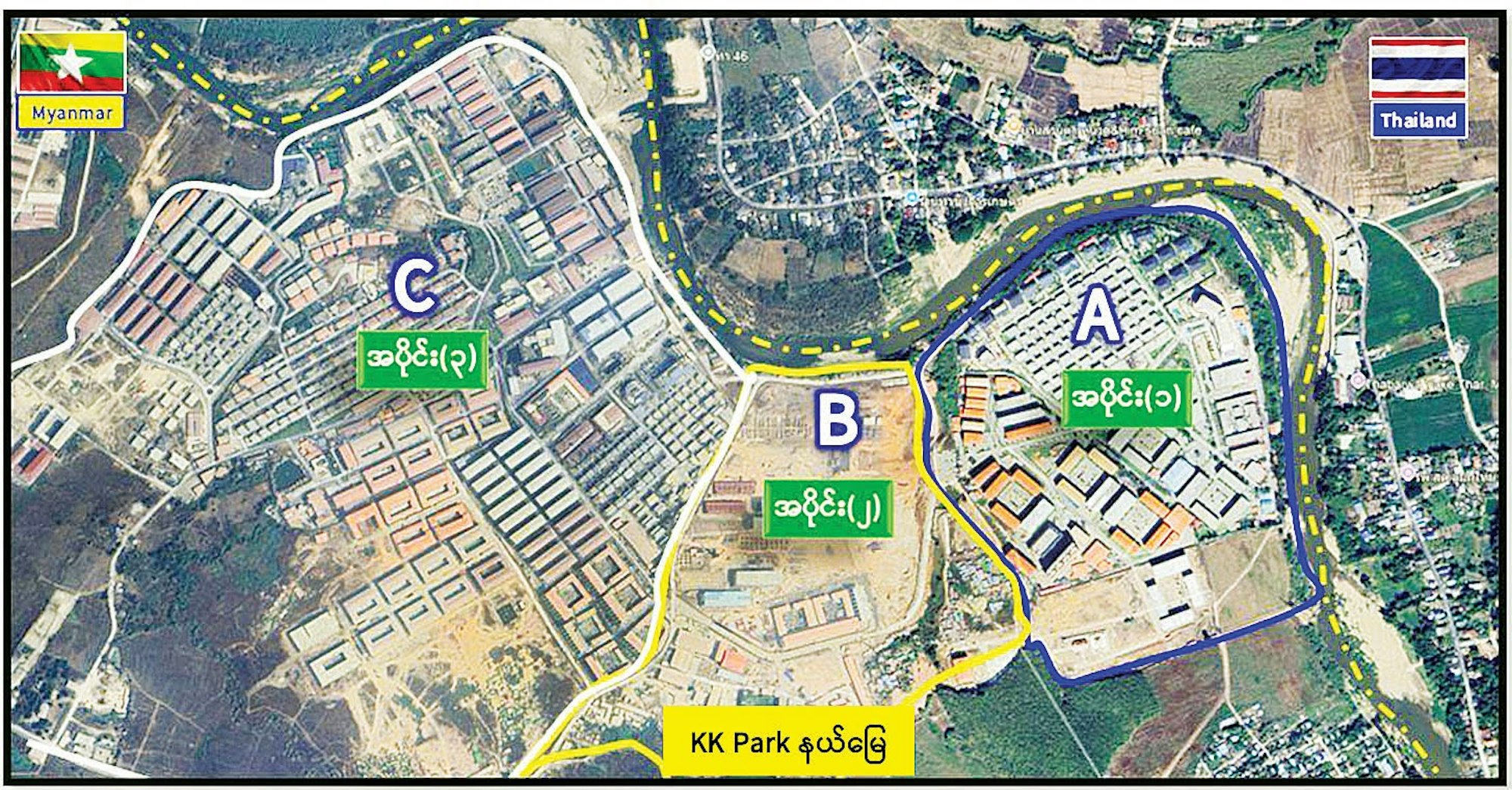
Map of KK Park Zones, as published by the SSPC’s Ministry of Information. KK Park II is located on the right, labelled as Zone A. (Source: SSPC’s Ministry of Information).

Analysis

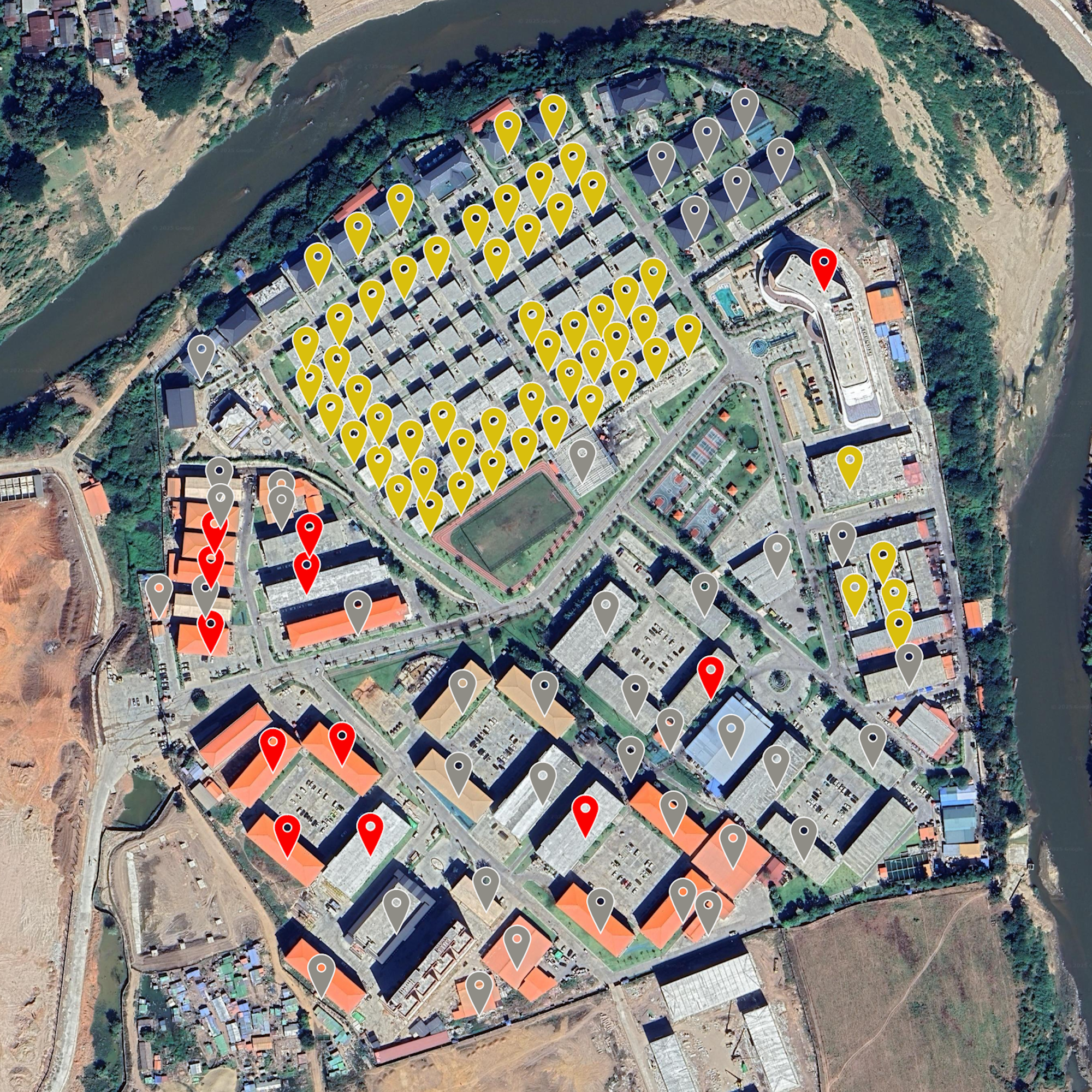
Myanmar Witness conducted an in-depth analysis of the destruction in KK Park II, including its methods and scale. The analysis, done using user-generated content (UGC) and satellite imagery, showed that at least 109 buildings in KK Park II were destroyed by 23 November 2025. Several pieces of footage revealed that the destruction was carried out in two main methods: the use of explosives and the use of heavy machinery. Despite frequent reports of explosions, heavy machinery was documented as the most common destruction method. At least 56 buildings were destroyed with heavy machinery, while explosives were used for the destruction of 12 buildings only, according to Myanmar Witness analysis. 

Myanmar Witness’s investigation indicates that while explosives were employed to permanently destroy buildings and damage surrounding infrastructure, heavy machinery (documented as the most common method) was clearly used in a more controlled manner that left several buildings partially intact and thus potentially reconstructible for future use. Furthermore, high-resolution satellite imagery, captured in the first week of December, revealed that a significant number of the partially destroyed buildings remained standing weeks after the SSPC’s Ministry of Information’s announcement on 19 November 2025, that 148 buildings were demolished by 17 November 2025. Therefore, it appears that the SSPC’s claims of destruction of these premises are incorrect. 

The analysis of the destruction method was done conservatively, only classifying buildings where the destruction method could be assessed with high confidence. In the absence of clear indications of one of the methods, the destruction method of the building was classified as unknown. Out of the 109 destroyed buildings, 41 were classified as unknown, making 38% of the analysed buildings. With that said, the use of heavy machinery remains the most common, as over 51% of the analysed buildings were destroyed with machinery.

Latest reports, direct to your inbox

Be the first to know when we release new reports - subscribe below for instant notifications.

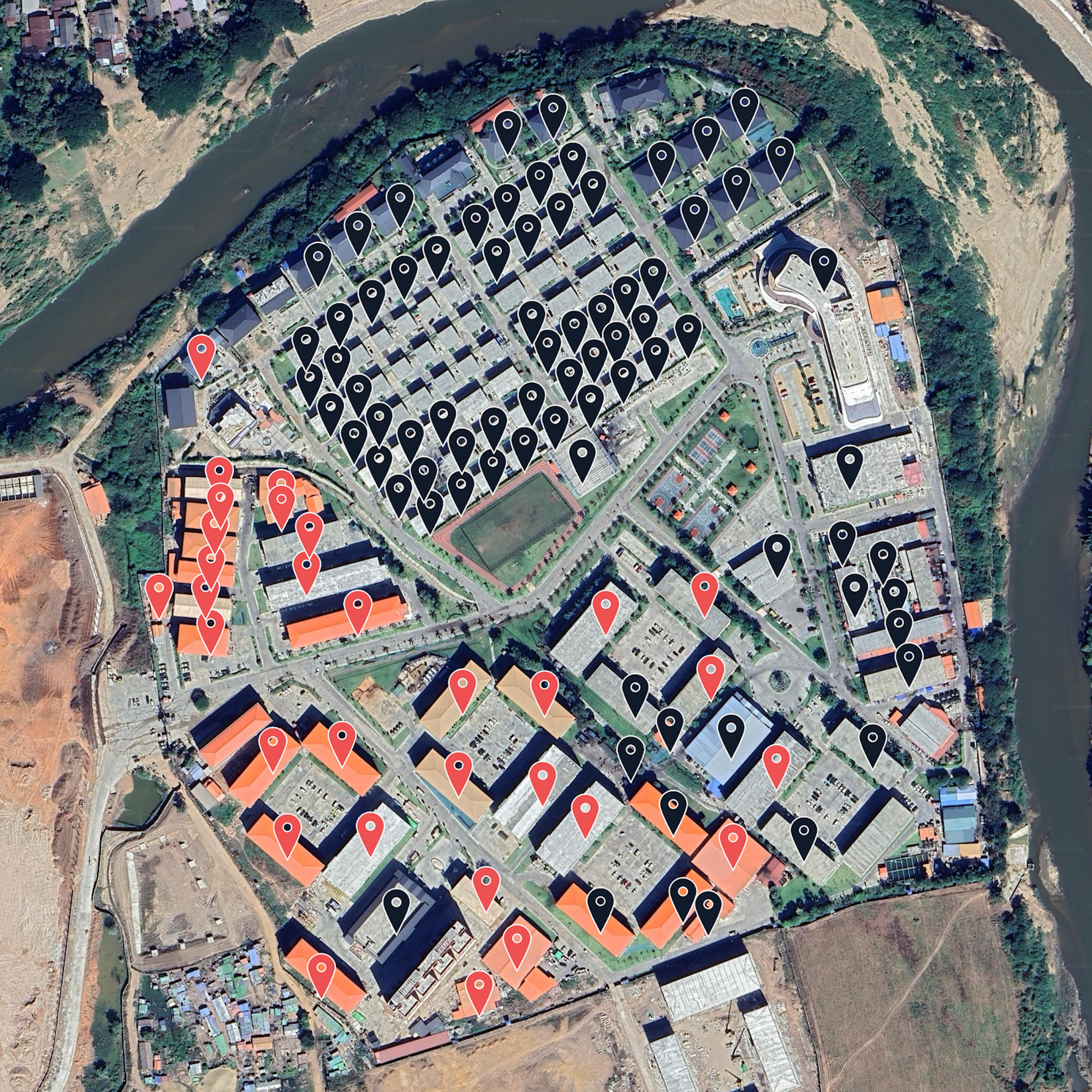
Map of destroyed buildings in KK Park II. The colour of the pin indicates the method of destruction: red represents the use of explosives, yellow represents the use of heavy machinery, and unknown is marked in grey. (Source: Map created in QGIS. Imagery Google Earth, ©2025 Airbus).

Explosions

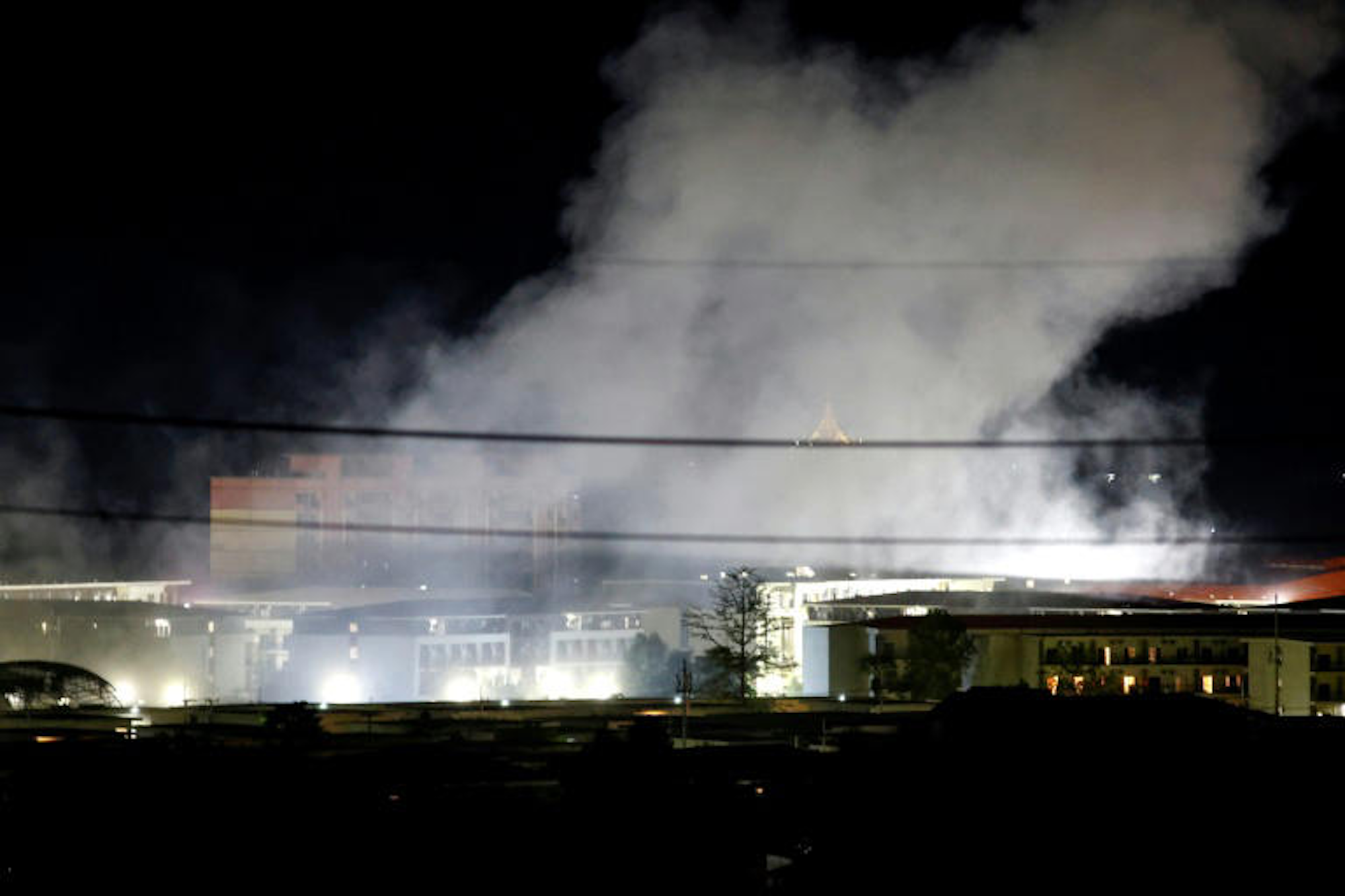
Explosives were reportedly used across several days during the demolition of buildings in KK Park II. Reports suggest that the explosions were heard up to three kilometres away, with smoke clouds visible from Thailand. 

Myanmar Witness was able to determine with high confidence that at least 12 buildings in KK Park II were destroyed with explosives. The actual number may be higher, as the destruction method of over a third of the buildings could not be determined with high confidence.

Smoke visible from inside KK Park II, potentially associated with the demolition of buildings. Myanmar Witness geolocated the image and was able to determine it was captured from Thailand territory. (Source: Sarot Meksophawannakul, AFP via MSN).

The buildings that were demolished with explosives were often the bigger structures in KK Park II. While the decision-making process regarding the method of destruction is unknown, it is possible that considerations of efficiency influenced the decision on the method of destruction.

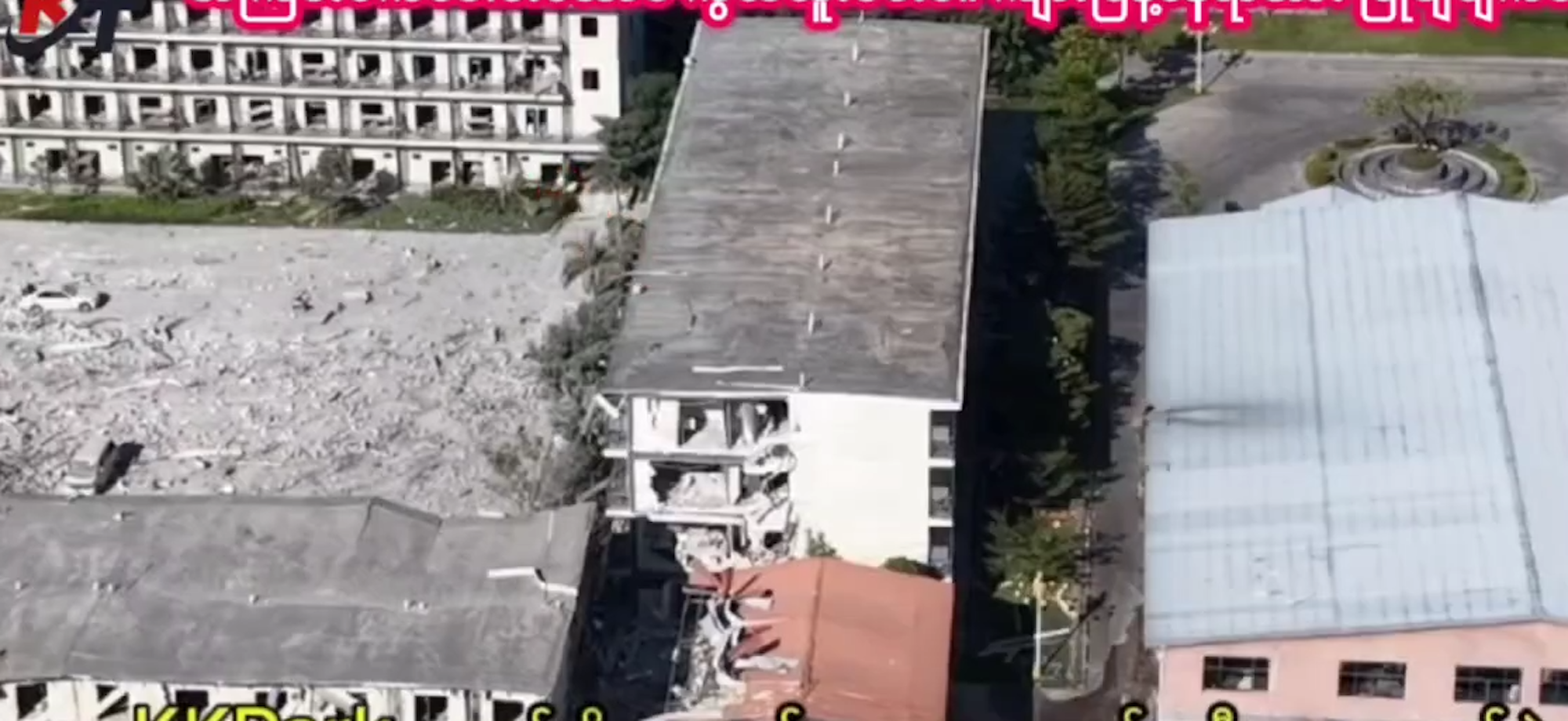
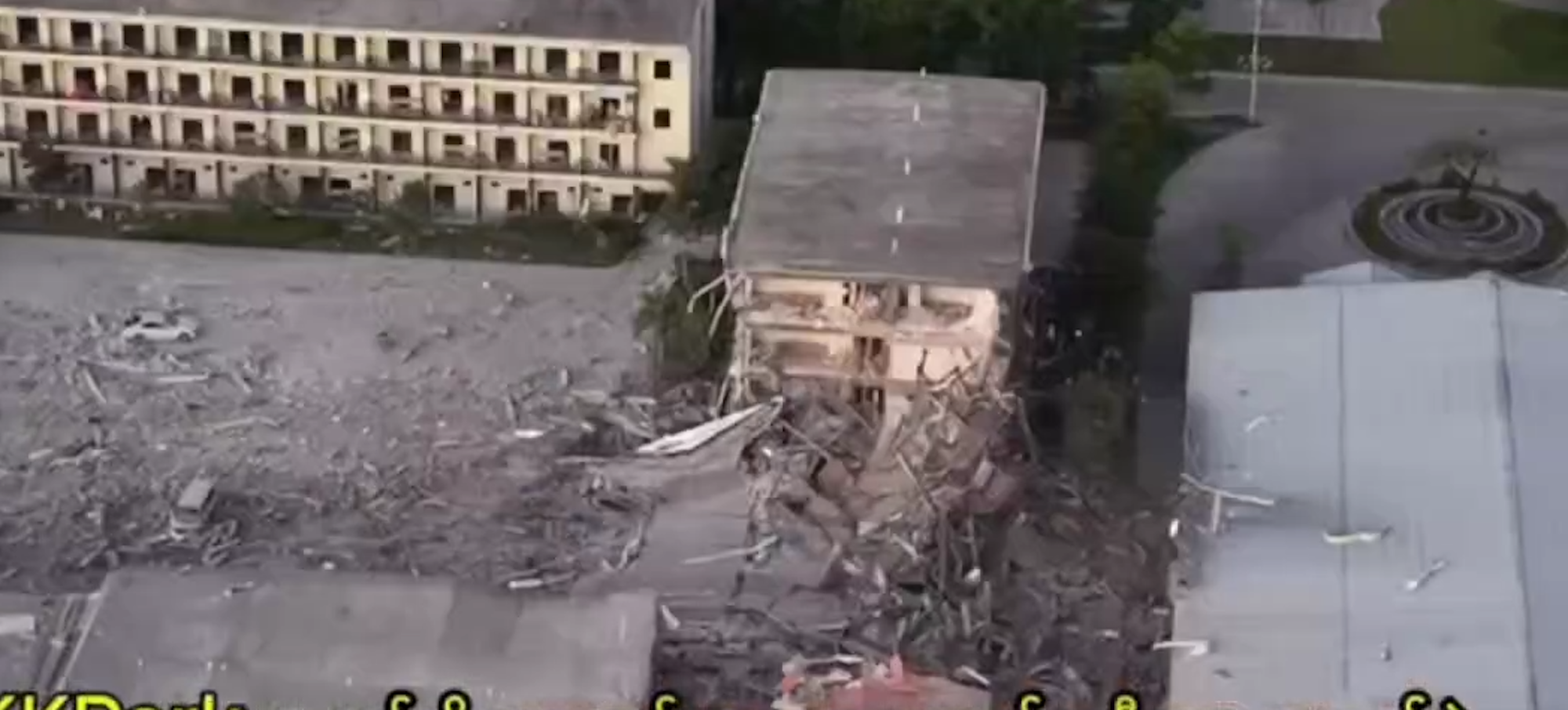
The damage caused by the explosions often appeared extensive and significant, even at times affecting nearby buildings. Street lamps were knocked down, suggesting that surrounding infrastructure, such as electricity and utility networks, was also likely damaged, with repairs potentially requiring significant time and additional resources. The dust and debris also covered a wide area, with reports indicating that debris even damaged buildings and infrastructure in Thailand (source redacted due to privacy concerns). The use of explosives often results in structural damage, leading to the collapse of buildings destroyed with explosives, making them completely unusable and impossible to reconstruct.

Stills from a video, published on 30 October 2025, showing a building in KK Park II [16.627884, 98.568573] before [Left] and after [Right] it was destroyed with explosives. Debris and signs of damage can be seen on the roof to the right. The remaining section of the building was destroyed with explosives shortly after. (Source: မှိုင်းဝေ).

Heavy machinery

Heavy machinery was documented as the most common destruction method, being used for the demolition of at least 56 buildings in KK Park II. In the imagery analysed excavators and other construction vehicles were more often seen being used to dismantle the smaller buildings in KK Park.

An image, published on 8 November 2025, showing a building in KK Park II [16.628420, 98.569810] being destroyed by an excavator. (Source: Trend News)

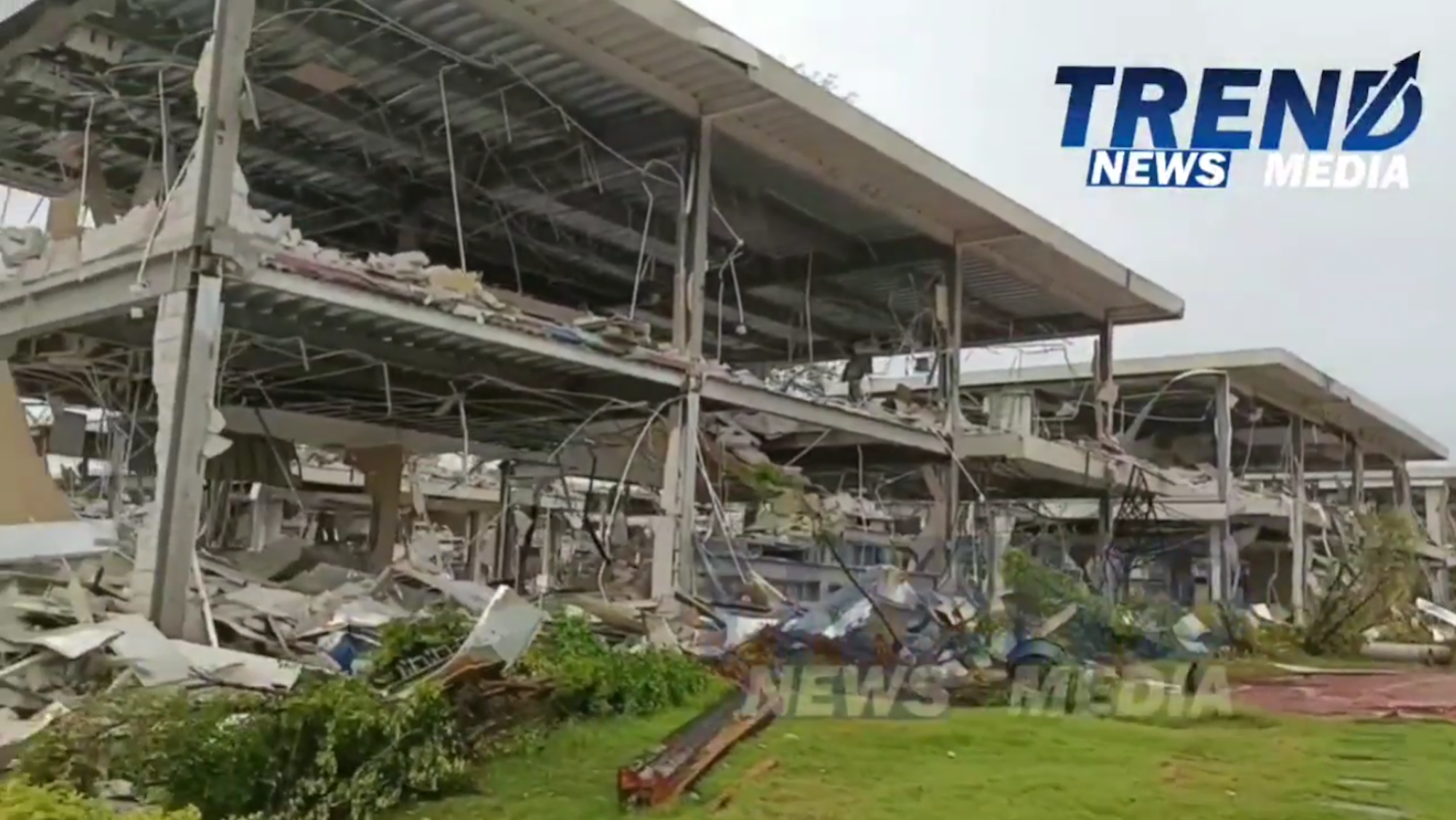
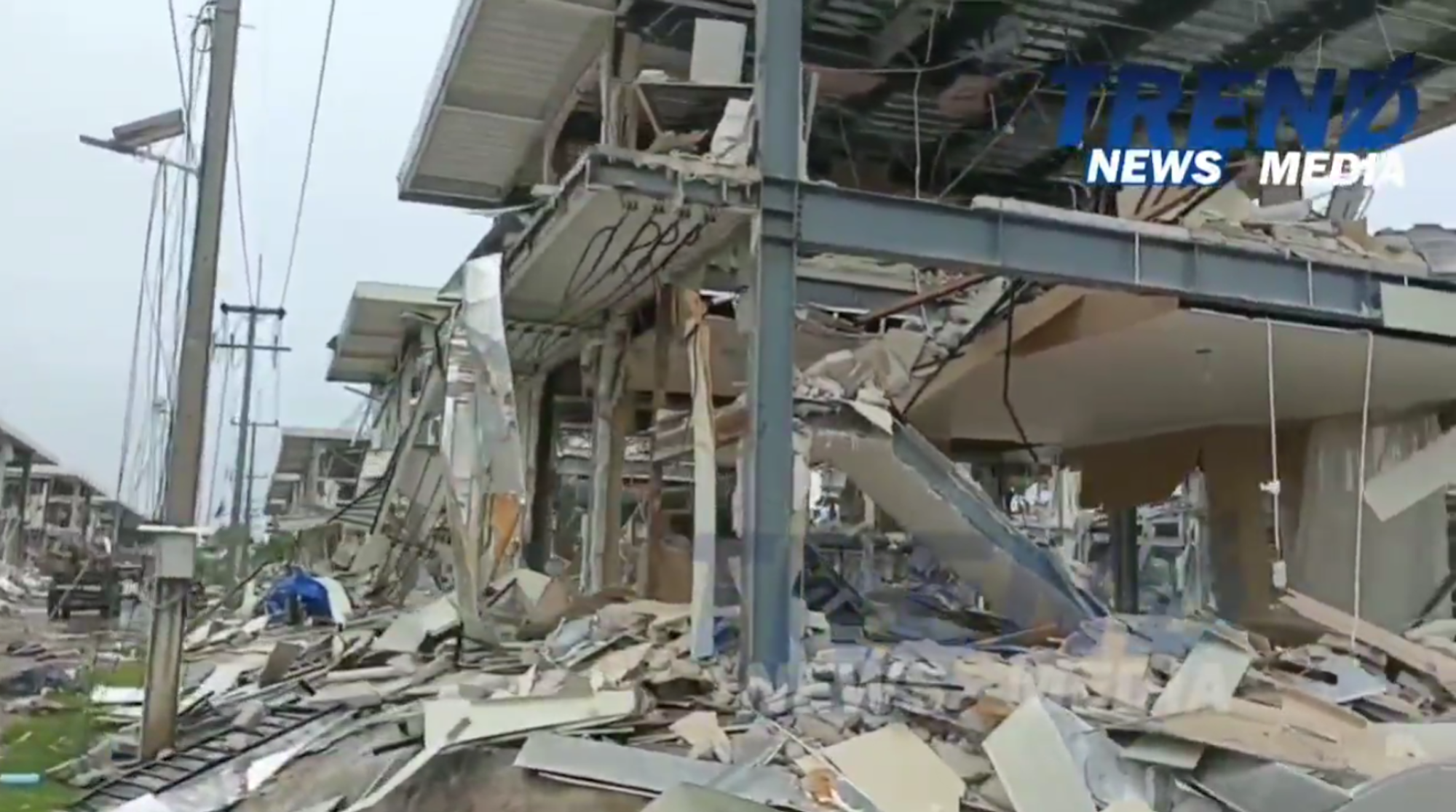
Myanmar Witness’s analysis concluded that the destruction of buildings with heavy machinery often appeared to be restrained, leaving key components mostly intact in a significant number of buildings. The UGC revealed that dozens of buildings had their walls mostly destroyed, but their structural steel beams remained intact. Not only that, in several cases, sections of the walls remained standing in place next to the beams, suggesting a deliberate action to avoid damaging these steel beams. Beyond that, the roofs of most of these buildings remained mostly undamaged, and inside, the ceilings of many buildings showed little to no damage, with lights still connected and hanging off the ceiling. Staircases were widely seen intact as well, with the cladding on their sides remaining in place in several buildings. Examples of the partial destruction can be seen in the images below.

Contrary to the use of explosives, destruction with heavy machinery allows for control of the damage to the surroundings, including infrastructure. For example, footage revealed that power lines next to buildings destroyed with heavy machinery mostly remained in place, suggesting this method was less prone to cause damage to the electricity and plumbing grid.

While the structural integrity of these buildings remains unknown, the large extent of the buildings that showed partial destruction indicates a potential intent to only partially destroy them. The little to no damage to the structural beams, roofs, staircases and ceilings, together with limited impact to the infrastructure, suggests there may be plans to restore these buildings, rather than to tear them down completely.

Stills from a video, published on 8 November 2025, showing destroyed buildings in KK Park II [16.628962, 98.566742]. The structural beams, staircases, and roofs are mostly intact. [Right] The image shows little damage to the ceiling of the building as well, and the observation of the lights still hanging intact suggests how carefully the method of destruction was carried out. (Source: Trend News)

Buildings reduced to rubble

The varying degree of destruction is also demonstrated by the number of buildings that were flattened. These buildings suffered severe damage, including to structural components, which led to their collapse. Out of the 109 destroyed buildings Myanmar Witness analysed, at least 31 collapsed to the ground. Almost all of the buildings that were destroyed with explosives were reduced to rubble, while the destruction method of the rest of the flattened buildings remains unknown.

Map of destroyed buildings in KK Park II. The red pins indicate that the buildings were completely flattened. (Source: Map created in QGIS. Imagery Google Earth, ©2025 Airbus).

Buildings still standing

High-resolution satellite imagery captured on 14 November 2025 showed a large number of buildings that remained standing, including buildings that were seen partially destroyed up to two weeks prior, as early as 30 October 2025. 

After concluding the analysis, Myanmar Witness reviewed additional high-resolution satellite imagery, captured in the first week of December. The imagery revealed that a significant number of the partially destroyed buildings remained standing weeks after the SSPC’s Ministry of Information’s announcement on 19 November 2025, that 148 buildings were demolished by 17 November 2025. Therefore, it appears that the SSPC’s claims of destruction of these premises are incorrect. 

While the buildings were deemed as destroyed by the SSPC,  it is evident from the available imagery that the core structure of several buildings remains intact, thus leaving open the opportunity for the infrastructure to be rebuilt and reused in the future. Additionally, considering the long period of time the buildings have remained standing, it is unclear if there are further plans to complete their demolition at a later time, especially after they were deemed fully destroyed, or if there are other plans in place.

Conclusion

Following Myanmar Witness’s initial investigation into reports of raids and explosions in KK Park II, this investigation analysed the destruction of buildings in the complex. On 19 November 2025, SSPC’s Ministry of Information stated that all 148 buildings had been destroyed by 17 November 2025; however, Myanmar Witness documented at least 109 buildings as demolished by 23 November 2025. The destruction was carried out with explosives and heavy machinery, with the latter being the more frequent method. Buildings that were destroyed with heavy machinery often showed partial destruction only, leaving key components like structural beams and roofs intact, indicating potential plans to reconstruct and reuse these buildings. Myanmar Witness will continue to monitor and investigate the destruction of KK Park and the crackdown on additional scam centres in the region.

Share Article