Content warning: This article includes posts that feature misleading and discriminatory narratives. Some readers may find this content distressing. CIR has redacted most links and the names of the accounts due to privacy concerns and to avoid amplifying harmful content. Upon request, CIR can share any relevant data.  

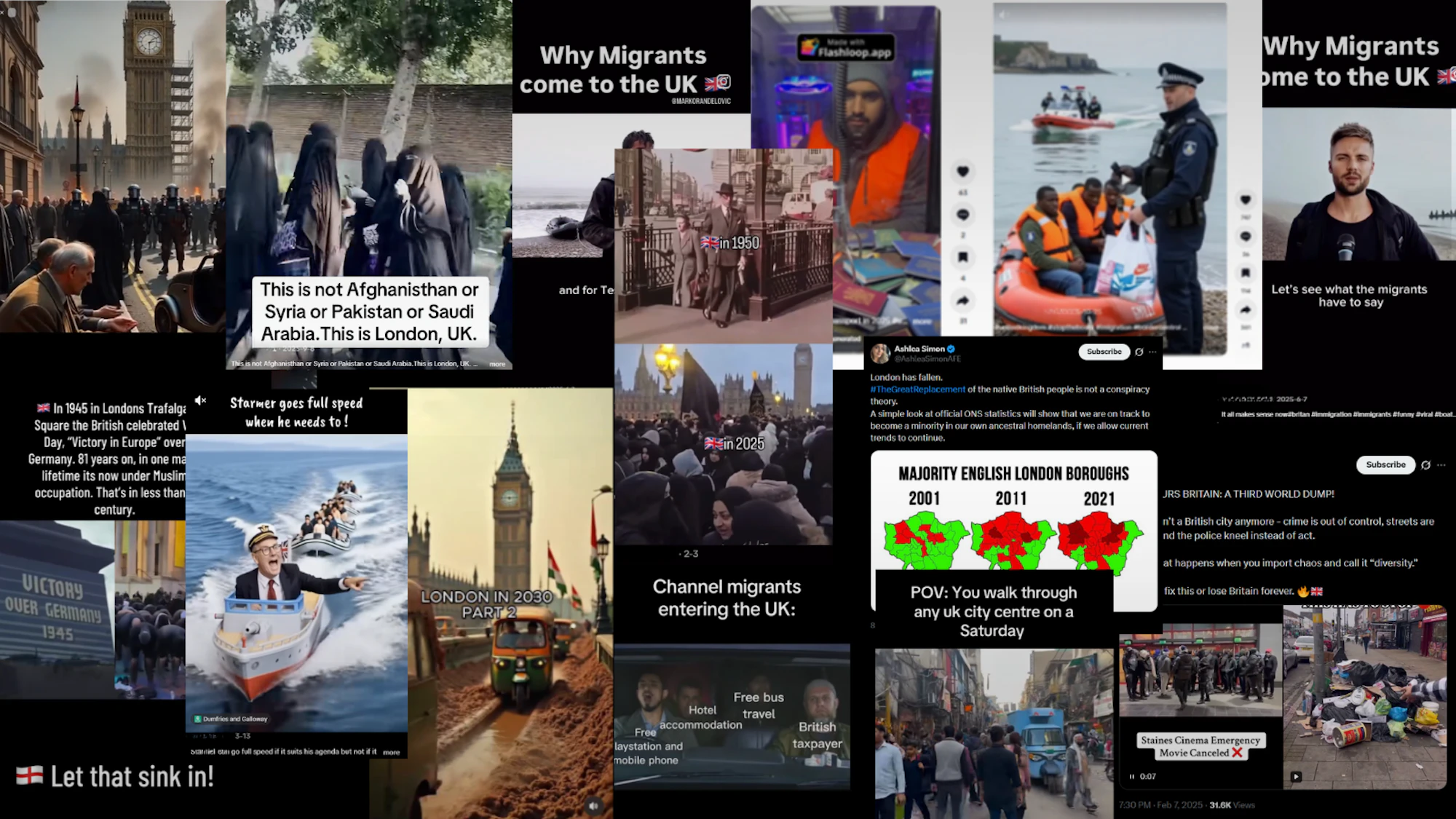
From AI-generated videos imagining London “taken over” by immigrant communities, to TikTok videos depicting a walk through central London requiring military-style gear, CIR has documented a wave of online disinformation portraying London as a city “in decline”. The content collected spans five platforms, overlaps with far-right extremist ideology, and is reaching international audiences.


The emerging threat: narratives targeting London

Across social media platforms, narratives portraying London as in decline have become increasingly visible. Posts using captions such as “London has fallen” have circulated widely, promoting claims that frequently blame migrant and minority communities for perceived social and cultural decline.    

Through ongoing monitoring and prior research, CIR has identified online content that portrays London as unsafe, lawless, and in decline. Findings from CIR’s initial research suggest that social media accounts are spreading identity-based disinformation (IBD) that frames migrants and minority communities as responsible for crime and social disorder. More broadly, this content distorts or exaggerates information about London to create a misleading perception of widespread decline. Across platforms, this content amplifies fears about safety in the capital while reinforcing hostile attitudes towards immigrants and ethnic minorities. Understanding these narratives is important because they do not exist in a vacuum and can have real-world repercussions, including contributing to individuals’ radicalisation and mobilisation to violence. 

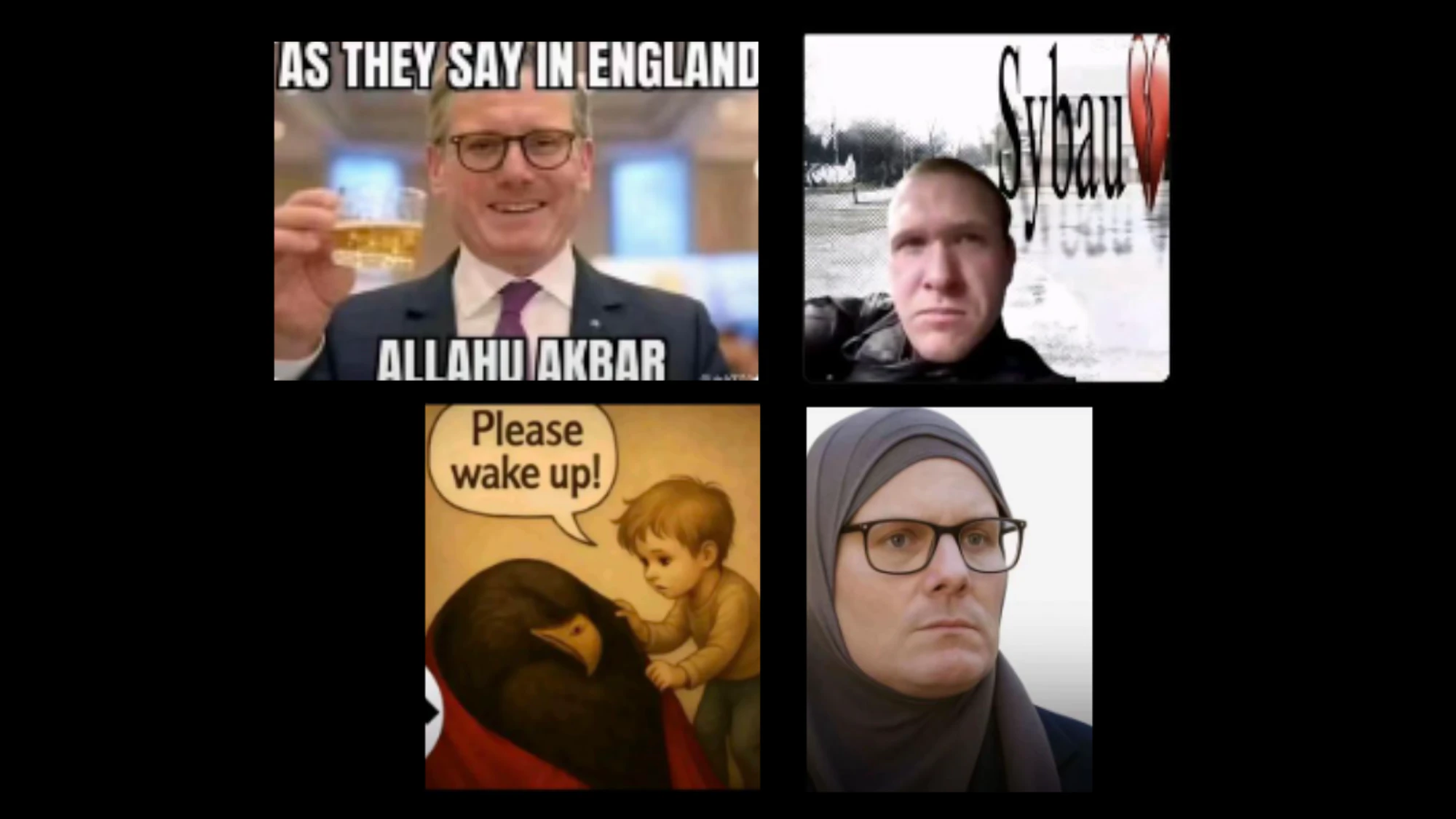
Several of the narratives identified overlap with far-right extremist ideology and conspiracy theories, particularly those relating to demographic change and perceived cultural replacement. This is not limited to the content itself; comment sections under these posts contain references to perpetrators of terrorist attacks, extremist coded language, and imagery (memes and stickers) evoking or glorifying violence.  

These findings are consistent with recent reporting on the topic. The BBC, for example, has reported that influencers online are depicting Western cities – including London, Manchester, New York, and San Francisco – as overrun with crime and illegal immigrants. These videos often use real incidents – such as phone thefts or street crime – but strip them of context, creating an exaggerated perception of danger and societal decline.  

Similarly, the investigative news outlet London-Centric has examined how some content creators exploit divisive content for revenue, with little concern for real-world impact. They found that one account in particular posted AI-narrated tours of London homes, falsely claiming that properties in Knightsbridge and Chelsea had been given to illegal immigrants for free. The Bureau of Investigative Journalism and the BBC have also reported on the geographic origin of some of the accounts posting urban decline narratives, including activity linked to users in Sri Lanka, Vietnam, and Pakistan.  

In addition, the BBC and Times Higher Education have reported that influential figures, including President Donald Trump and Elon Musk, have amplified narratives portraying London and the United Kingdom (UK) as in decline, often using misleading or false claims about crime and immigrants.  

To identify emerging narratives targeting London, particularly those framing the city as experiencing an “urban decline,” CIR researchers collected a sample of over 150 text-based posts and videos from five social media platforms – X, Facebook, Instagram, YouTube, and TikTok – over a four-day period. Researchers also analysed the comment sections of the posts and videos to assess how audiences engaged with and responded to these narratives.  

CIR then conducted a qualitative analysis to identify recurring narrative themes across the dataset. Five key themes emerged: London as unsafe, anti-immigration, Islamophobia, ‘great replacement’, and nostalgia. These narrative themes are not mutually exclusive, with content often overlapping across categories. The following article explores these five narrative themes in detail, alongside broader findings across the dataset, including the use of AI-generated content and audience engagement in comment sections. 


London as unsafe

Across platforms, accounts have been sharing content with manipulated information portraying London as increasingly unsafe. Posts frequently exaggerated levels of violent crime – particularly knife crime – through misleading claims, decontextualised footage, or false statistics. Some content also promoted inaccurate claims that public figures had left London due to safety concerns.  

For example, Radio Genoa – a far-right Italian account known for spreading pro-Russian and anti-immigration narratives – falsely claimed that the actor Tom Cruise had left London because the city had become too dangerous (see figure 1).  
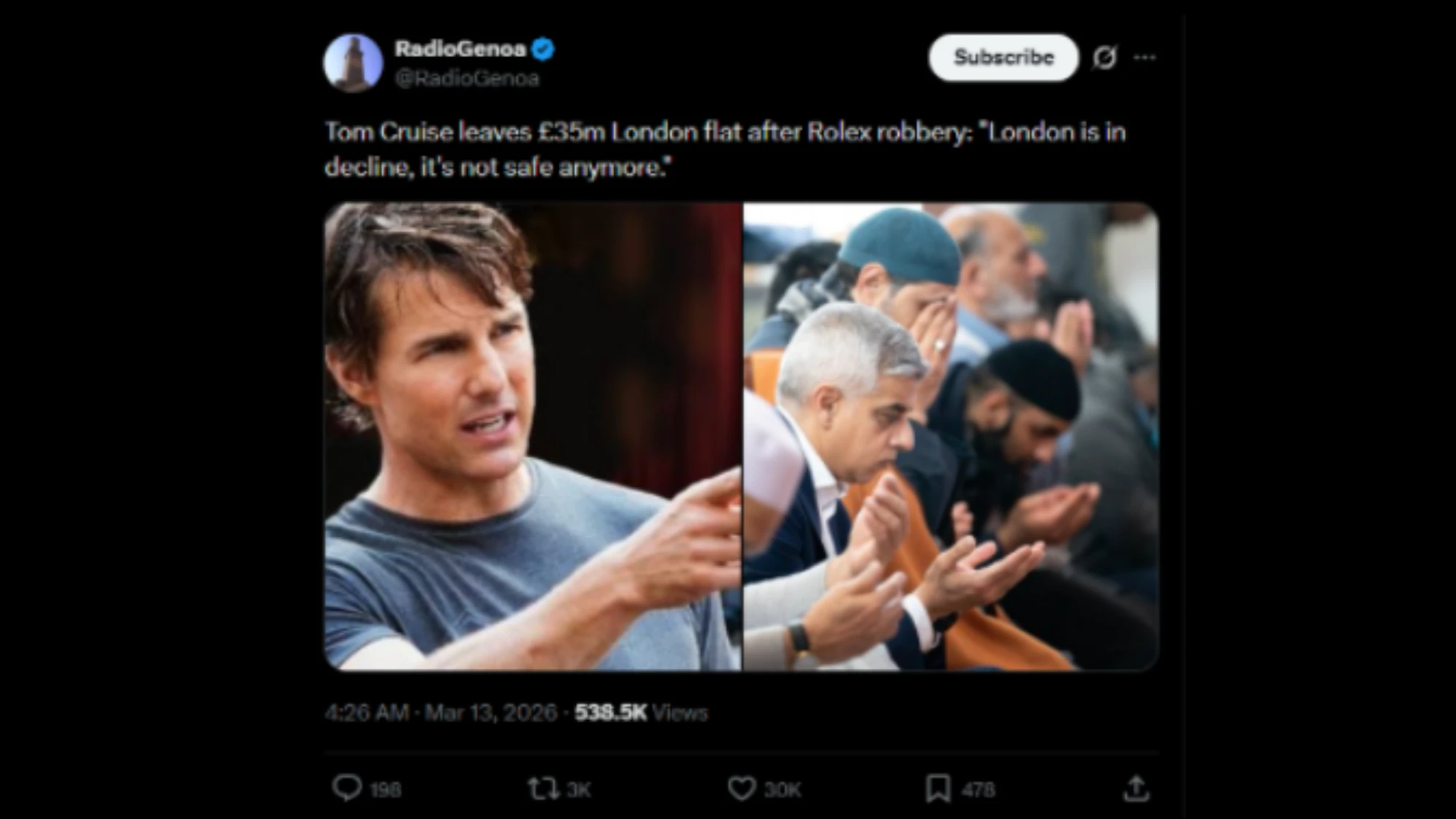
Figure 1: screenshot of a post shared by the X account Radio Genoa, falsely claiming that the actor Tom Cruise left London due to safety concerns. Source: X 

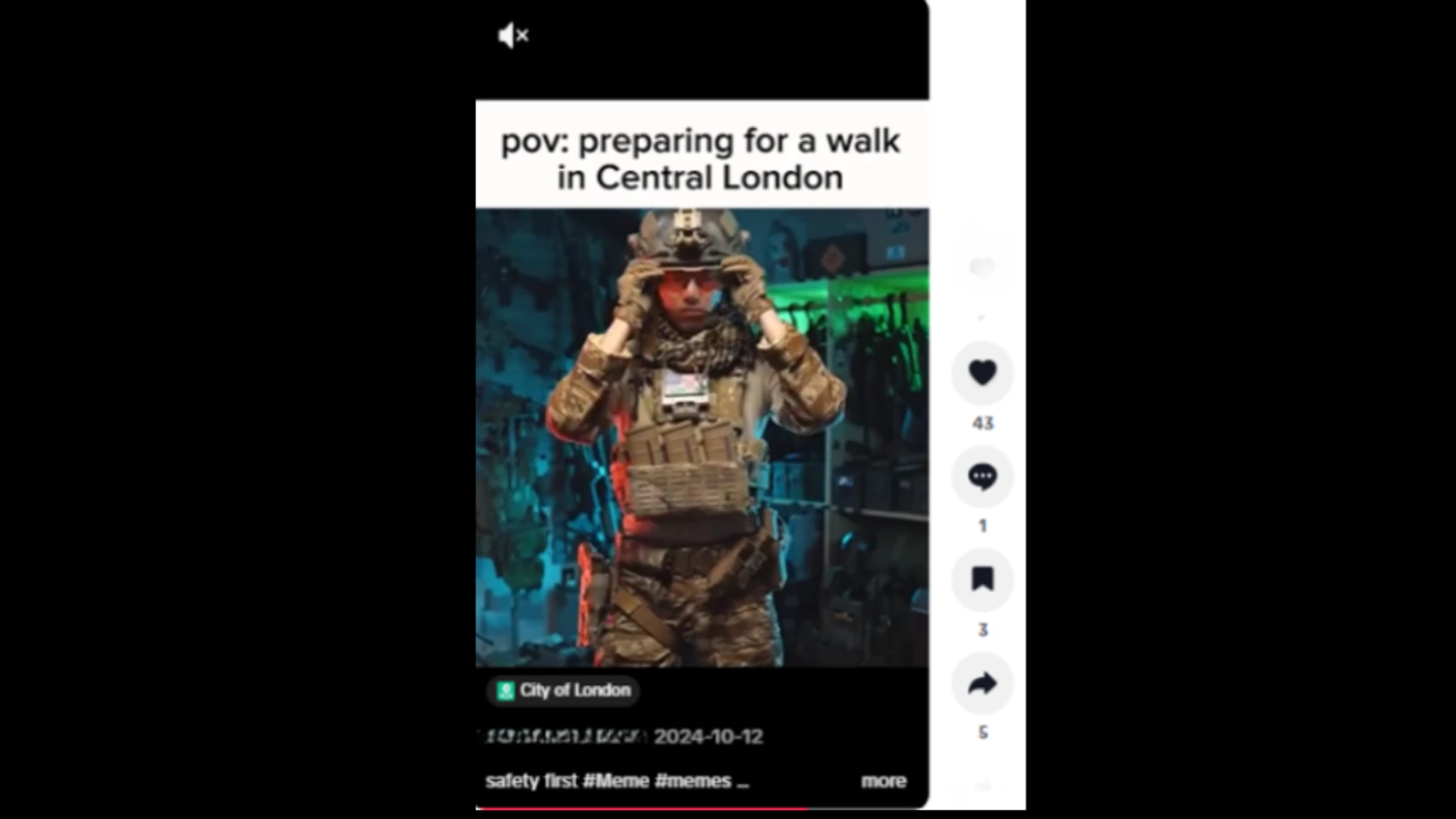
On TikTok, individual users created and shared short videos that used humour and exaggerated scenarios to reinforce perceptions of widespread danger in the capital. Some videos depicted everyday scenarios – such as asking for directions in London – paired with imagery (often taken from video games), implying violent outcomes. Figure 2 shows a TikTok video where an individual is getting dressed in military-style gear alongside the caption: “POV: preparing for a walk in central London.” 

Figure 2: screenshot of a TikTok video showing a man dressing in military-style gear, alluding to the widespread danger in the city. The caption reads: “POV: preparing for a walk in Central London”.  Source: TikTok.  

Anti-immigration narratives

Users shared anti-immigration narratives depicting immigrants as a threat, with claims that they exploit the UK system to access free housing or benefits. Immigrants were also directly and indirectly blamed for rising crime rates, as well as broader social discontent and insecurity in British society.  

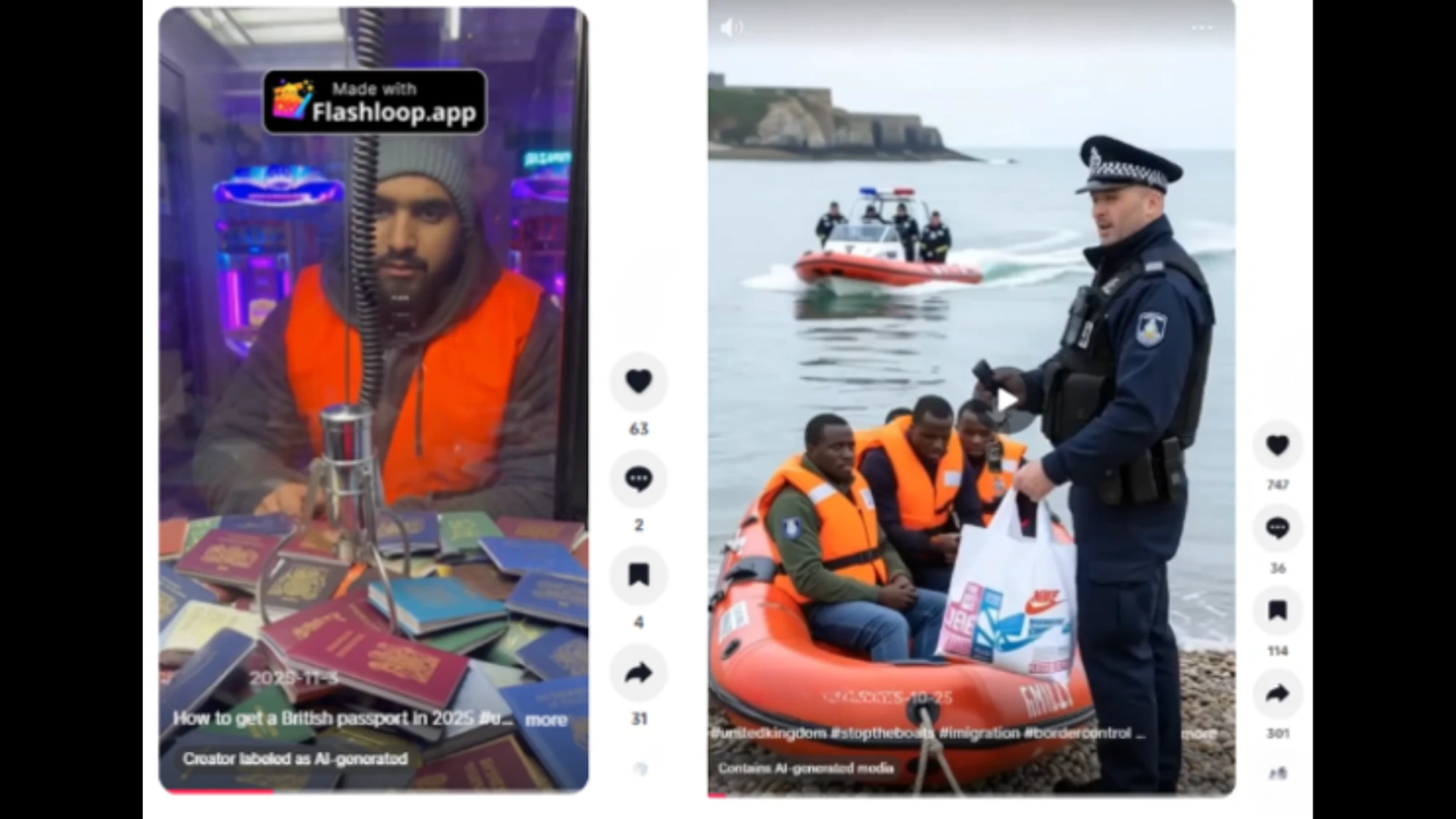
Videos shared on TikTok – many of them AI-generated – depicted individuals “winning” British passports through arcade-style games (figure 3 left) or immigrants being welcomed by British police with gifts (figure 3 right).

Figure 3: screenshots from AI-generated videos on TikTok: [left] video showing a man playing an arcade-style game to ‘win’ a British passport. Source: TikTok; [right] video showing a British policeman welcoming immigrants arriving by boat with gifts. Source: TikTok. 

These videos imply that British taxpayer money is being used to provide special treatment or benefits to immigrants. Other videos implied that immigrants received preferential treatment and that British citizenship could be obtained easily or without scrutiny.  


Islamophobic narratives

Content under this theme closely overlaps with the anti-immigration narratives identified above. However, posts and videos within this category more directly blame Muslims and Islam for the perceived decline of London and the UK more broadly.  

Content frequently claimed that Muslims had “invaded” London, often using decontextualised or AI-generated media to reinforce these narratives. This type of content is likely intended to incite fear and hostility towards Muslim communities by portraying Islam as incompatible with British society and culture.  

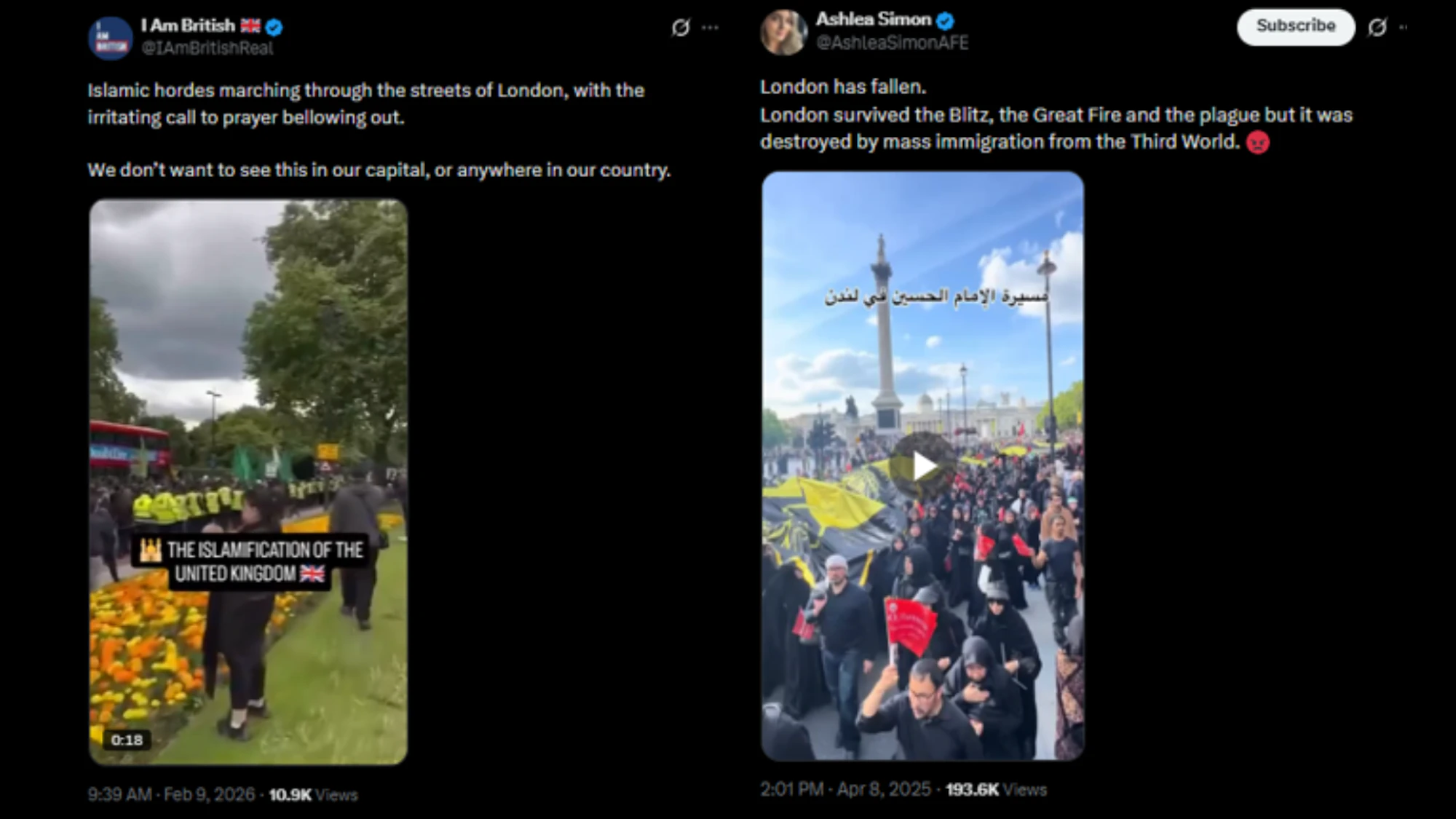
Across these examples, researchers identified repeated references to the so-called “Islamification” of the UK, with claims that demographic and cultural change were responsible for London’s perceived decline (see figure 4 left). Anti-immigration and pro-Brexit figures such as Ashlea Simon – the Chair of Britain First, a far-right British neo-fascist political party – have also shared posts amplifying these narratives (see figure 4 right).   

Figure 4: [left] screenshot referring to the so-called “Islamification of the UK”. Source: X; [right] screenshot of a post from Ashlea Simon, Chair of Britain First, claiming migrants have caused London’s downfall. Source: X 

“Great replacement” and “white genocide” conspiracy theories

Anti-immigration and anti-Muslim narratives often overlapped with content promoting the Great Replacement conspiracy theory – a theory created to denounce the “replacement” and “contamination” of the white population by non-white communities.  

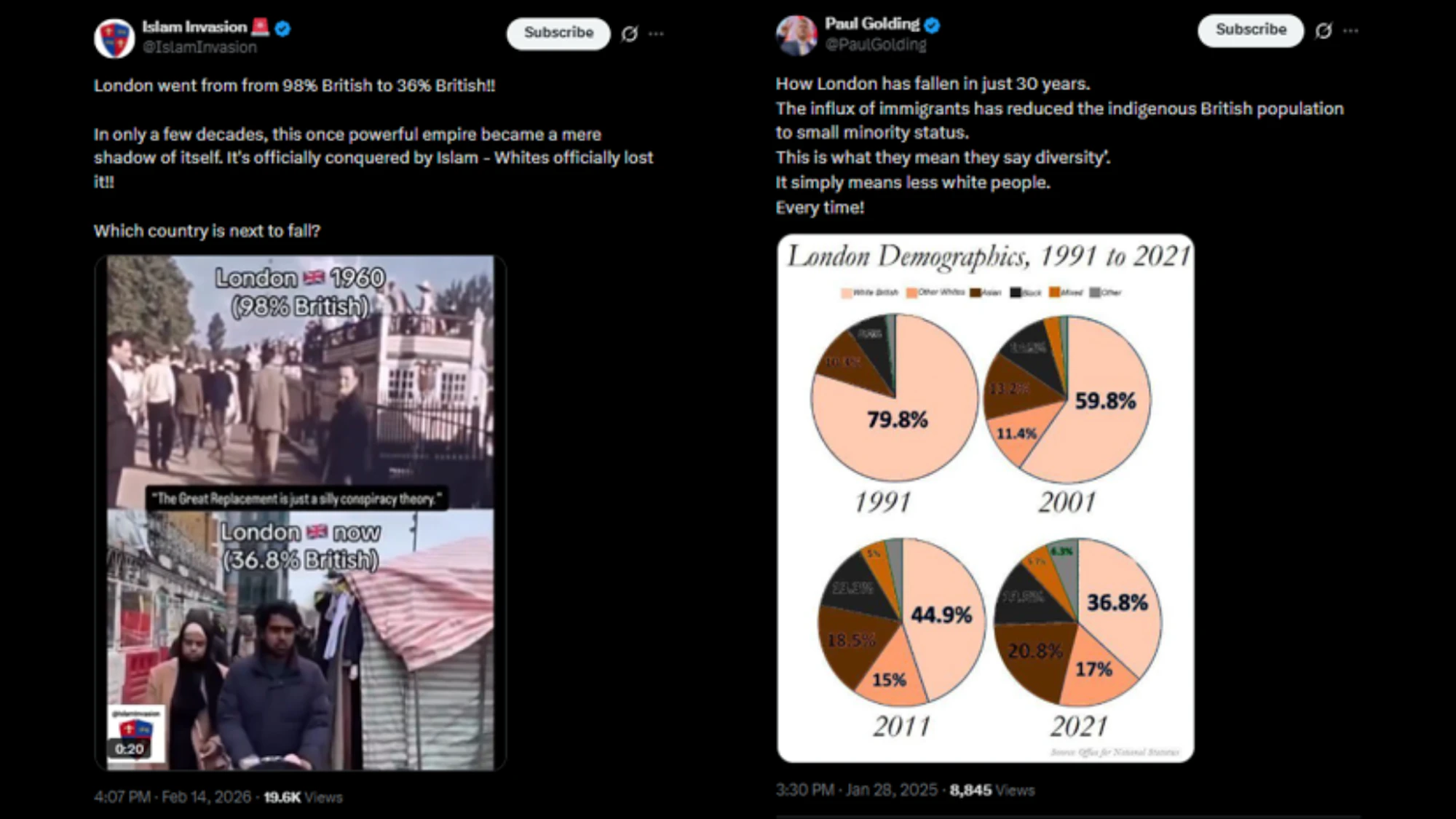
Users shared content promoting misleading claims about demographic change in the UK, alleging that the white British population is being replaced by non-white immigrants in London, and across the country more broadly (see figure 5 left). Some accounts also claimed that the “Great Replacement” was no longer a theory but a reality, often referencing the conspiracy theory of an ongoing “white genocide.” Posts referencing a replacement of the white British population were also shared by Paul Golding, co-founder and former leader of Britain First.  

Figure 5: [left] screenshot of a post sharing false claims on demographic changes in London. Source: X; [right] post from former leader of Britain first, Paul Golding, blaming immigrant communities for the downfall of London and Britain. Source: X 

Content under this theme is used to reinforce ‘us vs them’ distinctions by framing the white British population as the in-group and any non-white minority community as the out-group. In most cases, the in-group blames the out-group for all perceived ills and grievances, including social grievances and perceived national decline.  

This type of content can be particularly dangerous because it frames demographic change as an “organised replacement” of the white British population by non-white communities. Often overlapping with anti-immigration and Islamophobic narratives, it positions demographic change as an existential threat, fuelling resentment and hostility towards immigrant and ethnic minority groups and providing ideological justification for those who seek to act on such beliefs. This framing creates a heightened sense of urgency that has historically been associated with real-world extremist violence. 


Exploiting nostalgia

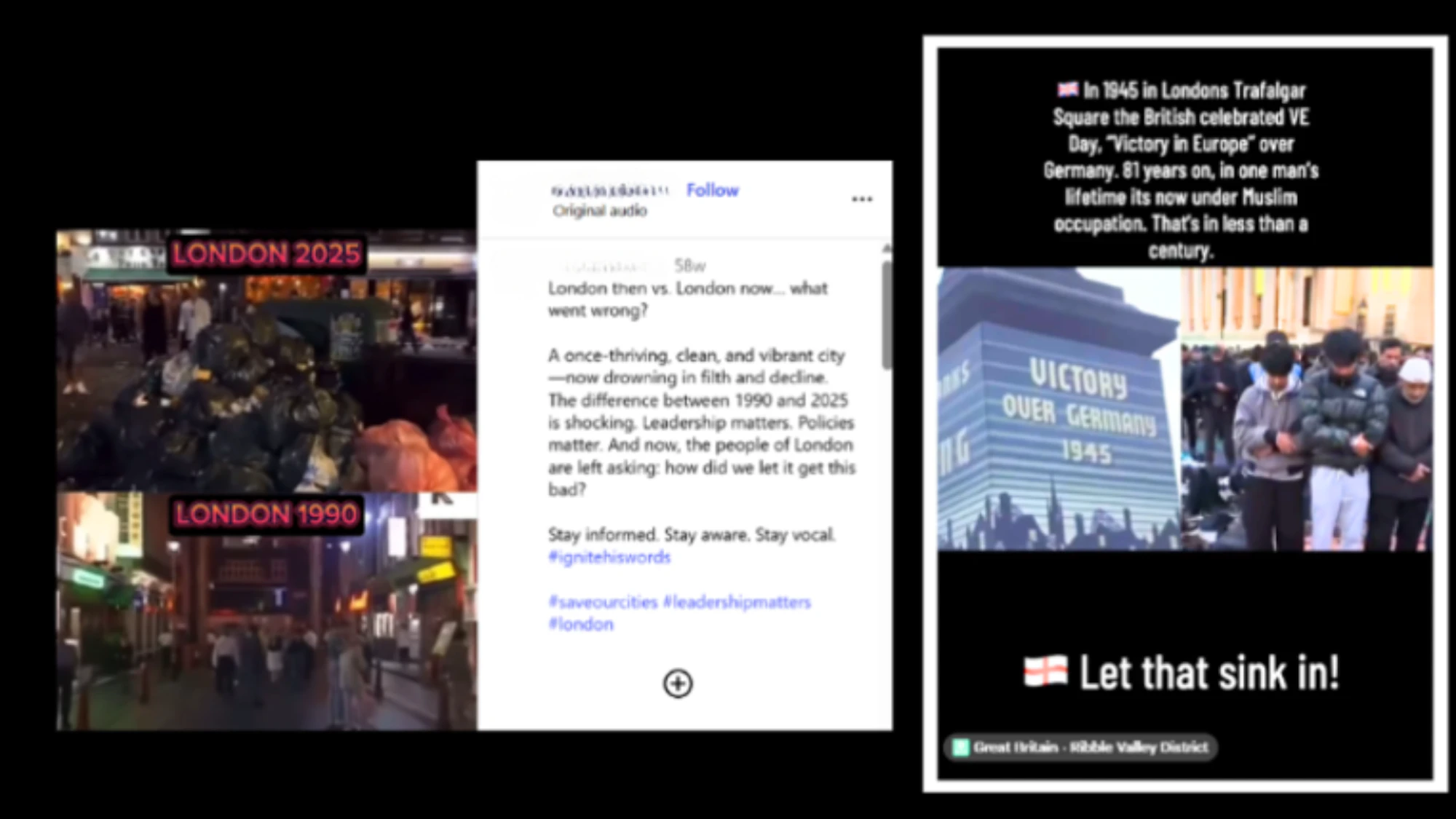
Under this narrative theme, users shared content glorifying the “good old days,” often comparing a romanticised version of London or Britain’s past with present-day imagery. These posts frequently suggest that London was safer or more prosperous in the past, attributing the city’s perceived decline to immigration and demographic change, often through imagery of crowded or visibly neglected streets (see figure 6 left). 

For example, a TikTok video compared Trafalgar Square in 1945, during Victory Day celebrations, with Trafalgar Square in 2026 during Eid celebrations. The caption framed these changes as evidence of London’s decline, implicitly suggesting that the city had been culturally overtaken by Muslims (see figure 6 right).  

Figure 6: [left] screenshot of a post referencing London’s decline by comparing London in 1990 and 2025. Source: Instagram; [right] screenshot of a TikTok video showing images from London’s Victory Day celebrations in 1945 and Eid celebrations in 2026. Source: TikTok.

Nostalgia-driven content can intensify perceptions of cultural loss and decline, encouraging audiences to view social change as something that must be resisted or reversed. For this reason, the comment section under these posts often call for action or encourage users to “do something” about these perceived changes.


Use of AI-generated content to spread harmful narratives

One of the key tactics identified across all narrative themes was the use of AI-generated videos. These are often designed to exaggerate or amplify negative cultural, racial, and ethnic stereotypes targeting immigrants and minority communities, ultimately contributing to the spread of harmful narratives. 

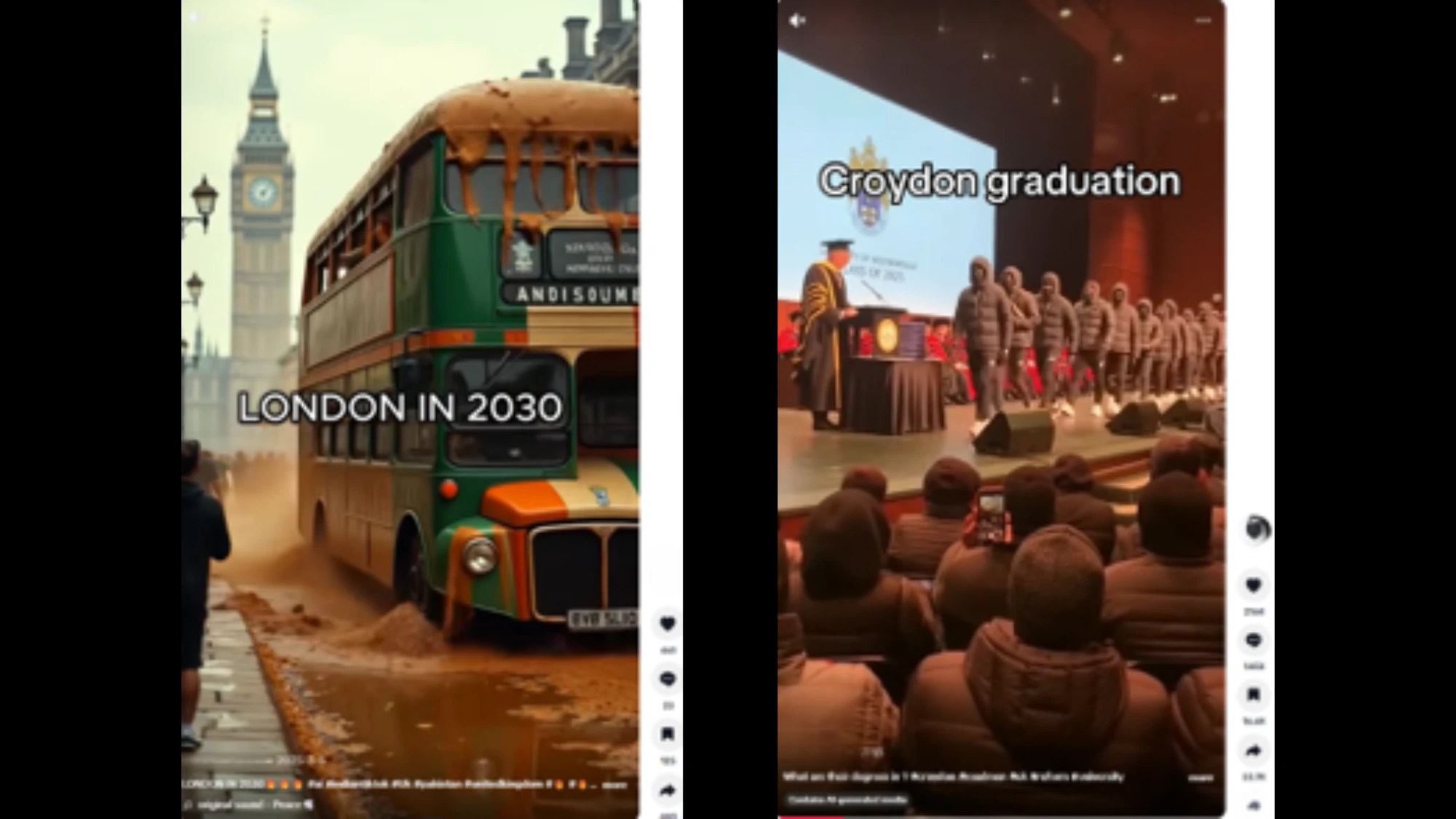
Examples shared on TikTok depicted fictional scenarios portraying immigrants as a threat to British society. Certain AI-generated videos imagined a fictional future in which London had been “taken over” by people of Indian origin (see figure 7 left). Others targeted specific areas of the capital, using fabricated scenarios to spread harmful stereotypes about communities living there, including Croydon’s Black British community (see figure 7 right).  

Figure 7: screenshots from AI-generated videos on TikTok: [left] screenshot of a TikTok video imagining a fictional future in which London had been “taken over” by people of Indian origin. Source: TikTok; [right] screenshot of a TikTok video showing a “graduation” in Croydon. These videos spread harmful stereotypes about communities in London. Source: TikTok. 

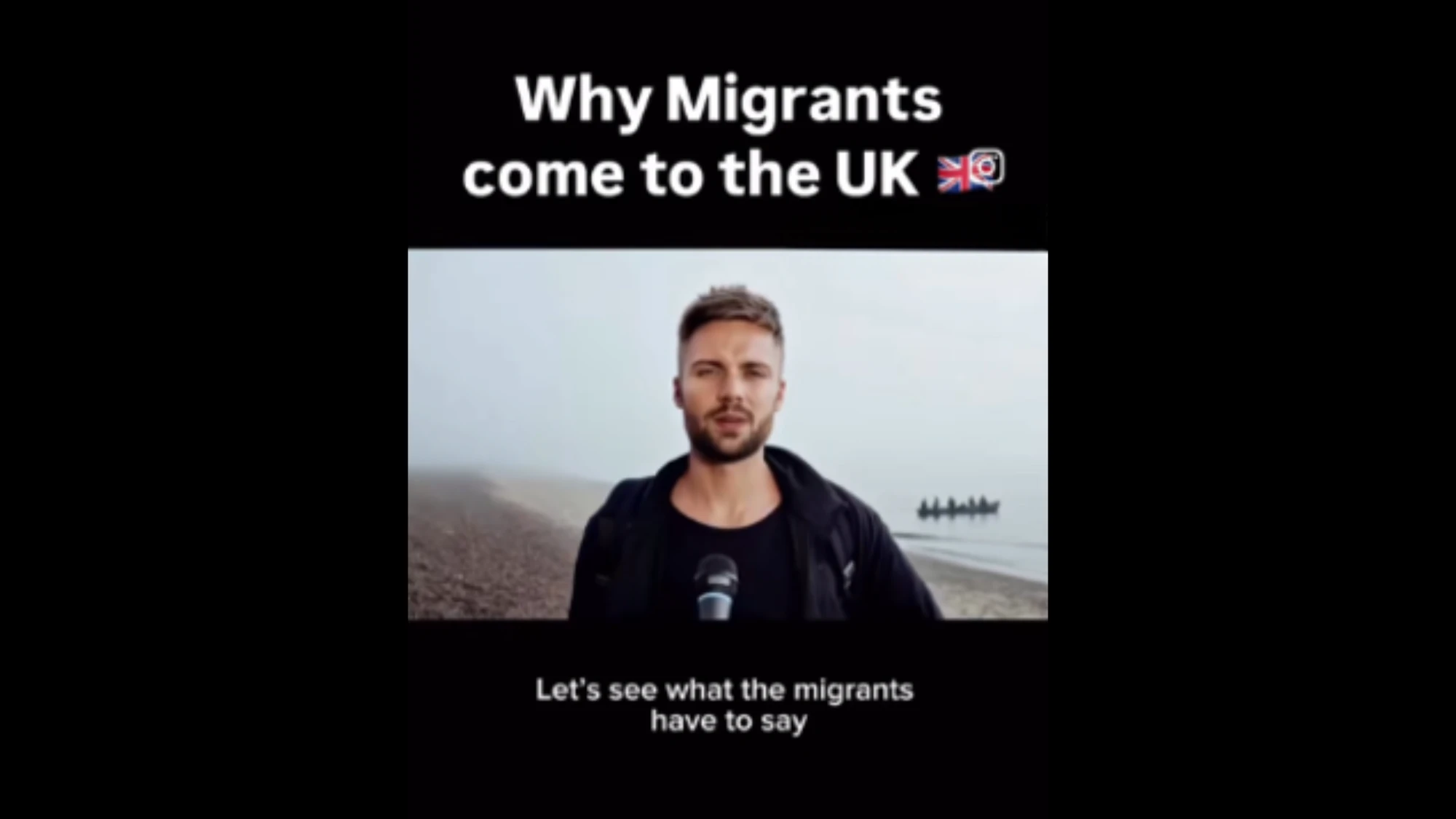
TikTok users also shared AI-generated “street interview” style videos depicting migrants arriving in the UK. The street interview format is particularly effective at spreading this type of content. By mimicking the aesthetic of authentic citizen journalism, these videos lend false credibility to their claims, with the potential of generating high engagement levels on TikTok.   

In these videos, a white British man interviews migrants arriving by boat, who are portrayed as travelling to the UK for “benefits” such as free food or gym memberships (see figure 8). These portrayals reinforce misleading stereotypes that asylum seekers exploit public services, while undermining the complex realities surrounding migration and asylum claims.

Figure 8: screenshot of an AI-generated TikTok video featuring an interview-style format where immigrants arriving on a boat are being interviewed. Source: TikTok.  

How narratives are amplified in the comment sections

To assess audience engagement with these narratives, CIR’s analysis of comment sections across the dataset found that users are actively reinforcing and amplifying the same narratives, expressing hostility towards immigrants and deepening perceptions of London’s decline. 

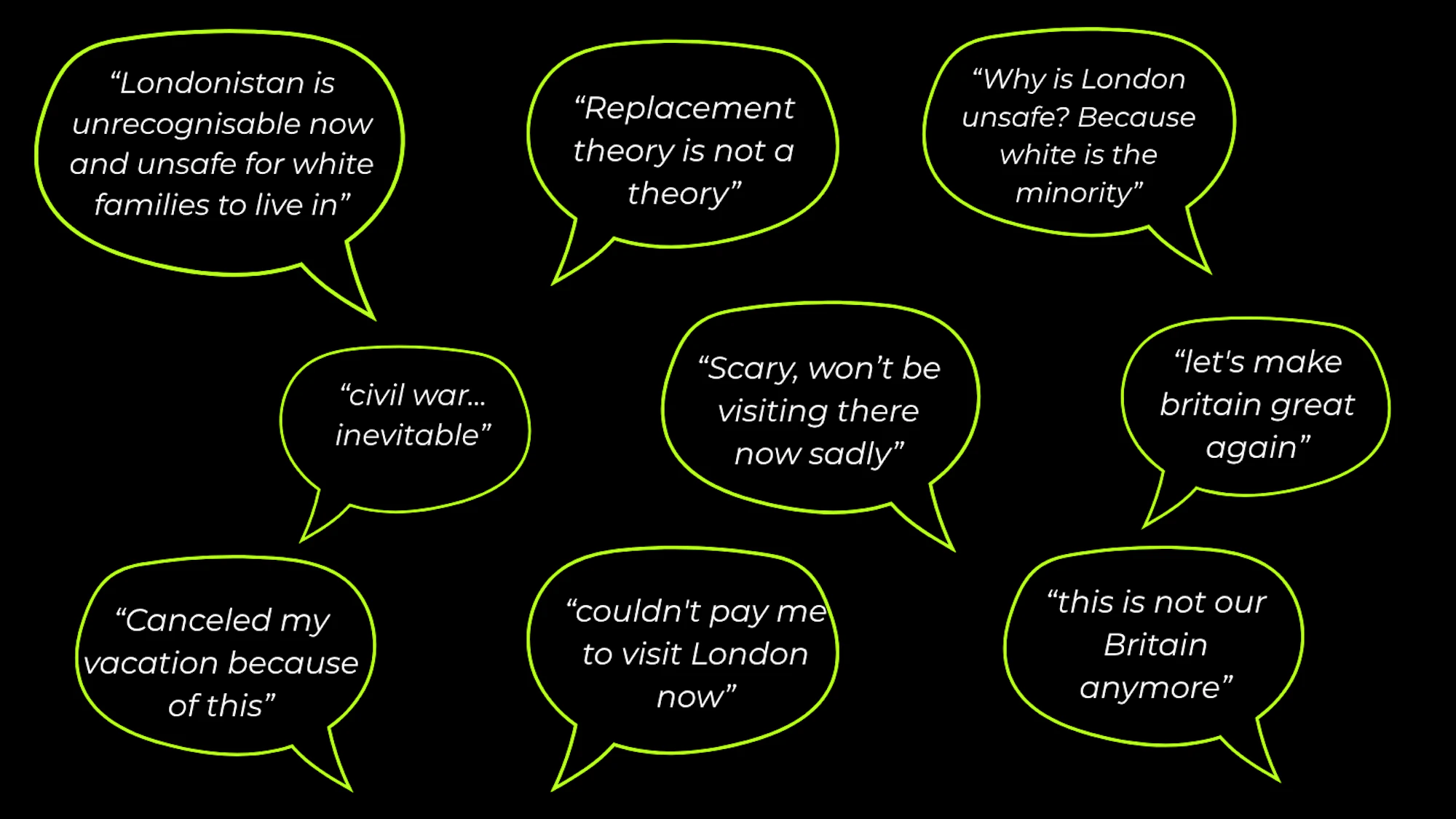
Figure 9 shows a sample of comments from the dataset. These included statements expressing reluctance to visit London due to safety concerns, with users avoiding London completely or cancelling their holidays; references to the Great Replacement conspiracy theory, through misleading demographic claims; and comments expressing a need to “take action” against perceived demographic and cultural change.

Figure 9: sample of comments from the dataset. These comments were collected under posts and videos across the five social media platforms analysed.  

In addition to text-based responses, users also engaged with posts through visual content, such as stickers and memes. Some blamed Prime Minister Keir Starmer for increased immigration, while others referenced or glorified extremist violence through imagery associated with Brenton Tarrant, the perpetrator of the Christchurch Mosque attacks. Additional examples called for mass deportation of immigrants, and others included extremist coded language and imagery evoking or glorifying Nazi Germany (see figure 10).  

Figure 10: sample of stickers used in the comment section to spread hate, praise perpetrators of terrorist attacks, and evoke or glorify Nazi Germany

Audience engagement with this content suggests that these narratives are shaping perceptions of London both domestically and internationally. Researchers identified engagement from users in countries including the United States, Spain, Italy, and Japan, indicating that narratives portraying London as unsafe or in decline are circulating beyond UK-based audiences.  


The bigger picture

These initial findings suggest that online narratives portraying London as unsafe or in decline are increasingly intertwined with anti-immigration, anti-Muslim, and extremist conspiracy narratives. Across platforms, misleading and decontextualised content is being used to frame demographic change, migration, and multiculturalism as threats to public safety and national identity. Analysis of comment sections suggests that users are actively engaging with and amplifying these narratives, with discussions frequently expressing hostility towards migrants and minority communities. 

This initial research indicates that engagement with narratives portraying London’s perceived decline extends beyond the UK, with international audiences participating in and further amplifying claims about the city’s unsafety and decline.  

These findings highlight how identity-based disinformation, particularly targeting ethnic, racial, and religious identities, is being used to attribute societal decline to migrant communities. Collectively, these narratives reinforce in-group and out-group distinctions, contributing to increased social polarisation and tensions. Any narrative that reinforces in-group and out-group identities, calls for violent action against minority communities, and frames demographic change as an existential threat can have dangerous real-world repercussions often linked to individuals’ radicalisation and mobilisation to violence.   

Further research on this topic will help establish the full scale and reach of these narratives, identify the actors behind them, the tactics used to disseminate them, and assess their potential offline impact.  


If you’re keen to find out more about emerging narratives on “urban decline” disinformation, please reach out to: [email protected]. CIR welcomes opportunities to expand the scope of this research and collaborate with stakeholders. 

Latest reports, direct to your inbox

Be the first to know when we release new reports - subscribe below for instant notifications.

Share Article