After M23 left Uvira: Verified footage shows Banyamulenge church looted

4 min read

CIR

CIR 's photo

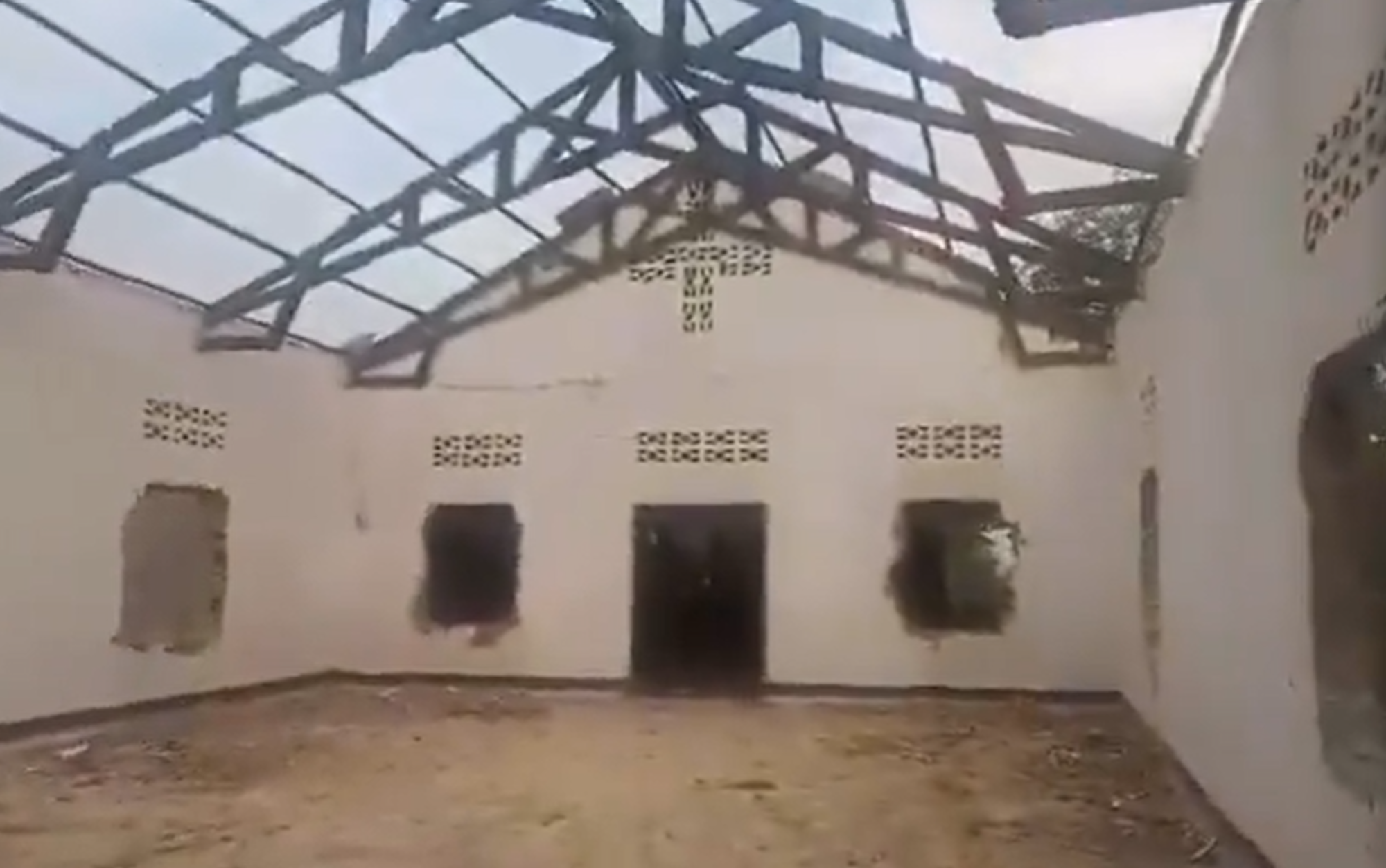
Still from footage showing damage to the church. Source: X

Share Article

Uvira, a city in South Kivu province, is a key transit hub for goods, people, and armed groups, connecting eastern Democratic Republic of the Congo (DRC) to neighbouring areas via road and lake transport. Its infrastructure gives it economic and political importance, while its location allows armed groups and the Forces Armées de la République Démocratique du Congo (FARDC) to project influence into surrounding areas, including nearby mountains often used as staging grounds for military operations.

Owing to its strategic position, Uvira has experienced prolonged instability as fighting between FARDC, their Wazalendo allies, M23 and other groups, has spread throughout the region since January 2025. Alongside these military developments, tensions involving the Banyamulenge community, a Congolese Tutsi minority whose identity has long been linked to regional conflict dynamics and perceptions of cross-border affiliation, have intensified.

Escalating tensions amid shifting frontlines

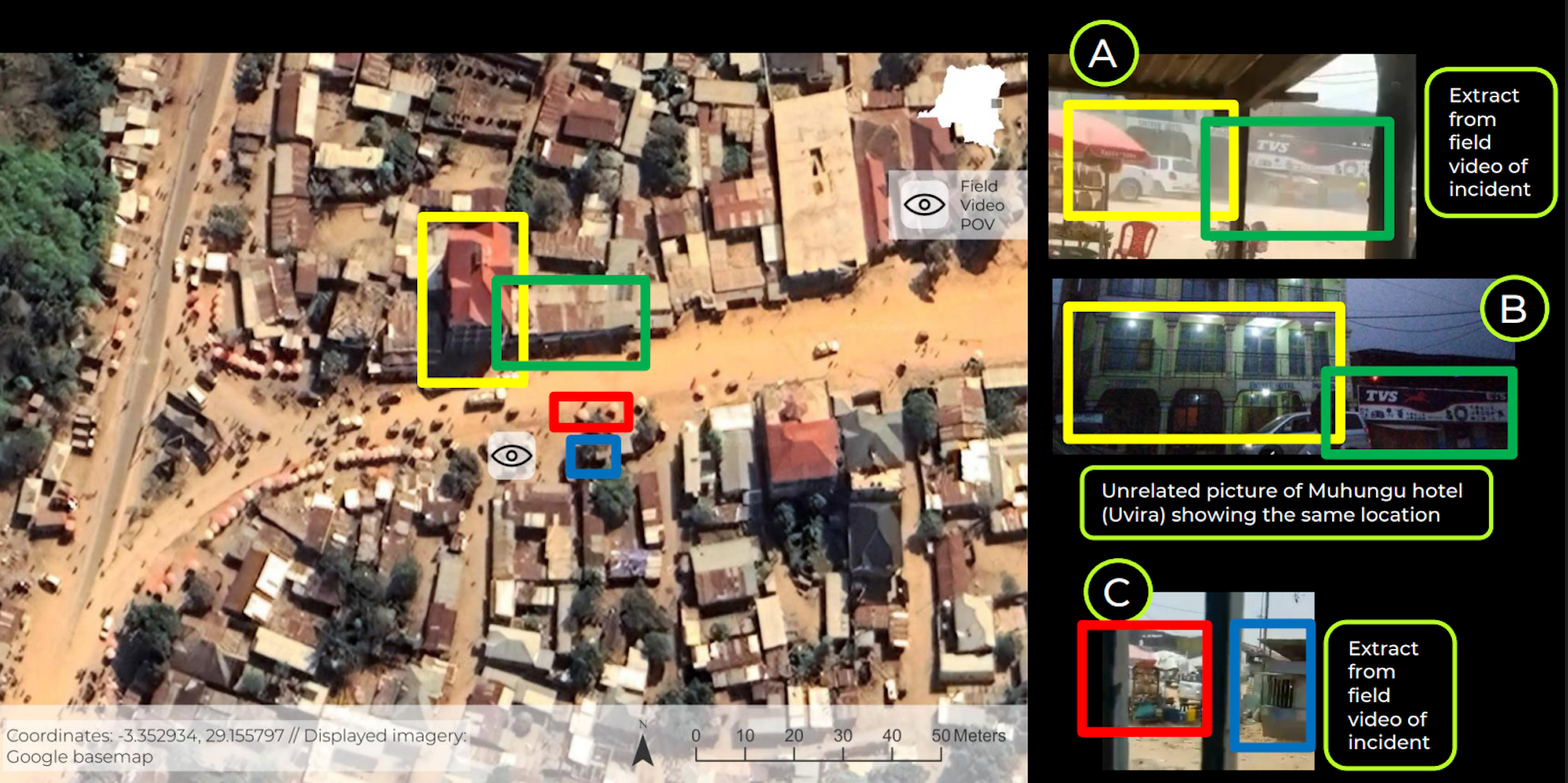
As clashes have moved closer to Uvira, friction between FARDC soldiers and Wazalendo fighters inside the city has grown. On 25 August 2025, local reporting indicated that a FARDC soldier was shot and killed by Wazalendo fighters while escorting a Banyamulenge funeral convoy. CIR geolocated and verified videos showing the convoy being attacked as it crossed Uvira [-3.381679, 29.142449]. While the full circumstances of the shooting remain unclear, the incident highlights probable ethnic targeting of members of the Banyamulenge by Wazalendo actors operating in the area.
Protests and competing narratives

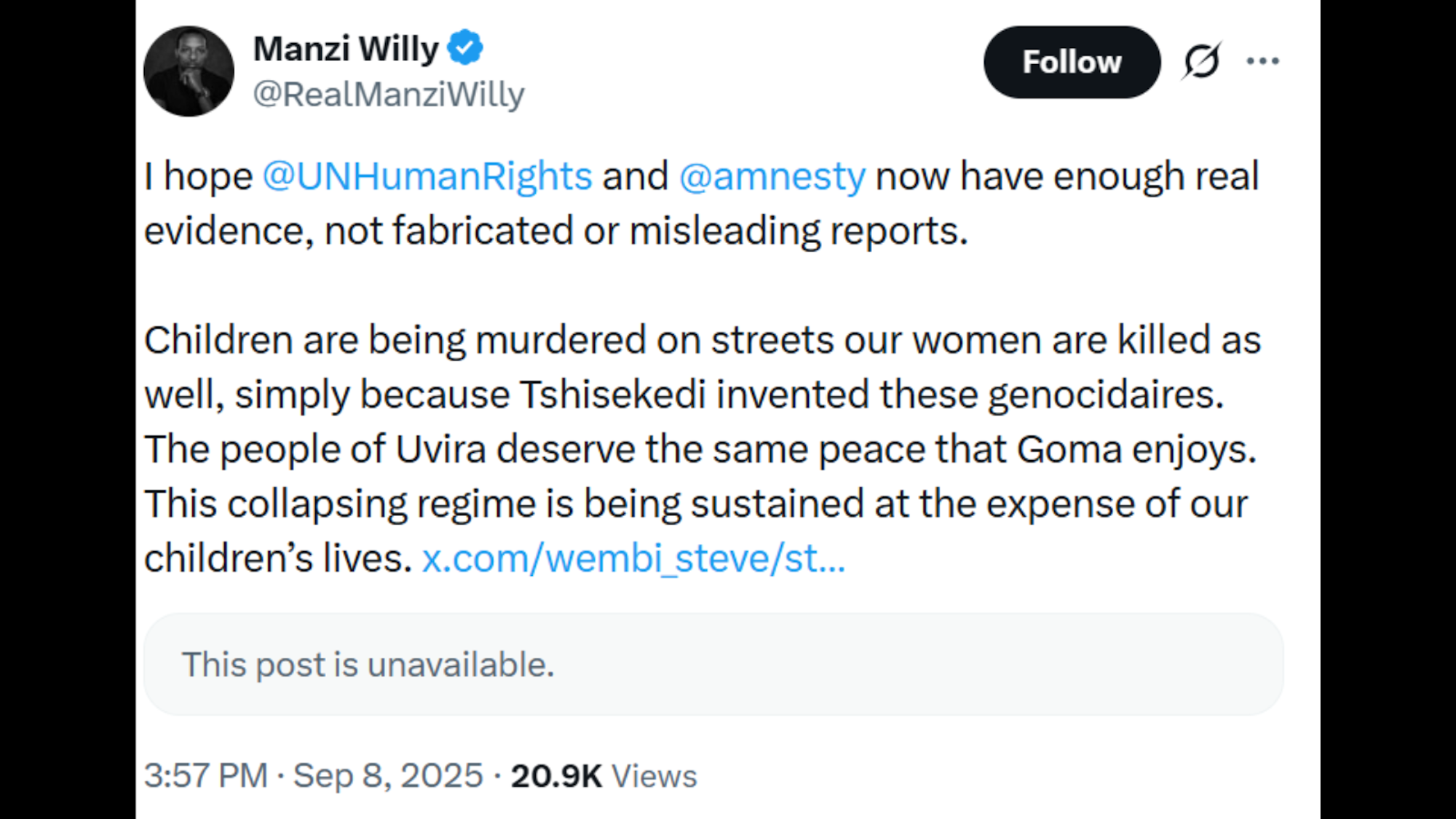
Unrest escalated further in September 2025 as demonstrations and clashes erupted in Uvira over General Gasita, a FARDC officer from the Banyamulenge community who was accused by critics of collaborating with M23 and preparing the ground for the group’s arrival. CIR analysed online narratives surrounding the protests and identified sharply divided reactions.

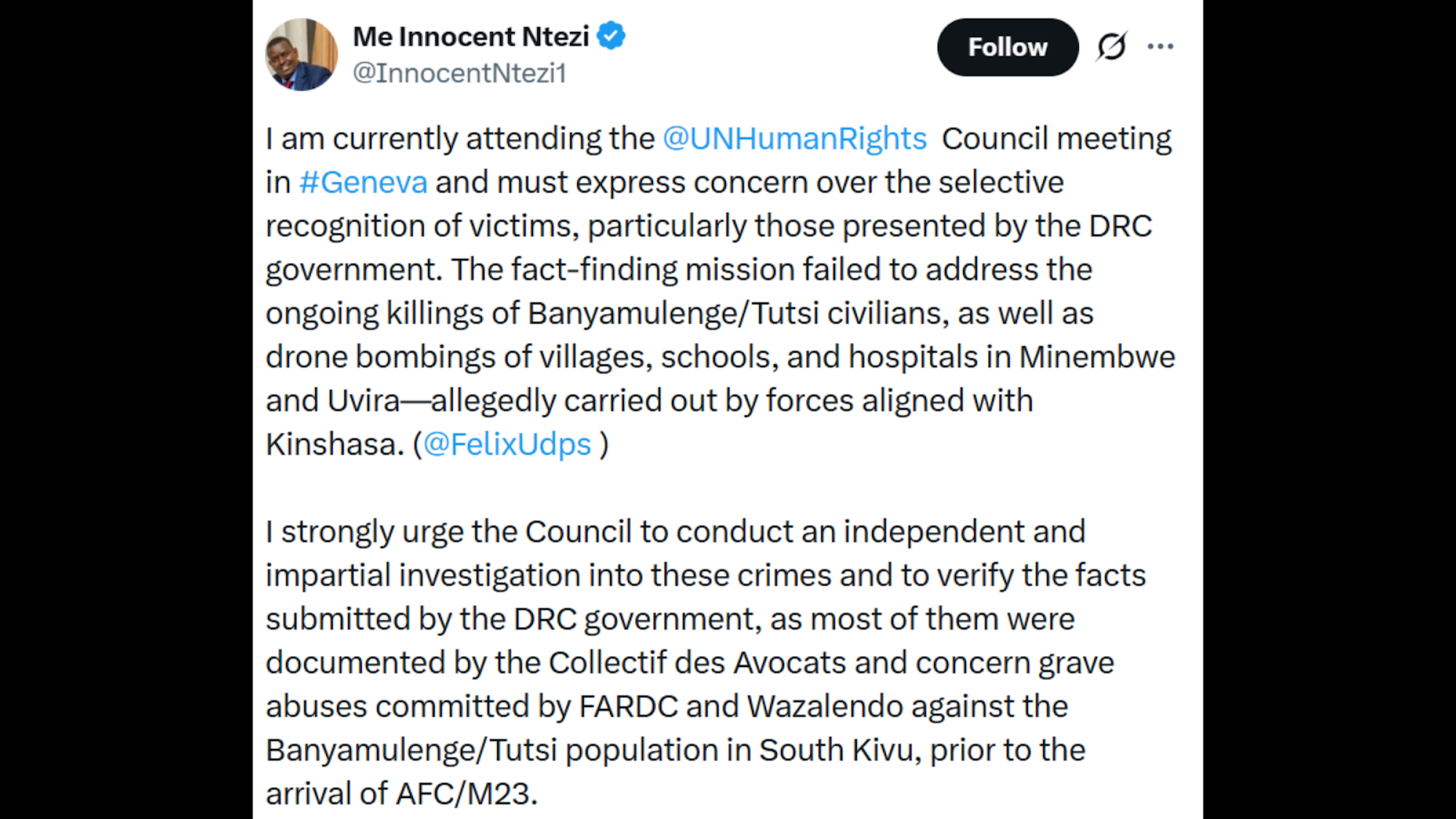
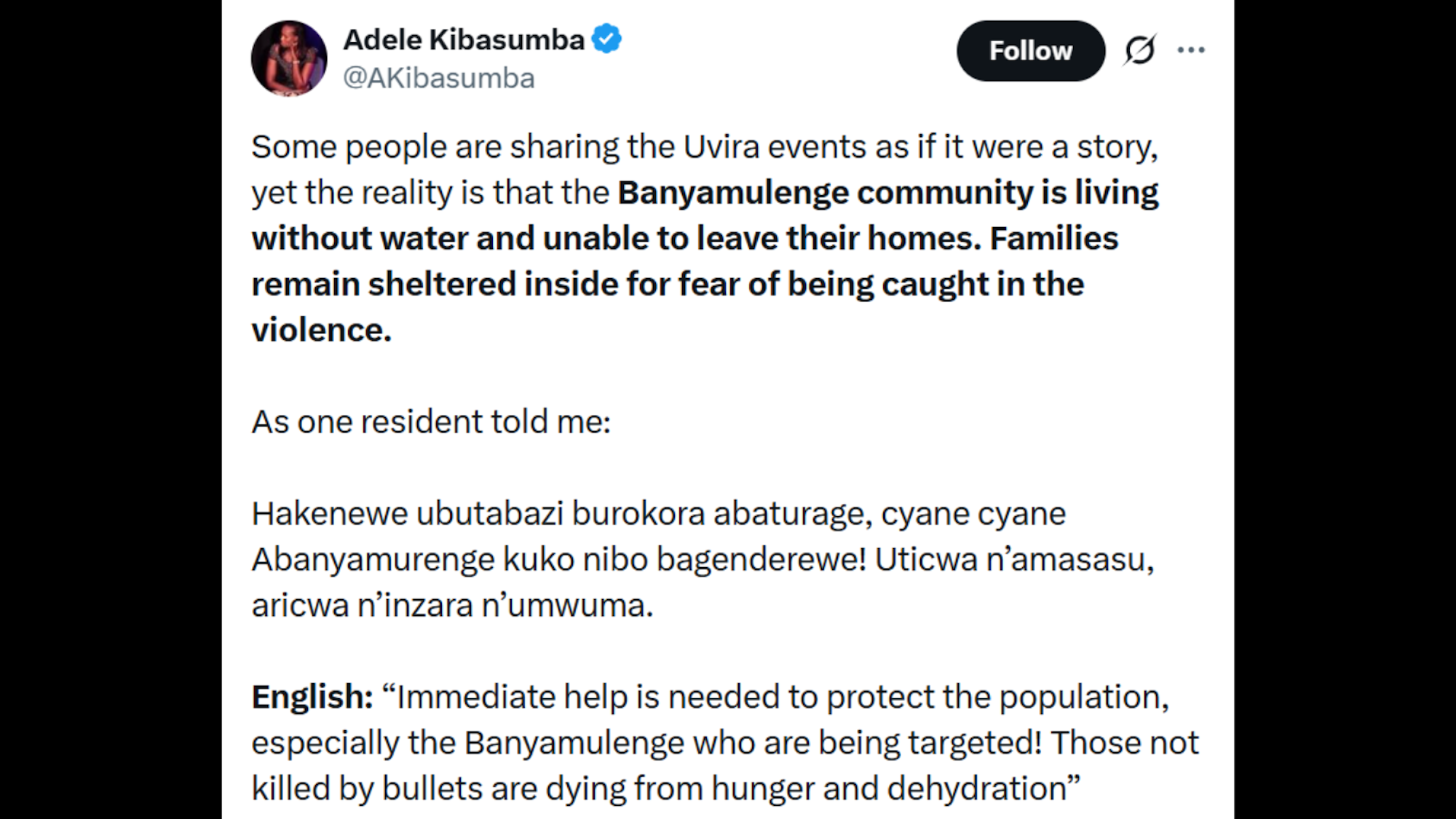
Accounts aligned with M23 condemned alleged abuses against Banyamulenge civilians and criticised unequal international attention. Posts expressed support for the community, emphasising claims of discrimination and limited international scrutiny.

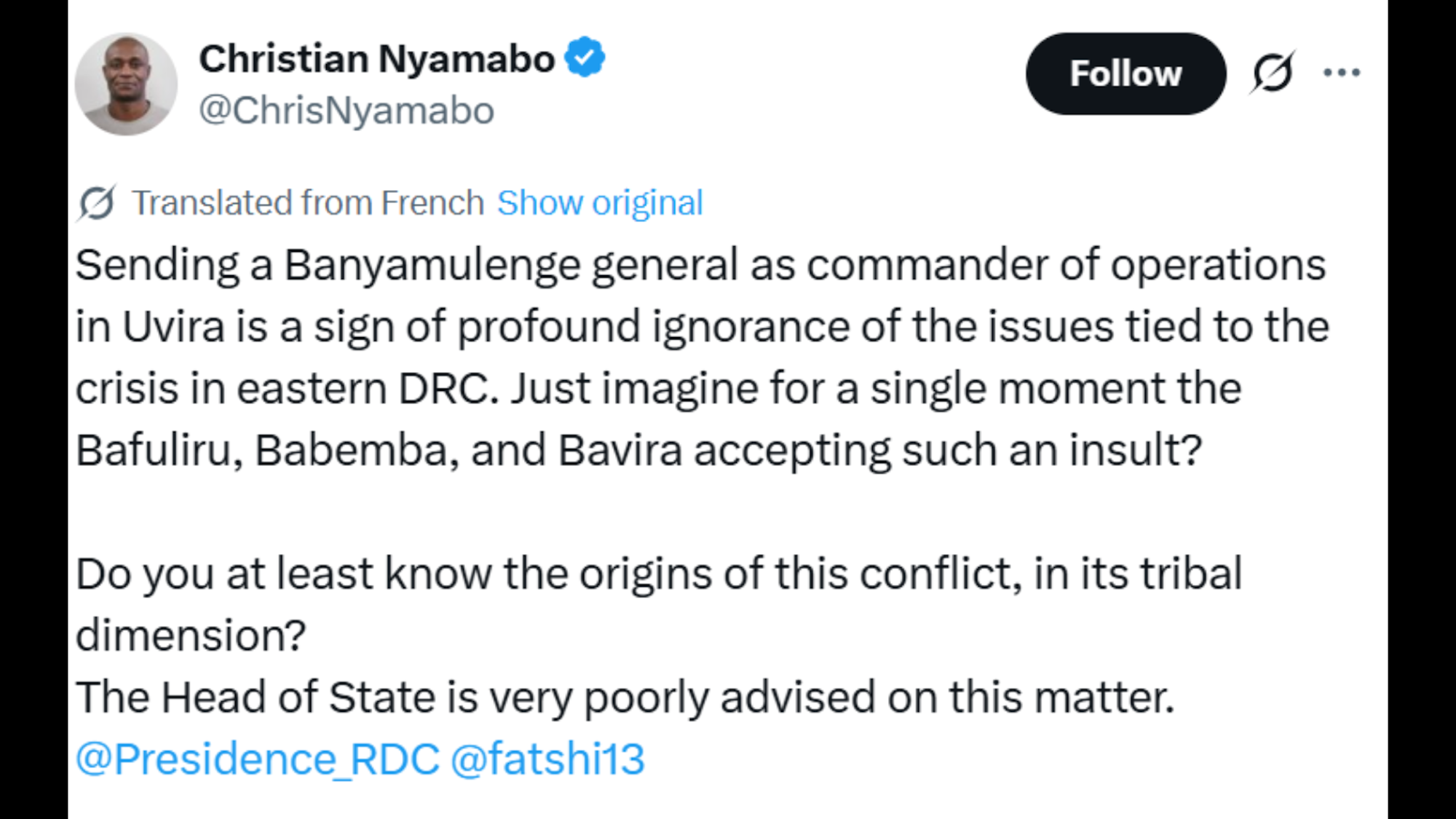
Other posts criticised the government for deploying a Banyamulenge general to Uvira, highlighting a perceived disconnect between Kinshasa and armed actors in the eastern DRC. Together, these diverging narratives show how ethnic identity and military developments have shaped public discourse around Uvira.

Targeting of Banyamulenge sites and mass displacement

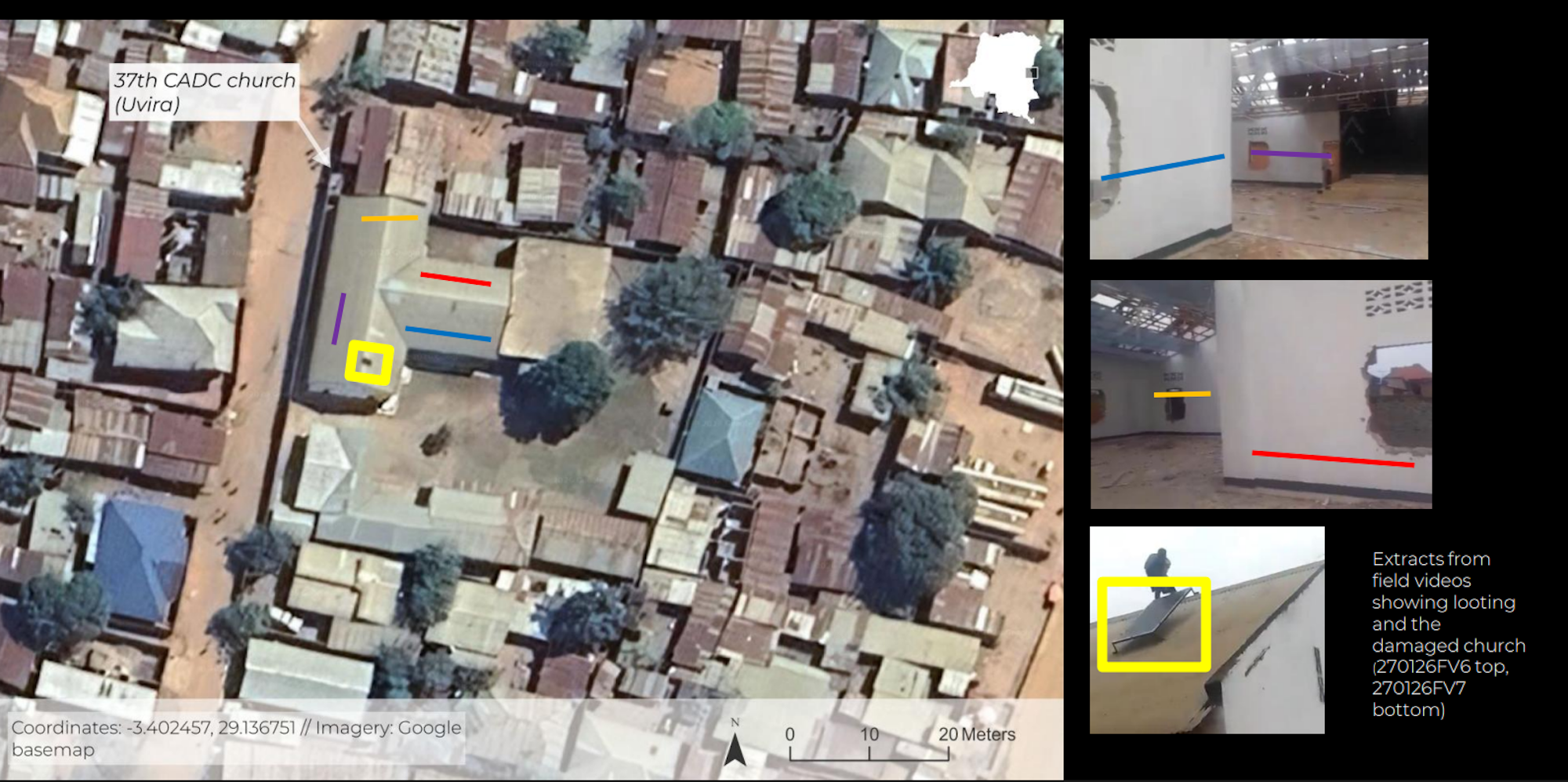
Following M23’s reported withdrawal from Uvira in mid December 2025, CIR verified further incidents indicating the targeting of Banyamulenge-associated sites, including the looting and destruction of the 37th CADC church. Videos analysed by CIR show individuals removing objects and damaging the church [-3.402397, 29.136681], which is reported to serve a predominantly Banyamulenge congregation and previously functioned as a transit centre for people displaced by Mai-Mai violence in 2019. While the site’s targeting indicates possible disproportionate impact on Banyamulenge infrastructure, CIR could not determine the identities or motives of those involved.

Twirwaneho press statement claimed that approximately 70% of houses, churches and offices affiliated with members of the Banyamulenge community were damaged or looted after M23’s withdrawal from Uvira. A significant number of Banyamulenge residents left Uvira during this period, many reportedly travelling to Kamanyola, as indicated by footage verified by CIR. 

Accounts differ on the reasons for these departures. A Twirwaneho communiqué states that residents fled after attacks against Banyamulenge travellers moving toward nearby mountainous areas. Pro-FARDC sources, however, claimed that M23 compelled Banyamulenge civilians to withdraw alongside them. Sources cited by Human Rights Watch reported that some individuals were warned they should leave with M23 or risk reprisals from Wazalendo fighters. CIR could not independently verify these competing accounts, and reports of injuries or possible killings during this period remain unconfirmed.

Videos circulating online in the days following M23’s withdrawal show FARDC personnel escorting groups identified as Banyamulenge civilians within Uvira, including footage geolocated to [-3.383305, 29.141805]. These operations suggest authorities perceived a degree of risk for remaining residents, although FARDC later stated that no Banyamulenge were harmed after the withdrawal. Pro-M23 sources alleged that houses belonging to Banyamulenge residents were subsequently occupied by Wazalendo fighters, a claim CIR was unable to independently verify.

Anti-MONUSCO narratives circulate online

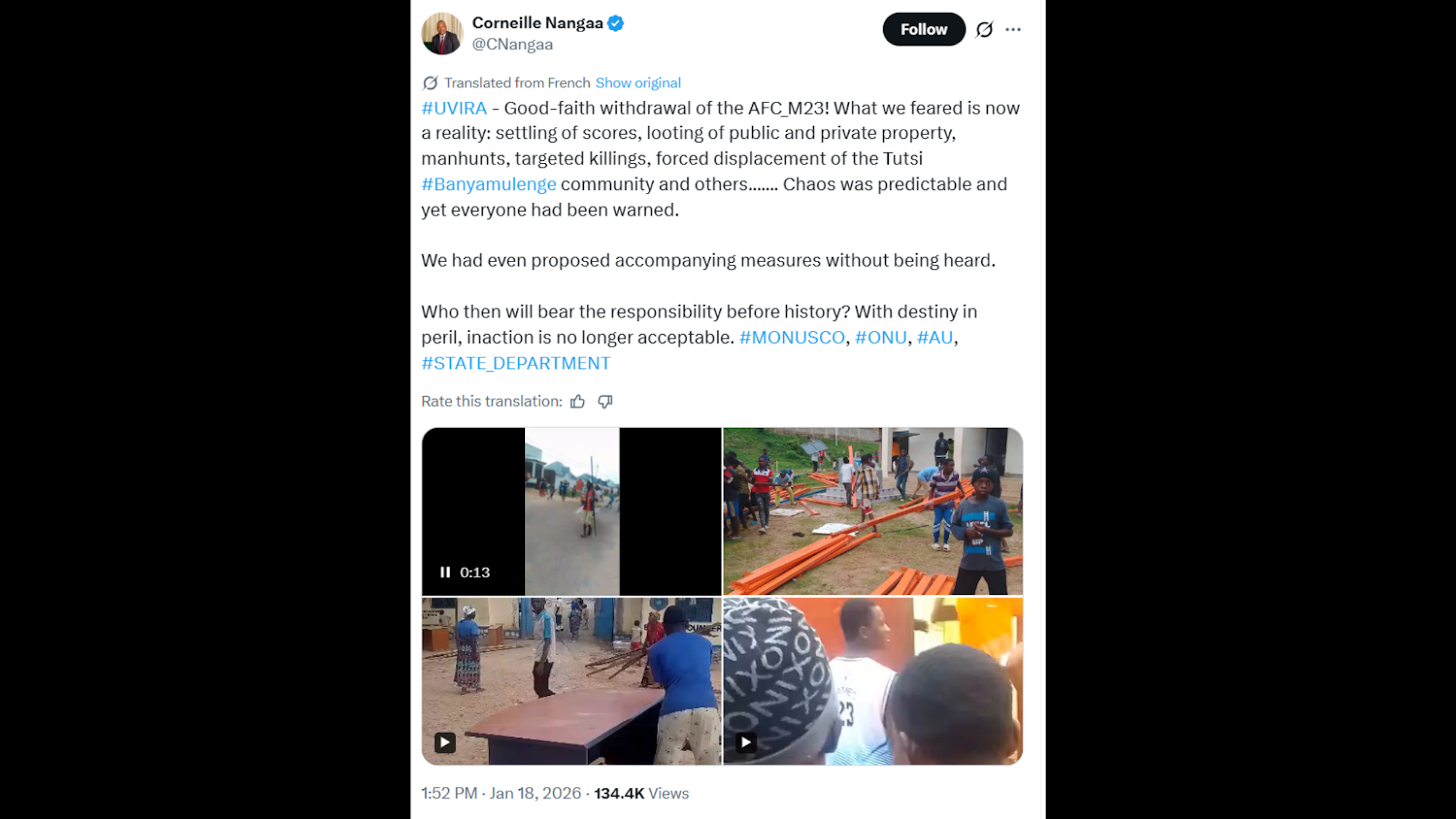
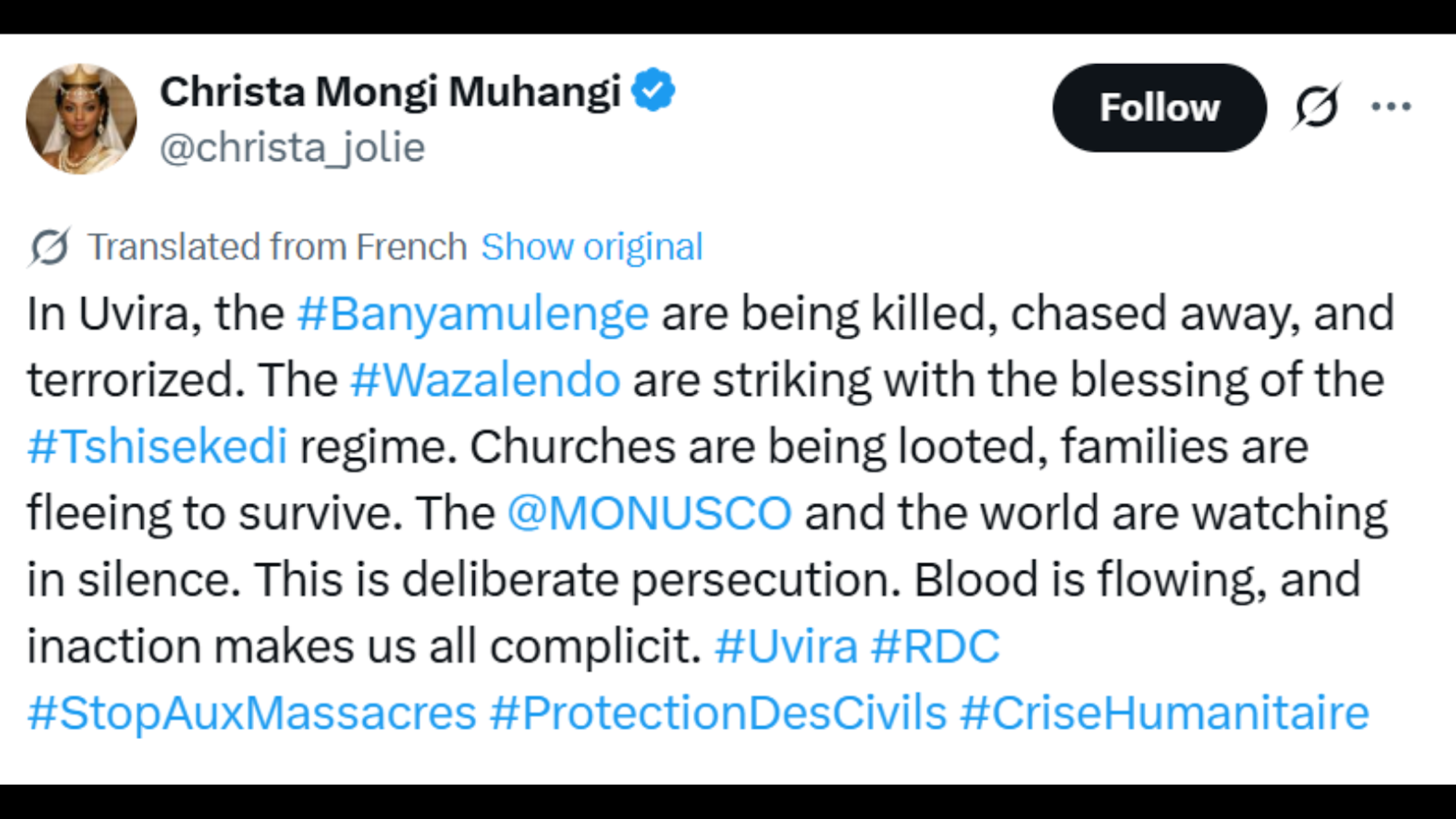
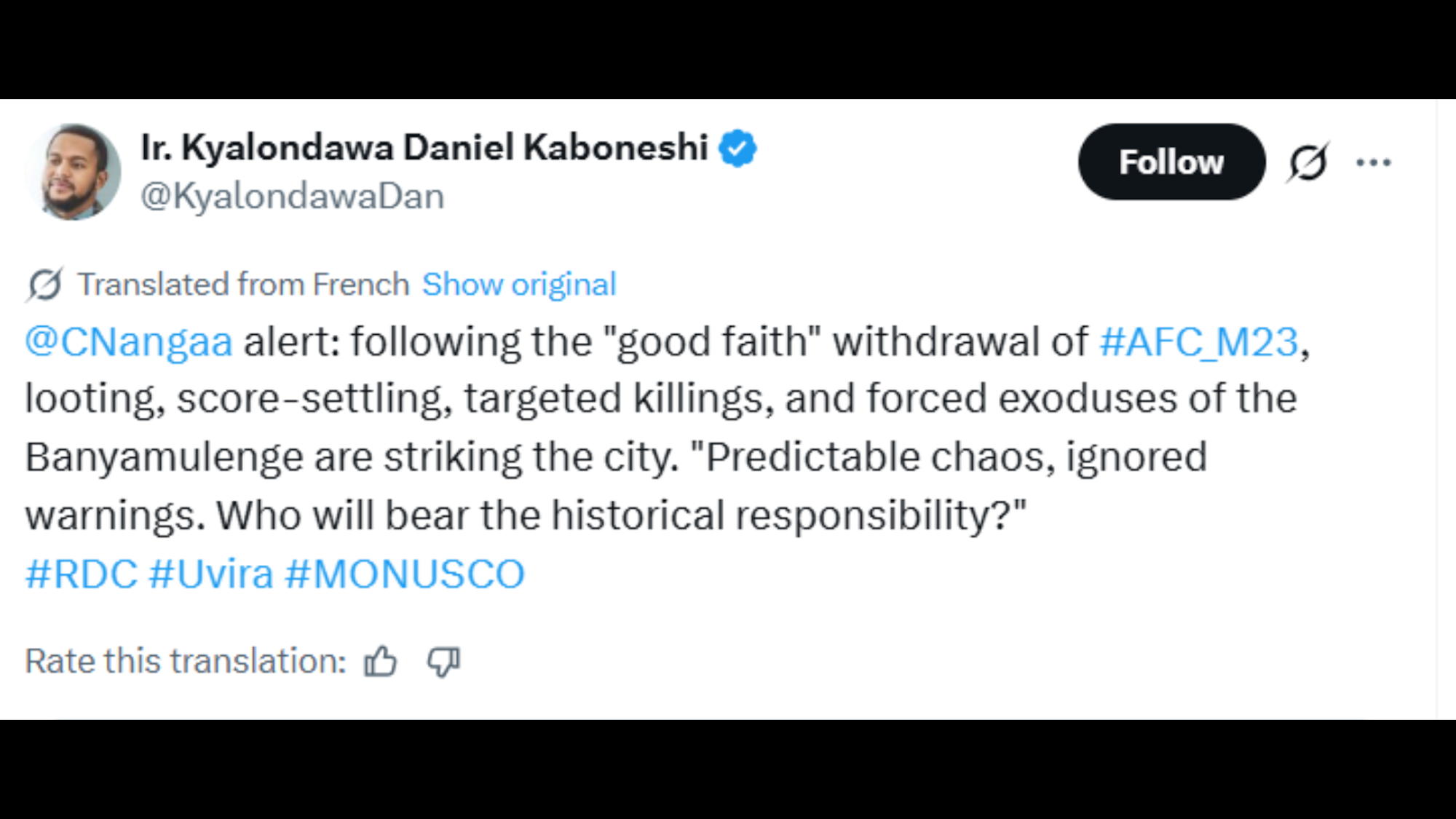
In the wake of M23’s withdrawal from Uvira, allegations of targeting against the Banyamulenge circulated widely on social media. Footage claiming to show looted homes and churches prompted criticism of FARDC, Wazalendo groups, and the UN peacekeeping mission MONUSCO. On 18 January 2026, AFC/M23 representative Corneille Nangaa posted videos on X alleging abuses against Banyamulenge civilians and criticised MONUSCO’s response. Following this post, CIR observed a sharp increase in online criticism of the mission.

Monitoring posts published on X using a French-language keyword dataset, CIR identified 1,249 posts criticising MONUSCO in connection with alleged targeting of Banyamulenge civilians, including a peak of 515 posts on the day of the reported withdrawal. Collectively, these posts were viewed approximately 3.39 million times. Frequently used terms referenced “crimes”, “insecurity”, “international responsibility”, and “humanitarian emergency”. Accounts posting criticism were spread across multiple countries, including the DRC, Rwanda, Switzerland, the United States, and Canada. Overall, CIR verified a significant rise in negative commentary toward MONUSCO linked to allegations of Banyamulenge targeting.

While the precise nature of these attacks are difficult to ascertain in a convoluted and constantly evolving online information sphere, incidents verified by CIR and social media reactions indicate that M23’s withdrawal from Uvira created the conditions for a spike in ethnic violence against the Banyamulenge. Contradictory claims from both sides indicate at the very least that civilians in the Uvira area were at risk as armed groups emptied the vacuum left behind by M23. While the precise facts remain uncertain, what is clear is that historical grievances and online narratives at once drive and obfuscate the dynamics of the ongoing conflict in eastern DRC.

Latest reports, direct to your inbox

Be the first to know when we release new reports - subscribe below for instant notifications.

Share Article