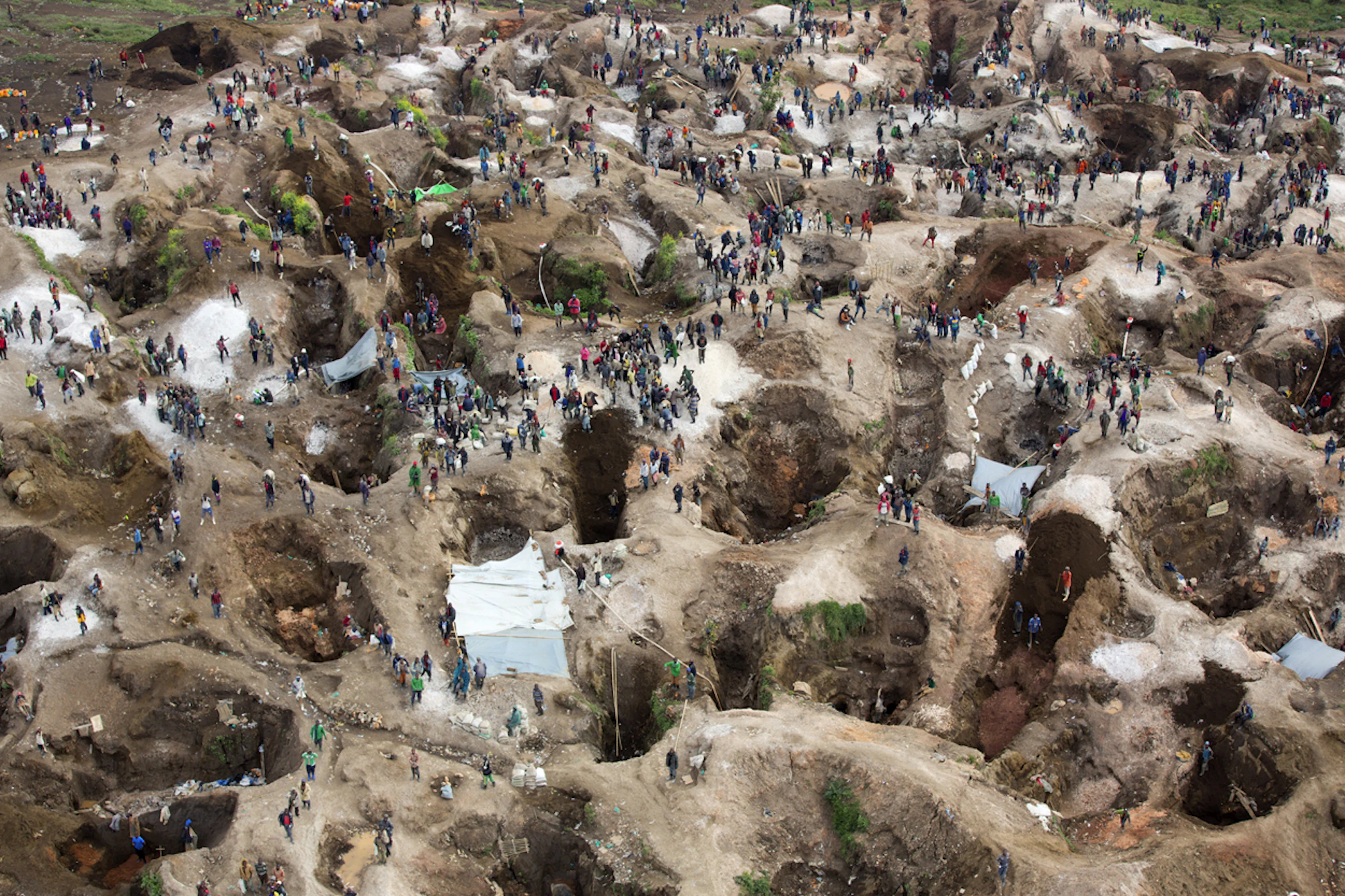
On 3 March, heavy rains induced a landslide at Rubaya, the site of the DRC’s largest coltan mine, reportedly killing 200 people, including 70 children, according to official government sources. M23, who have controlled Rubaya since April 2024, countered government estimates and claimed only six had died. The recent disaster follows another landslide at Rubaya in January that claimed 226 lives.
Conditions at Rubaya and the thousands upon thousands of mineral mines in eastern DRC have long been notorious: child exploitation is rife and the mines themselves physically precarious. Though the minerals produced by these mines are indispensable to multinationals like Apple, Tesla and Samsung, the artisanal miners who extract them see little material benefit.
A 15-year-old survivor of the 3 March landslide who lost his father in another in 2022 told Al Jazeera he now had “no choice” but to return to a job where he earns just $4 a day. Dangerous, exploitative and highly lucrative, the mineral trade in eastern DRC reveals that the interplay between violent conflict and the region’s abundant natural resources is never straightforward.
What is coltan and how does it relate to the ongoing conflict?
Essential to the manufacture of electronic components found in smartphones, laptops and electric car batteries, coltan, a highly heat resistant metal, is also used by defence and aviation industries in the production of turbine blades, missiles and GPS systems. Deposits at Rubaya account for 15% of global supply, and along with gold, tin and tungsten, coltan is one of the four so-called ‘conflict minerals’, all found in abundance beneath the soils and hillsides of eastern DRC.
The DRC’s rich natural resources have long been closely linked to cycles of violence that have wracked the country since Belgium’s colonial occupation, itself reliant on the violent extraction of commodities like rubber, palm oil and ivory. In the past 20 years, legislation has attempted to curb incentives for armed groups’ exploitation of ‘conflict minerals’ by mandating various forms of responsible sourcing. Despite this, the mineral trade continues to be a boon for armed groups and government forces.
This reliance tends to be misinterpreted as a primary cause of conflict in the DRC, when in fact control of natural resources is just one among a whole host of important factors (corruption, land disputes, interstate tensions, political distrust and ethnic divisions) driving armed struggle in the region. According to a report by the International Peace Information Service (IPIS), natural resources can be both a cause of local disputes, where stakeholders may rely on local armed proxies to protect their claims to land or resources, and a means for armed groups (not excluding government forces) to profit or survive economically, whether through cross-border trade, smuggling or rent-seeking behaviour.
M23’s capture of Goma, expansion of mining activities and illicit smuggling networks
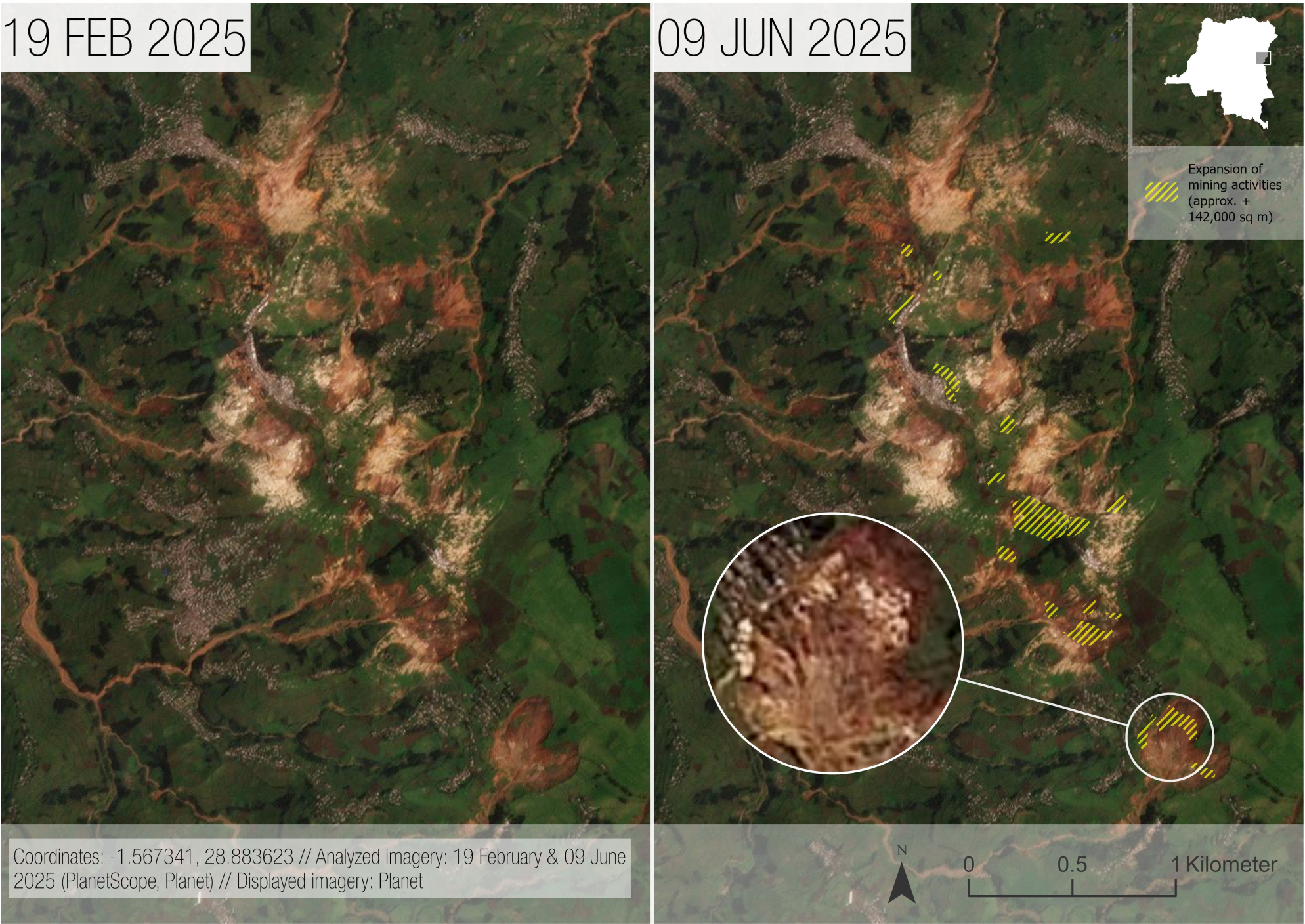
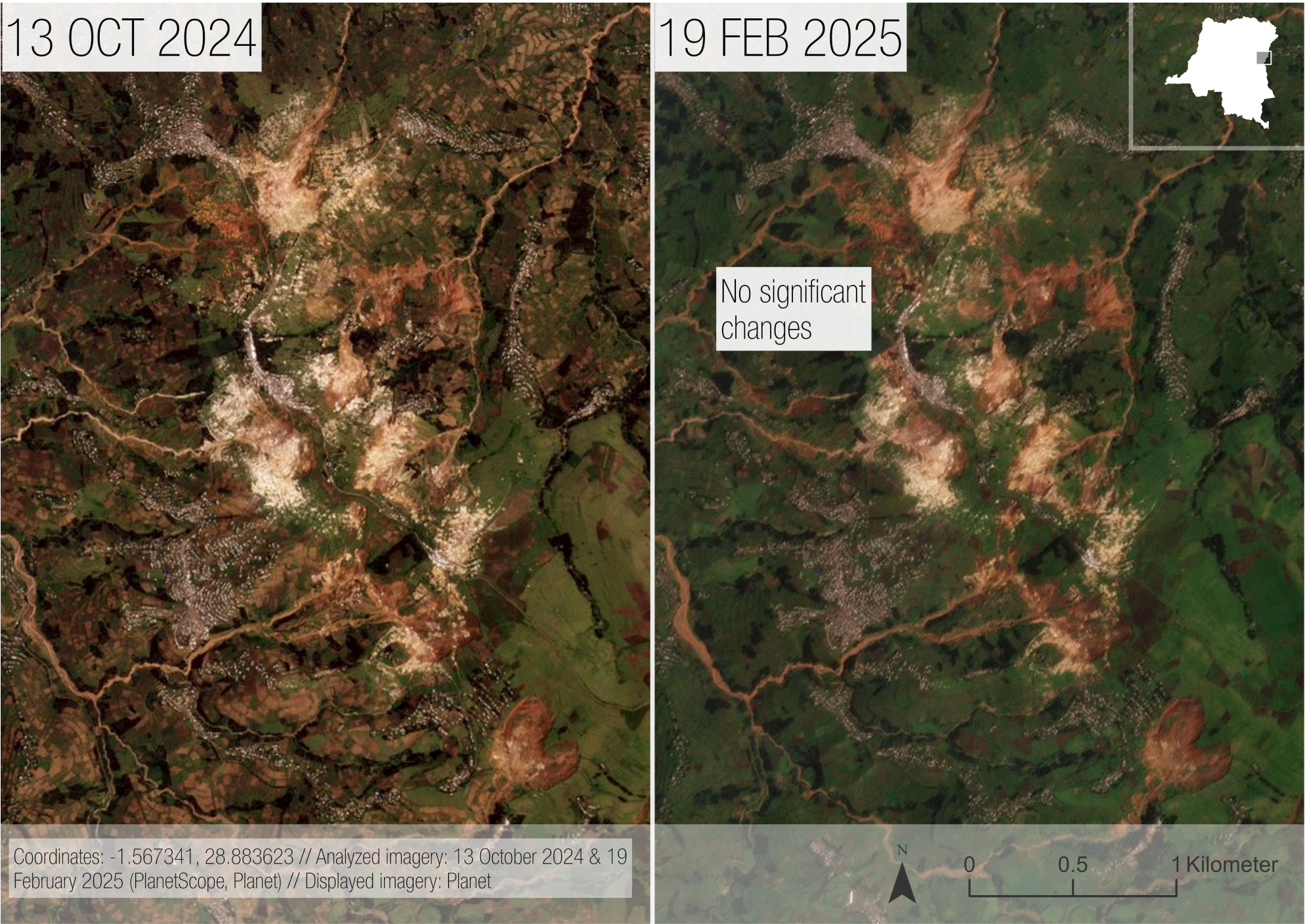
At Rubaya there appears to have been an increase in mining activity following M23’s capture of Goma, just 70 km away, in late January 2025. Satellite imagery analysed by CIR indicates approximately 142,000 m2 of new excavations made between February and June 2025, whereas a comparison of imagery of the site from October 2024 and February 2025 shows significantly less.