Scam compounds, where people are forced to conduct online fraud targeting victims globally, have emerged as one of the most significant human rights crises in Southeast Asia. Myanmar Witness has been monitoring the compounds since the 2021 military coup, identifying more than 137 suspected sites across Myanmar and the wider region through satellite imagery analysis, victim testimonies, missing persons reports, and incident records.

WARNING: This article analyses sensitive topics, including human trafficking and forced labour, which some readers may find distressing. Where possible, public references have been cited to support key findings; however, many sources have been withheld or redacted due to privacy and safety concerns. All personal details have been redacted from this investigation.  


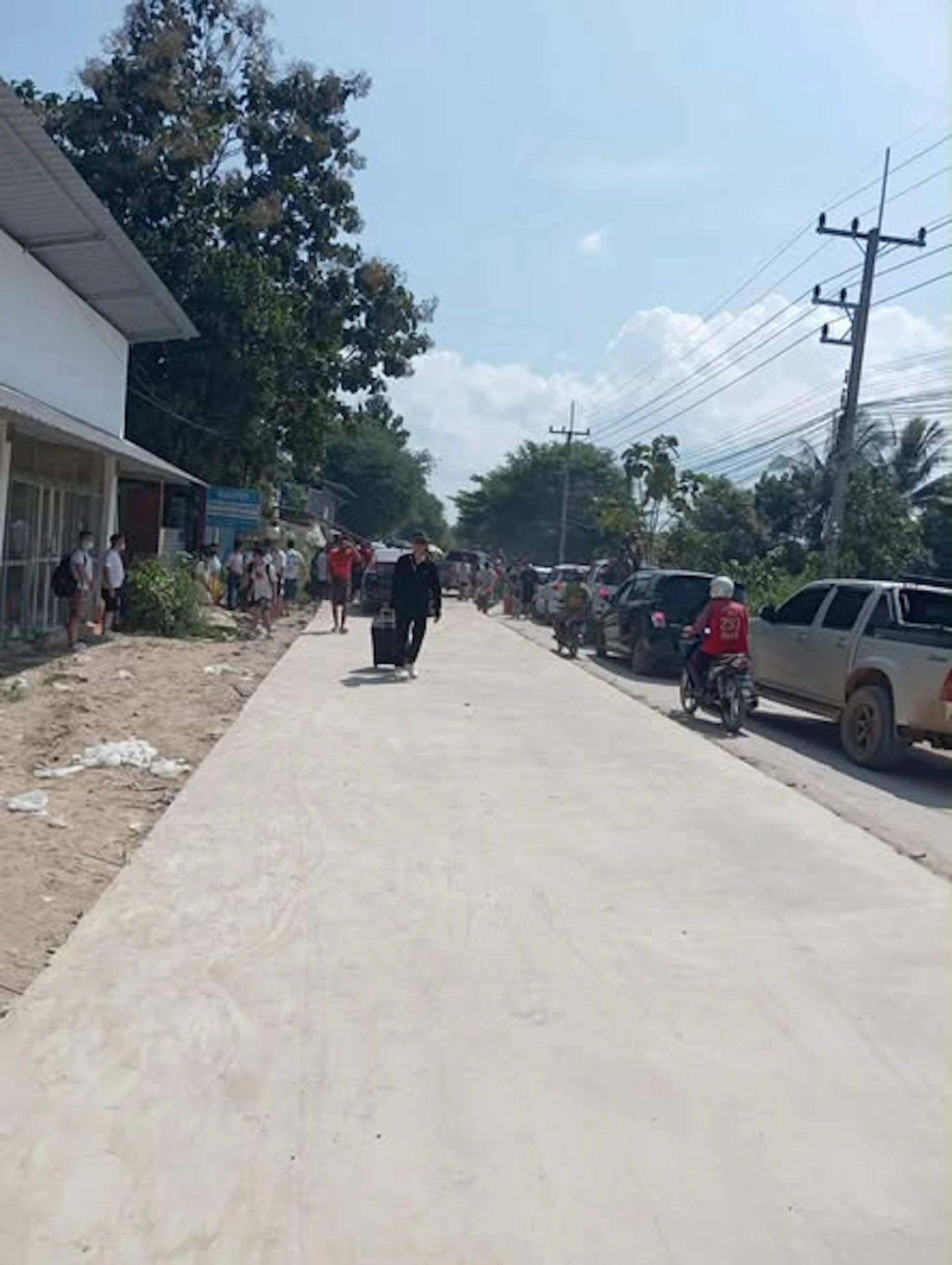
A line of people walk along a road, luggage in hand. Some appear to be carrying bags; others pull wheeled cases. They move in a loose group, on foot, away from the compound. There are no signs of distress. The transfer looks orderly.

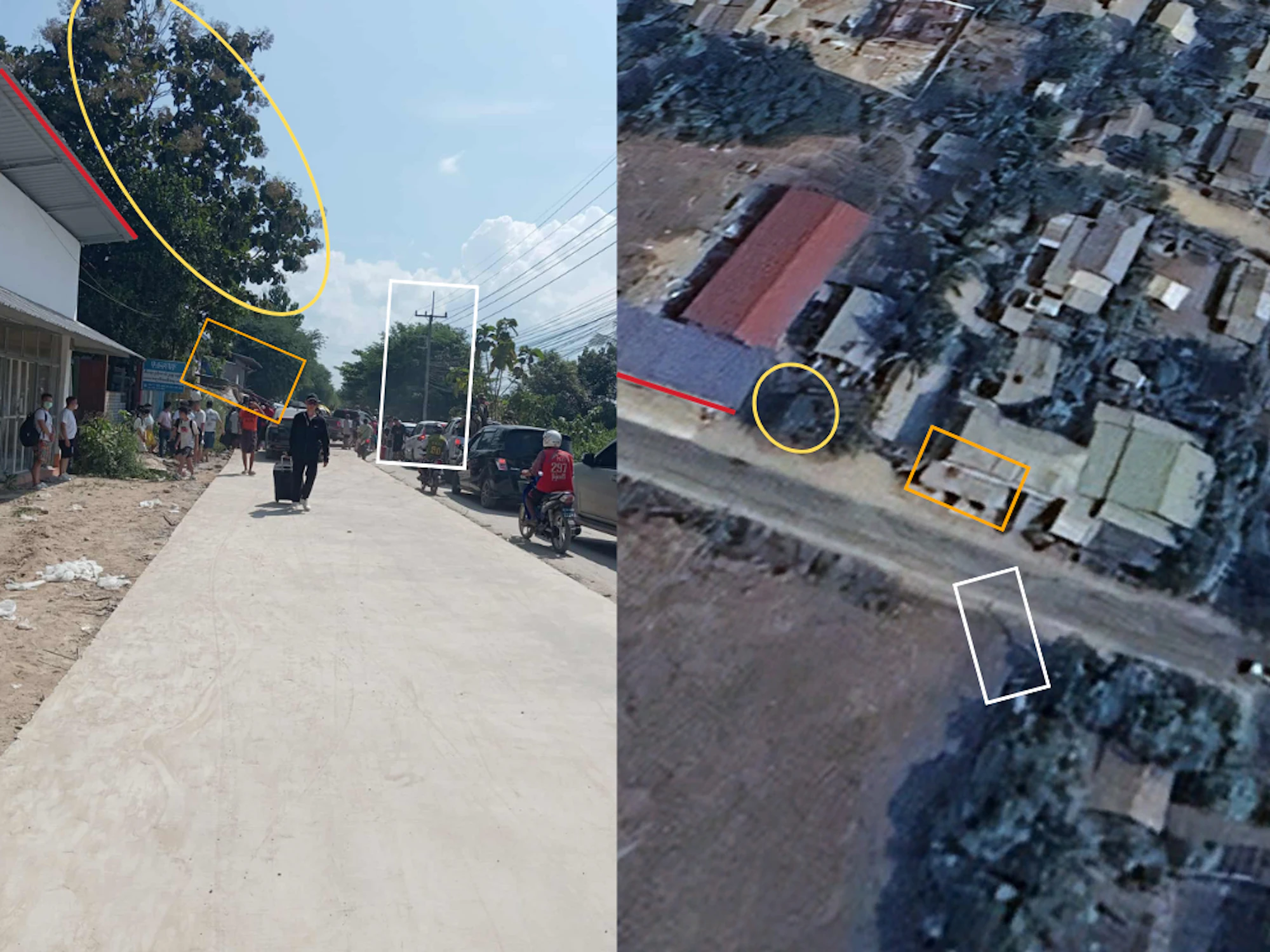
This scene was filmed on 23 October 2025, the same day the Myanmar military announced clearance operations at KK Park, one of the largest and most documented scam compounds in Kayin State. Myanmar Witness geolocated the footage to a point roughly three kilometres from the park. According to AFP reporting, several hundred people had been relocated to a nearby site that day, likely Huanya Park. The clearance operation had been widely publicised in advance, and according to victims’ accounts, the compound leaders had received warning before it began.

This is a pattern that recurs across Myanmar’s scam-compound economy: a publicised crackdown, a temporary dispersal, and operations continuing elsewhere. Since the 2021 military coup, Myanmar Witness has identified more than 137 suspected scam-related sites across Myanmar and the wider Southeast Asian region. Around half show indicators of forced labour, human trafficking, torture, or other forms of abuse. This article draws on this research to explain what these compounds are, where they are located, how people are trafficked into them, and what the evidence shows about the conditions they face once they arrive.

What are scam compounds?

Scam compounds are facilities ranging from vast fortified parks to small concealed rural sites where people are held, often against their will, and forced to conduct online fraud. Operations typically involve “pig butchering” scams, a form of long-term investment fraud in which targets are cultivated over weeks or months before being persuaded to hand over large sums, as well as romance fraud and cryptocurrency deception, conducted through carefully scripted interactions with victims around the world.

What distinguishes these sites from ordinary workplaces is not just their criminal purpose, but their infrastructure of control: perimeter walls and razor wire, CCTV surveillance, armed guards, and heavily restricted movement. Workers, many of whom were deceived into being there, report having passports confiscated on arrival, being assigned monthly fraud quotas, and facing punishment, sometimes severe, for failing to meet them.

The scam compound economy did not emerge from nowhere. Sites like Shwe Kokko in Kayin State trace back to a 2017 deal between Karen National Army leader Saw Chit Thu and a Chinese business partner. The 2021 coup created the conditions for rapid expansion: weakened governance, new armed group territorial control, and an influx of people made economically desperate by the crisis. Since then, Myanmar Witness has tracked consistent growth in the number of sites, even as authorities have moved against some of the most high-profile locations.

Border towns, weak governance, and armed groups

Scam sites cluster in areas where weak governance, armed group control, and cross-border access converge.
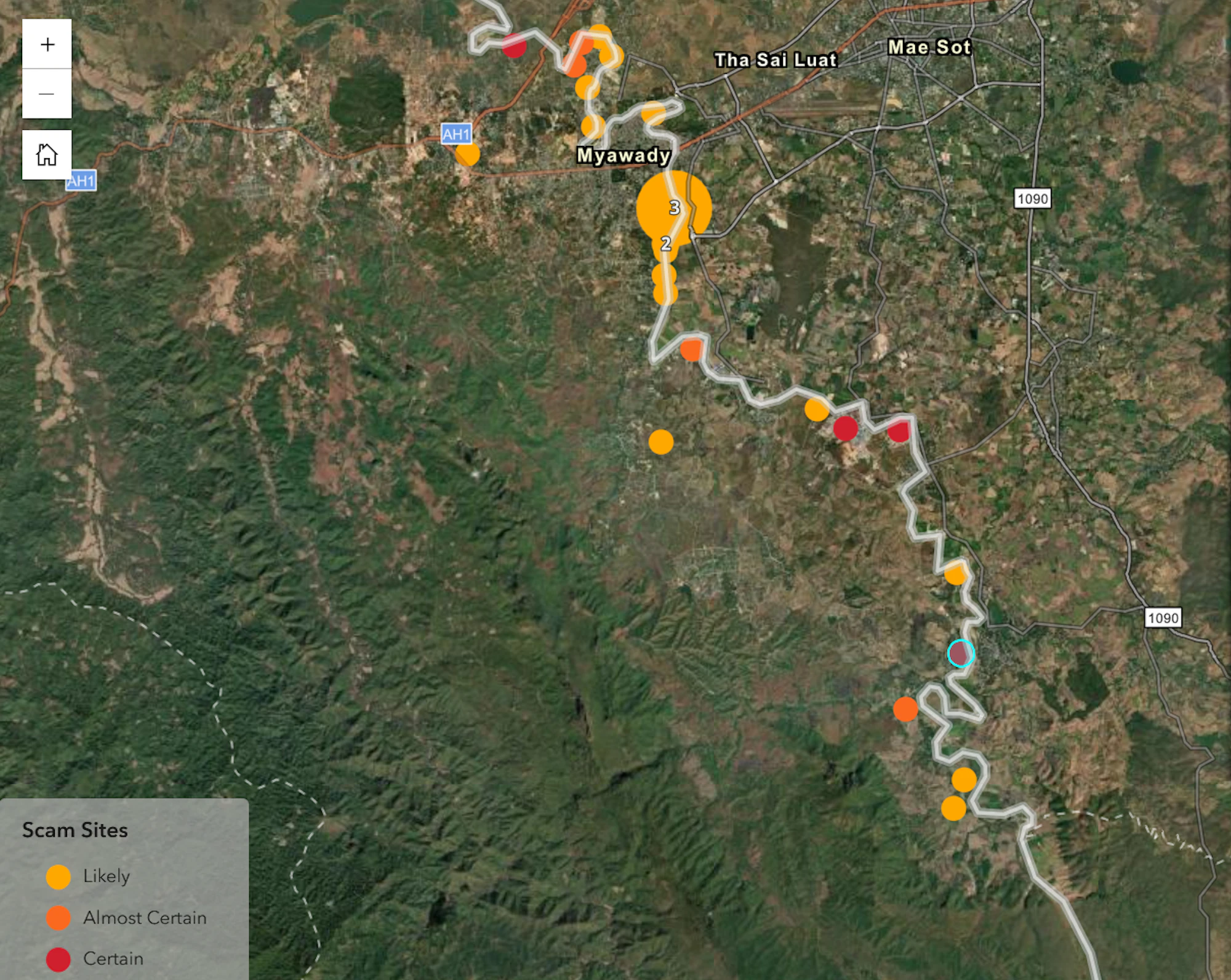
A snapshot of the interactive visual map Myanmar Witness has produced of scam compounds in Myanmar only. This map demonstrates the geographic clustering of scam compounds in Kayin and Shan States.

Within this, Myanmar Witness has mapped three primary concentrations.

The Myawaddy-Mae Sot Corridor (Kayin State) is the most heavily documented cluster, running along the Thai-Myanmar border. It is home to some of the most prominent compounds, including KK Park, Shwe Kokko, and Apollo Campus, and reflects historic trafficking routes. The area’s geography, bisected by the Moei River and historically used for cross-border trade, makes it well suited to the movement of people and goods. The Kayin State Border Guard Force (BGF) has dominated border security in the area and is implicated in enabling operations there.

Shan State (China border) hosts a significant cluster along Myanmar’s frontier with China, where family-based criminal networks and organised crime activity have historically underpinned cyberscam operations. 

Regional shift (to Cambodia and Myanmar) is now also becoming visible. Following military clearance operations in KK Park and Shwe Kokko in late 2025, recruitment and operations have been observed migrating toward Cambodia and more rural Myanmar locations, a pattern illustrating the ecosystem’s adaptability, though not yet included in Myanmar Witness’s public map.


Five types of compounds, one system of control

Scam compounds come in several forms. Based on satellite imagery and visual analysis, Myanmar Witness has identified five broad site types. Despite their differences, all share the same defining features: walls and perimeter fencing, restricted movement, surveillance infrastructure, and documented coercive control over the people inside. 

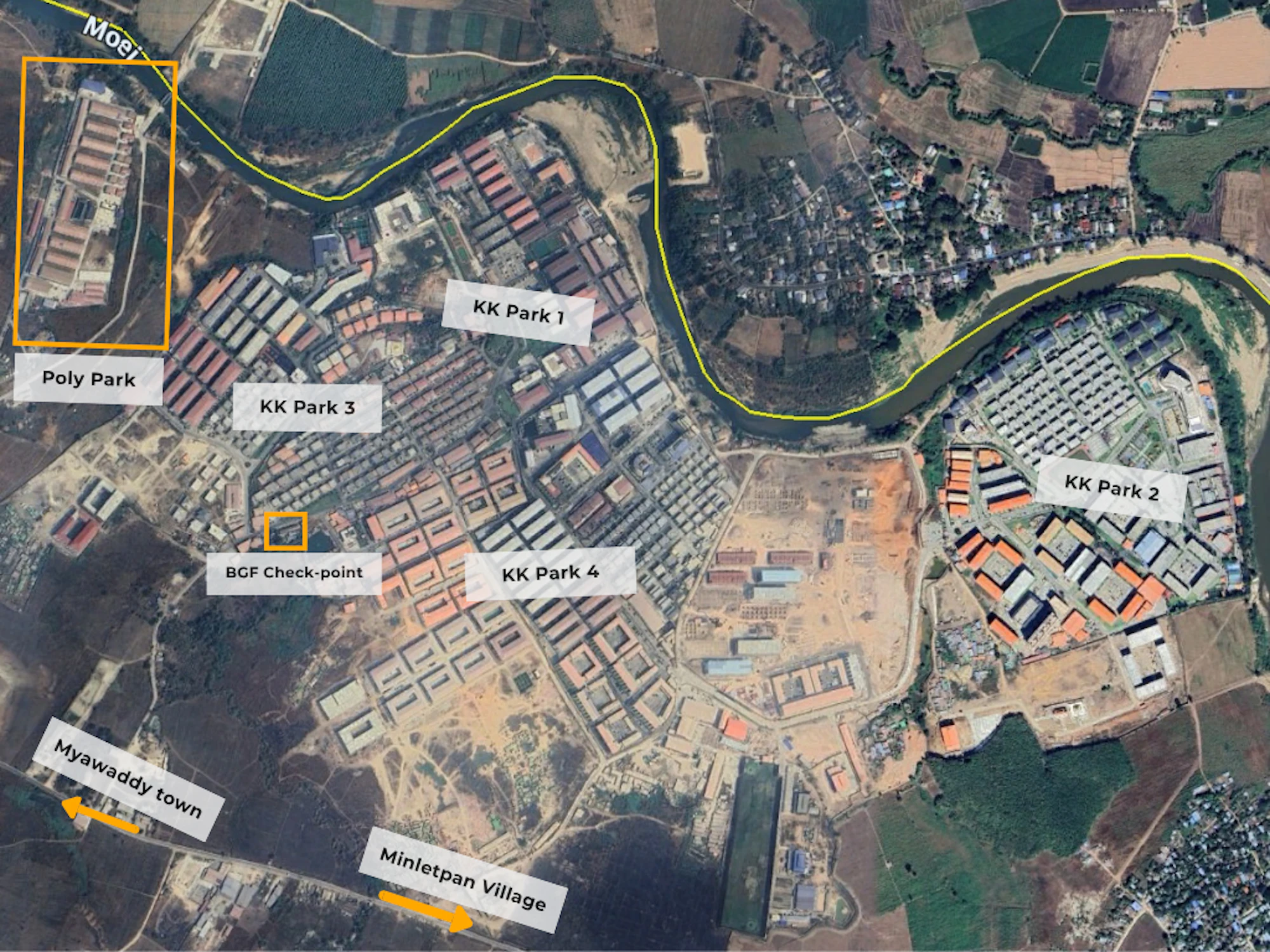
Fortified scam parks are the most recognisable: large self-contained compounds resembling gated industrial estates, with high perimeter walls, internal roads, dormitory blocks, CCTV, and controlled access points. KK Park is the archetype. In a February 2026 UN report, survivors described being held in multi-storey buildings enclosed by barbed wire-topped walls, guarded by uniformed armed personnel.

An image of KK Park [16.629936, 98.555437], an immense compound split into several developed sections, resembling self-contained towns, with visible walls and separations within the park. (Mapping created by Myanmar Witness, inspired by a map produced by Martin Nway Oo Swe via Facebook).

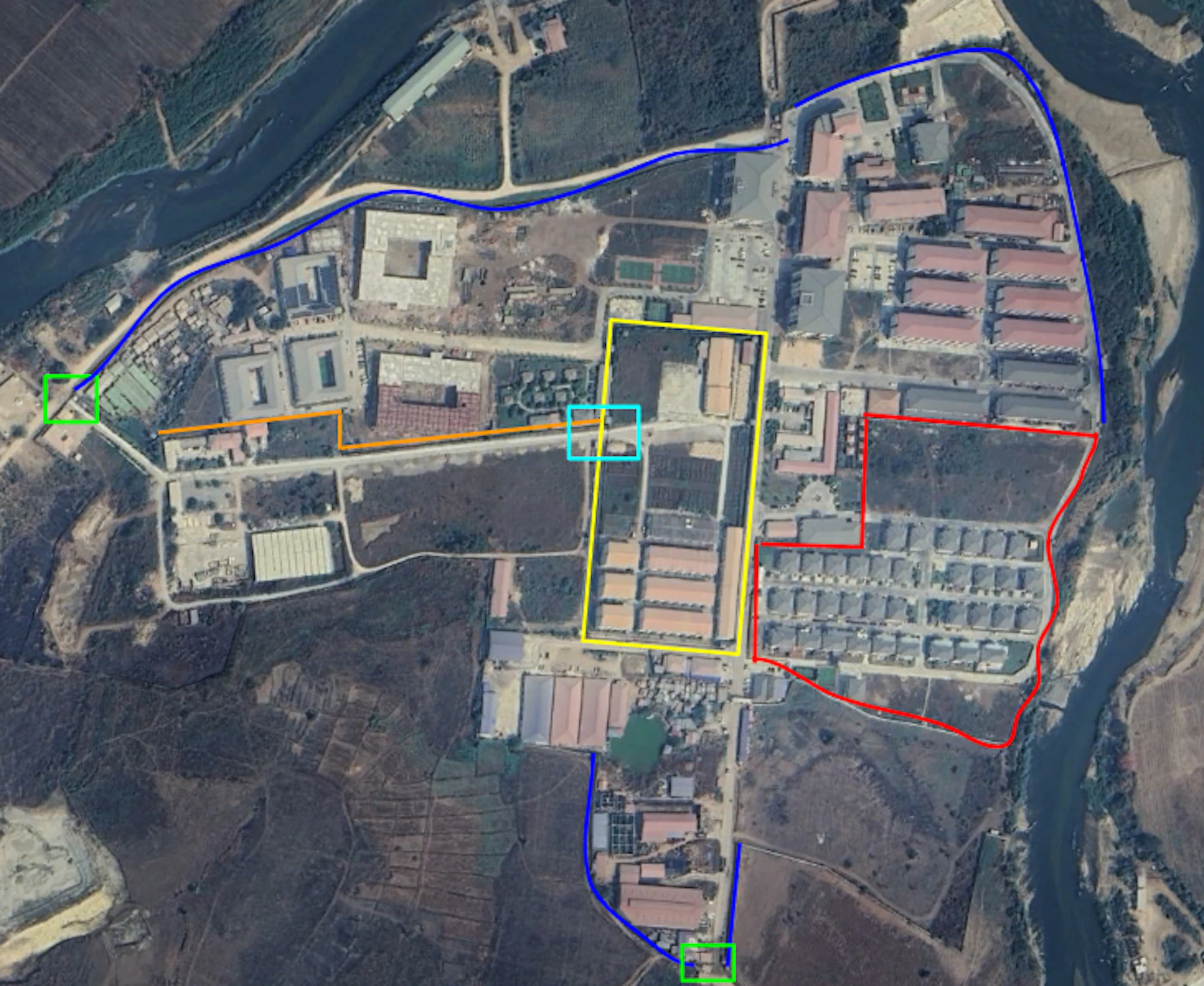
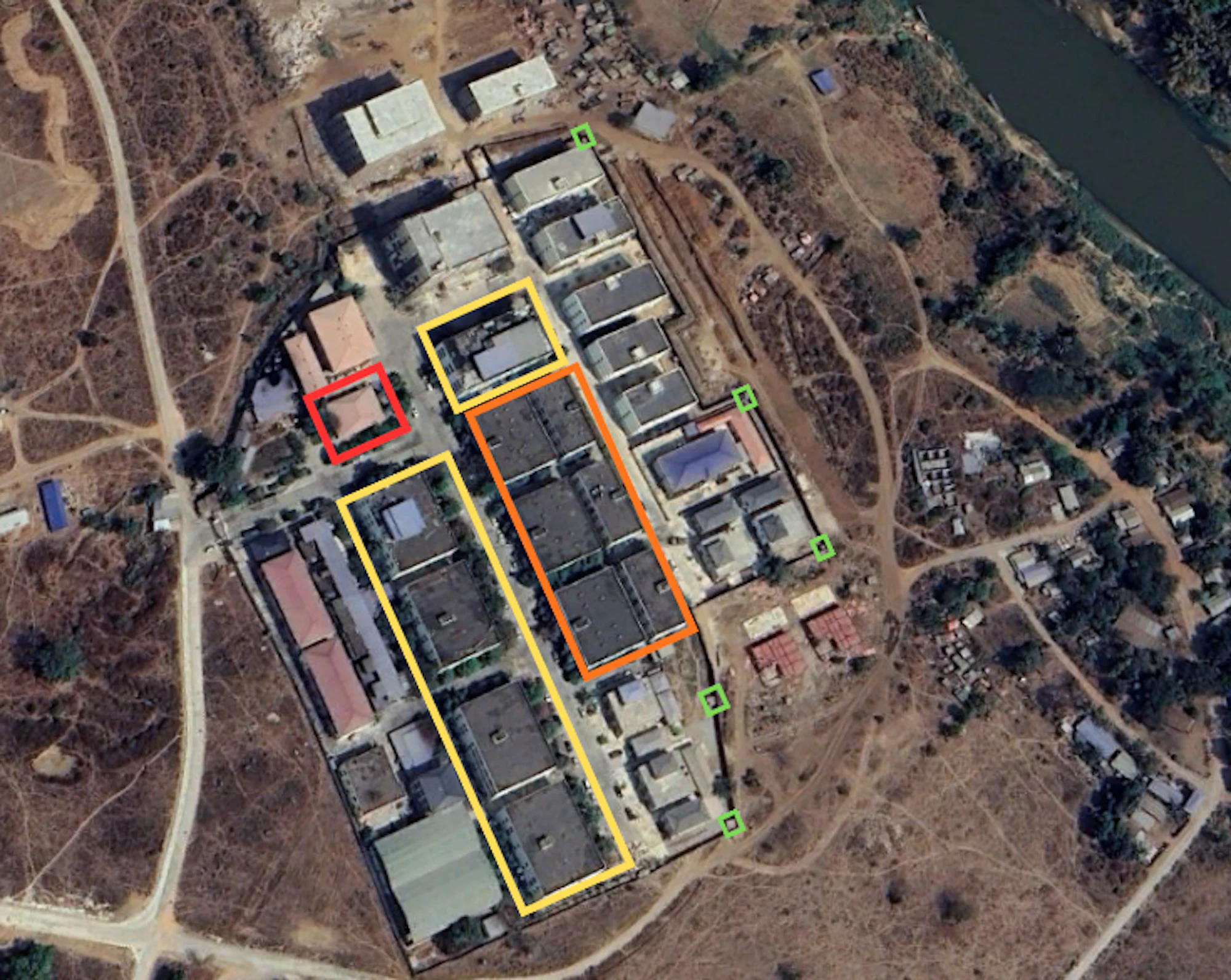
Prison-like compounds are more rigidly enclosed, with internal fencing, repetitive housing blocks, and watchtower structures. Huanya Park (also referred to as Media Asia International City) in Myawaddy is an example: satellite imagery shows multiple internal sections, external walls, and watchtower positions consistent with coercive detention.

Satellite imagery shows that Huanya Park, Myawaddy, Kayin State,[16.646166, 98.519812] is divided into multiple sections. Orange, yellow, and red denote internal fences, while dark blue lines indicate outer walls/fences. The light blue box highlights a likely gate between access roads. Green boxes mark the western and southern access points into the park (Source: Google Earth Pro, © 2025 CNES/Airbus).

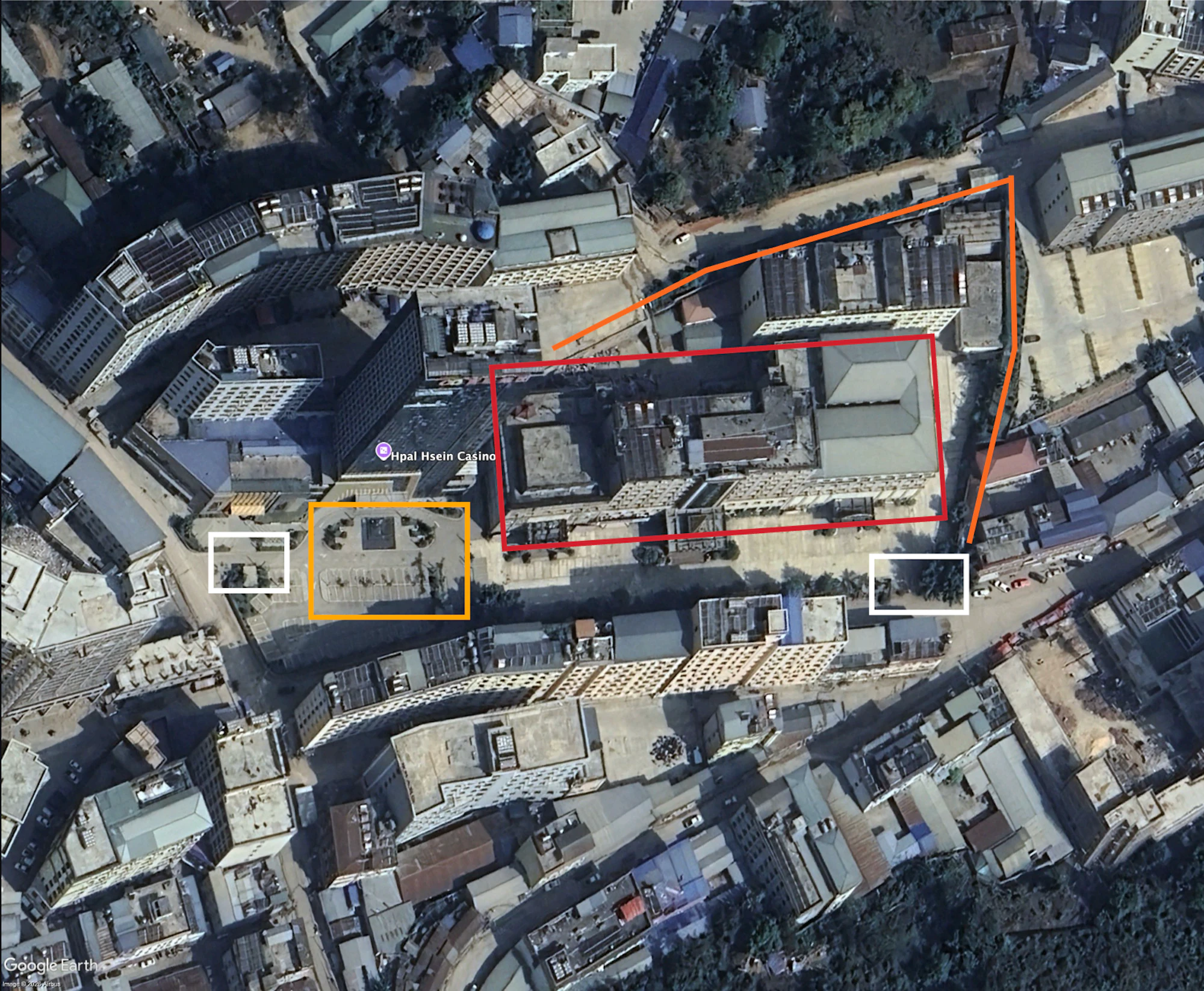
Casino and Special Economic Zone-style sites present as high-rise hotel or casino developments: compact urban compounds with limited entry points and large parking areas. Myanmar New Yum in Laukkaing, Shan State, reflects this type.

An image of Myanmar New Yum, with a compact design, resembling a hotel and casino structure at [23.691960, 98.766940](Source: Google Earth Pro, © 2025 CNES/Airbus).

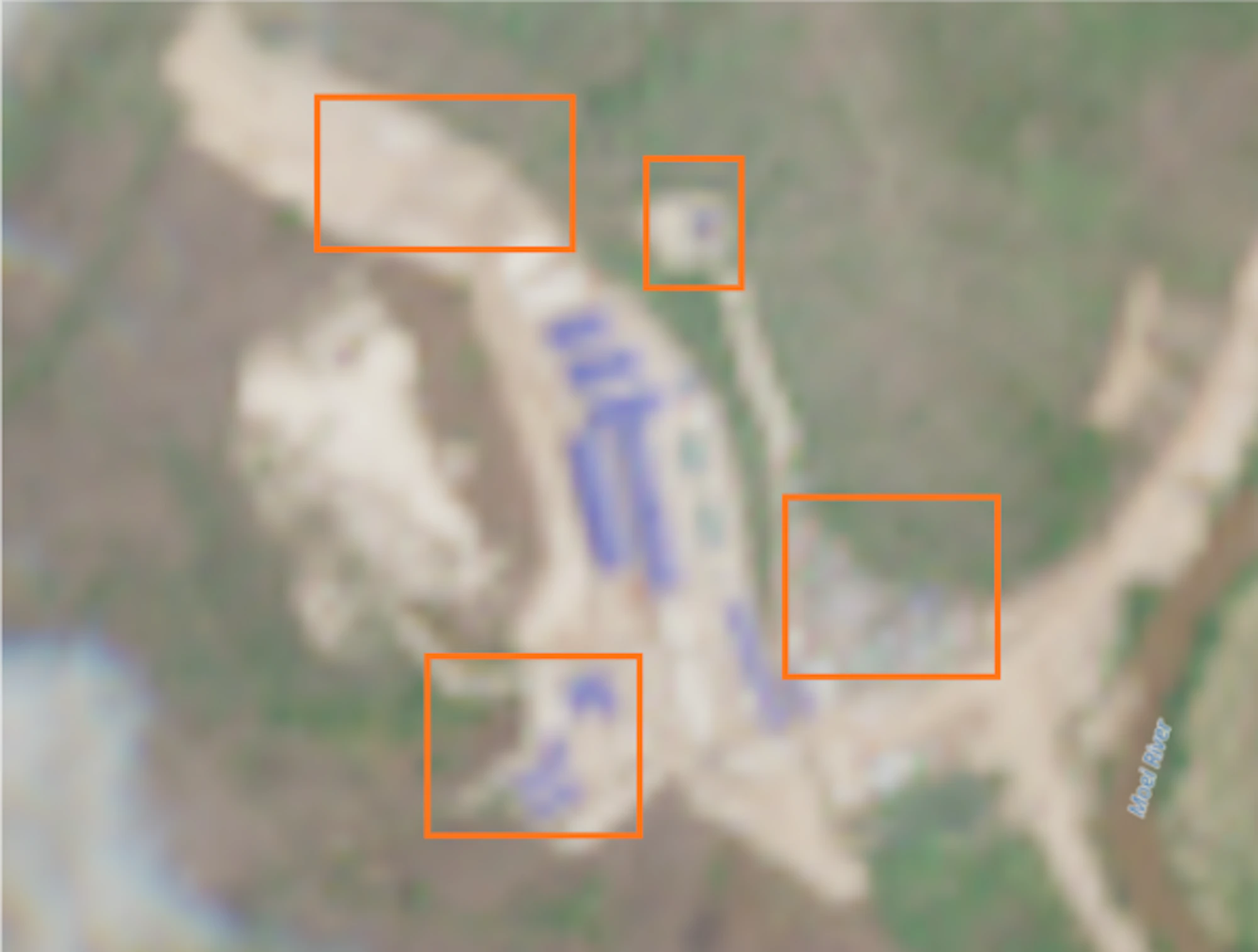
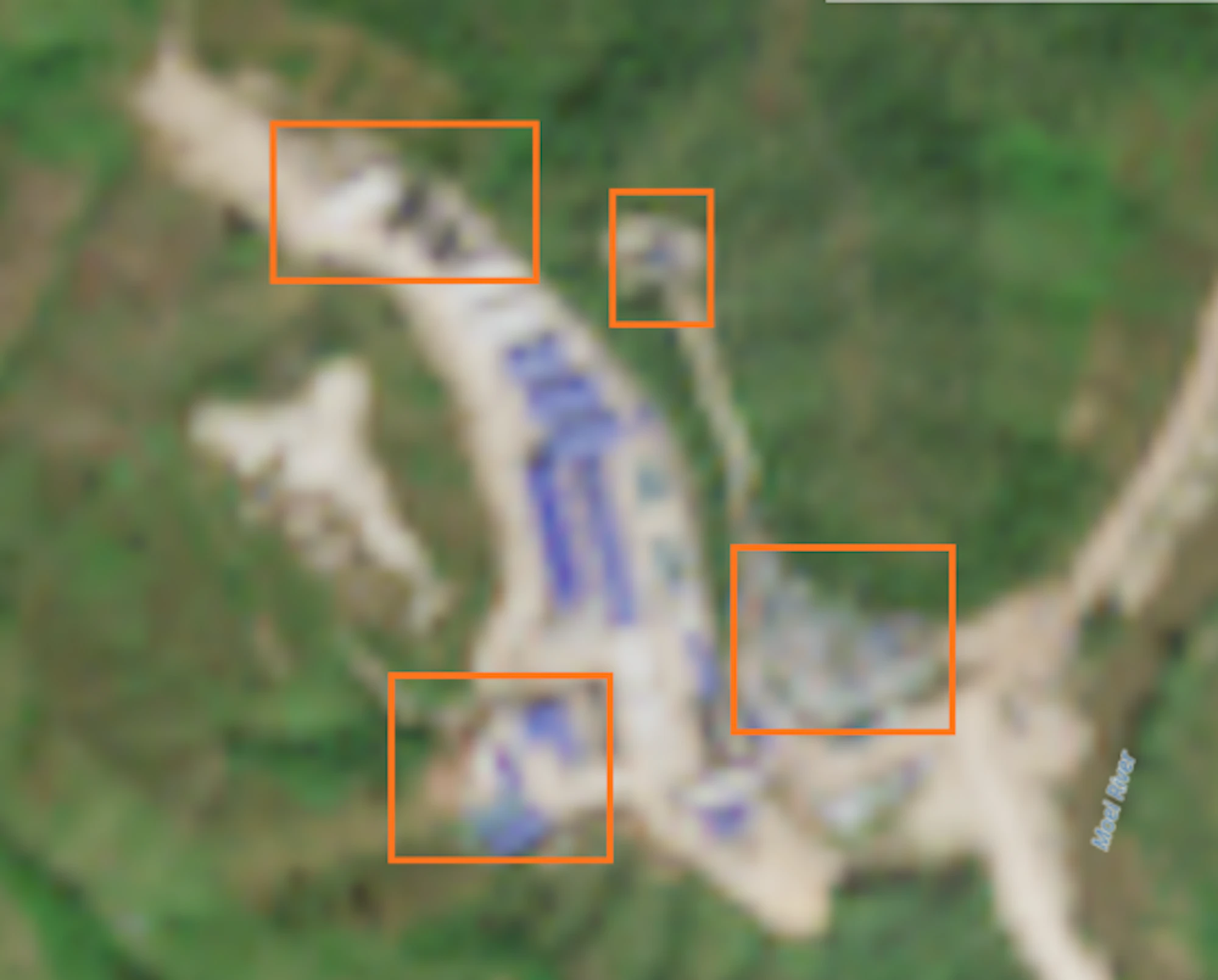
Rural and concealed sites are fragmented, set among tree cover, and harder to identify from above. Qingsong Park (also known as Thai Hoa Garden) in Myawaddy expanded rapidly following KK Park’s clearance. Satellite imagery from April 2025 and November 2025 shows extensive new construction across the site in that seven-month window, including rooftop installations consistent with Starlink satellite internet devices, fitted, in some cases, before the buildings beneath them were finished.

Myanmar Witness observed several expansions of Qingsong Park [16.427589, 98.63444] between April 2025 and November 2025, after clearance operations had occurred. This suggests the park may have been designed in aid of dispersing KK Park actors once clearance operations commenced (Source: [Left] Contains modified Copernicus Sentinel-2 [2025] [Right] Contains modified Copernicus Sentinel-2 [2025]).

Small controlled units are more compact and office-like, comprising a single walled section. Apollo Campus in Myawaddy fits this profile, with satellite imagery indicating a guard post, office blocks, and dormitory-style buildings in a single enclosed area.

Satellite imagery of Apollo Campus [16.776539, 98.483179] shows a single large enclosed section, with walls and fencing separating it from the surrounding area. (Source: Google Earth Pro, © 2025 CNES/Airbus).

The recruitment pipeline

Recruitment is the first link in what Myanmar Witness describes as a “recruitment-to-coercion lifecycle”. The pipeline relies heavily on fraudulent job advertising across social media platforms, including Facebook, TikTok, Telegram, and Viber, with posts promising high-paying roles in offices, hotels, casinos, or tech companies, often with transport, accommodation, and visa support included.

The adverts share consistent hallmarks: urgent language, unusually high salaries, no discussion of visa requirements, and frequent posting by anonymous or newly created accounts. Myanmar Witness reviewed more than 100 posts displaying these indicators across multiple platforms between 2021 and 2025.

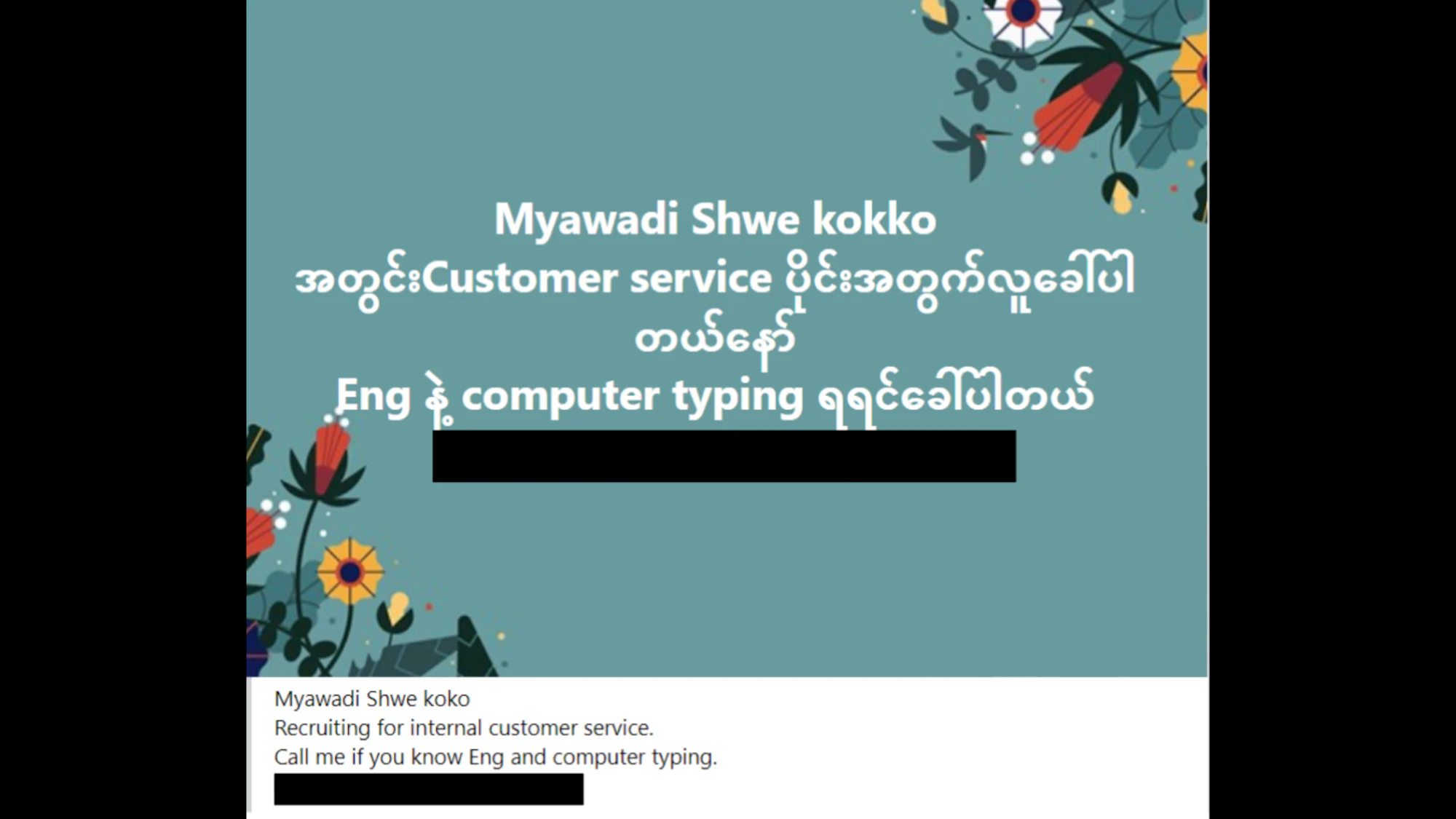
A likely fake Facebook account, presenting as a female profile, shares advertisements for Myawaddy-based jobs requiring typing skills. Although the account joined Facebook in November 2016, visible activity did not begin until 20 March 2018, coinciding with the emergence of scam operations in Shwe Koko (Source redacted due to privacy concerns).

Facebook groups remain a primary initial recruitment tool, but posts increasingly shift to private channels, like Telegram and Viber, for follow-up and final arrangements. Since 2023, TikTok has become a growing vehicle, with job postings using influencer-style aesthetics and aspirational messaging. Myanmar Witness identified one account claiming affiliation with a TikTok influencer with around 140,000 followers; in one video, the original influencer appears to confirm the association, suggesting real women are being used to attract workers rather than profiles being simply impersonated.

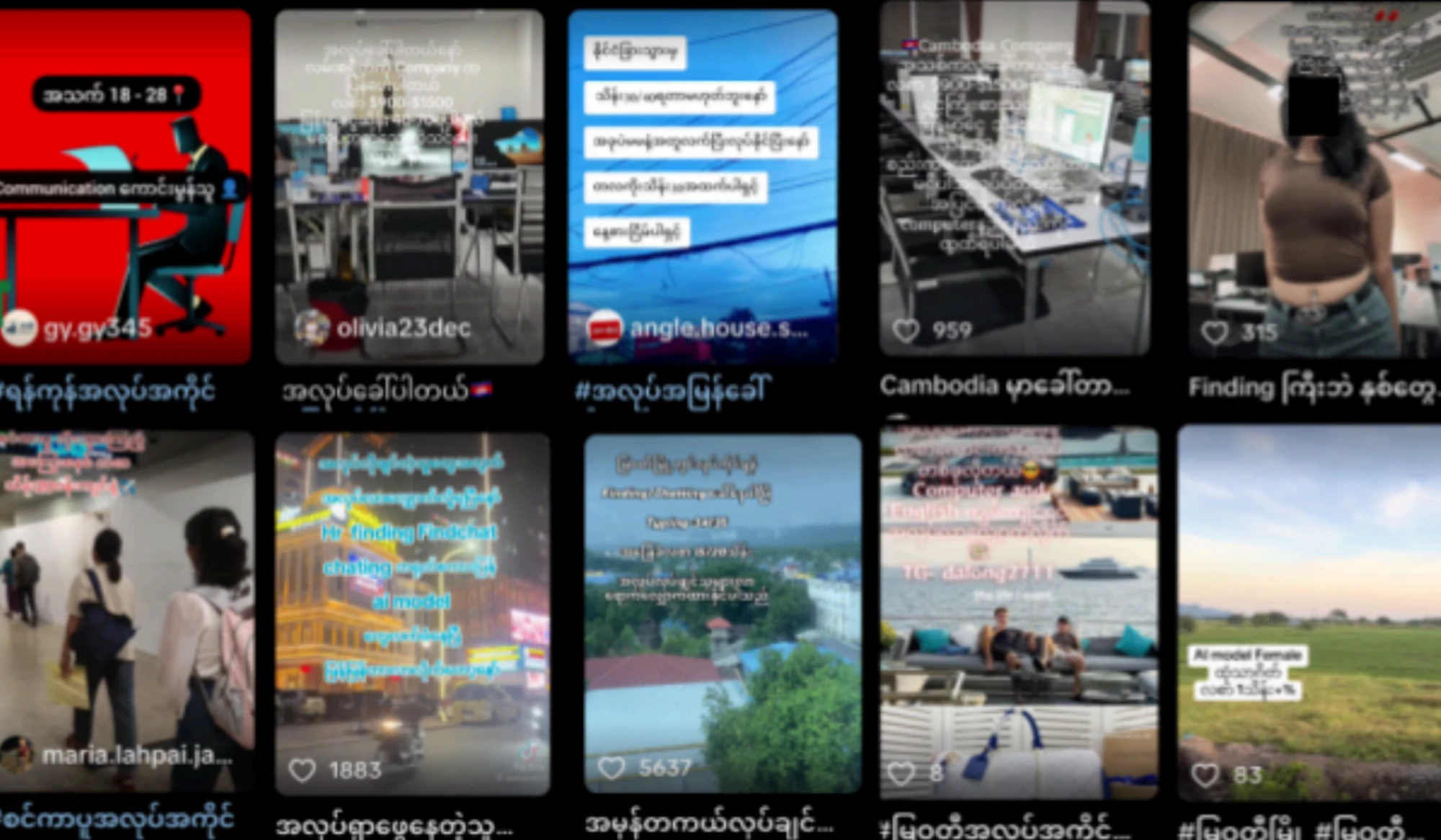
TikTok advertisements promoting jobs in Myawaddy display several suspicious indicators, including imagery resembling KK Park, the use of women and office settings, animated elements, and urgent text overlays. Some videos also feature individuals speaking directly to the camera (source: TikTok).

Job titles have evolved in step with the industry’s broader sophistication. Roles advertised have shifted from basic call centre work toward AI modelling positions, a term Myanmar Witness observed in adverts for individuals to act as visible fronts for AI-enhanced fraud operations. “Chatting” and “FineChat” roles targeting women likely indicate romance scam work framed as customer relations. As of 2025, Telegram channels linked to KK Park were advertising “AI model” and language-specific chatting positions even as clearance operations were underway.

Recruitment does not always rely solely on deception. Myanmar Witness noted that economic coercion plays a role: some Burmese youths reportedly joined scam compound work as an alternative to military service, while others entered willingly, given limited options and the apparent respectability of office work. The Kayin and Shan State local workforce, reportedly the largest domestic contingent, may include individuals who were not deceived in the conventional sense. This complexity matters for how repatriation and accountability efforts are structured.

Traffickers have also been documented exploiting trusted relationships: one case involved a fake online boyfriend who built a prolonged relationship before trafficking the victim from Shanghai via Hong Kong and Bangkok into Myanmar. Factory owners are also reported to have trafficked employees under the pretext of business relocation.


Overland, by river, in the dark

Transit routes are arranged to obscure the final destination and present the journey as legitimate, sometimes with flights, accommodation, informal border crossings, and car pickups structured to resemble normal work travel. Myanmar Witness documented multiple accounts in which victims were told they were heading to Thailand or China.

Bangkok is the most commonly documented initial entry point, with individuals flying in from China, Indonesia, the Philippines, and countries in Africa before being moved overland. The Mae Sai-Tachileik checkpoint in Chiang Rai has historically been flagged as a trafficking corridor. From there, individuals are typically taken to Mae Sot, crossing the Moei River at night into Myawaddy. One account collected by Myanmar Witness describes a group that crossed mountains and rivers in darkness without realising they had entered Myanmar.

Traffickers use informal crossings, staggered small-group movements, and checkpoint corruption to avoid detection, and coach victims to claim tourism or work purposes if stopped. Following the 2021 coup, routes shifted from the Asian Highway toward the Kawkareik-Nabu-Htilon-Hpa-An hill route, bypassing official trade zones and checkpoints, including at Myawaddy, Gyaing Bridge, and Hpa-An.

Alternative routes documented from collected social media posts include the China-Laos-Thailand-Kayin State corridor; an Indonesia-Malaysia-Bangkok route via Batam and Johor or Kuala Lumpur; and a Cambodian transit involving Phnom Penh, Sihanoukville, Koh Kong, and Poipet. In October 2023, Ugandan law enforcement reported that several citizens had been taken to Dubai, ostensibly for employment, before being diverted to Thailand and then Myanmar.

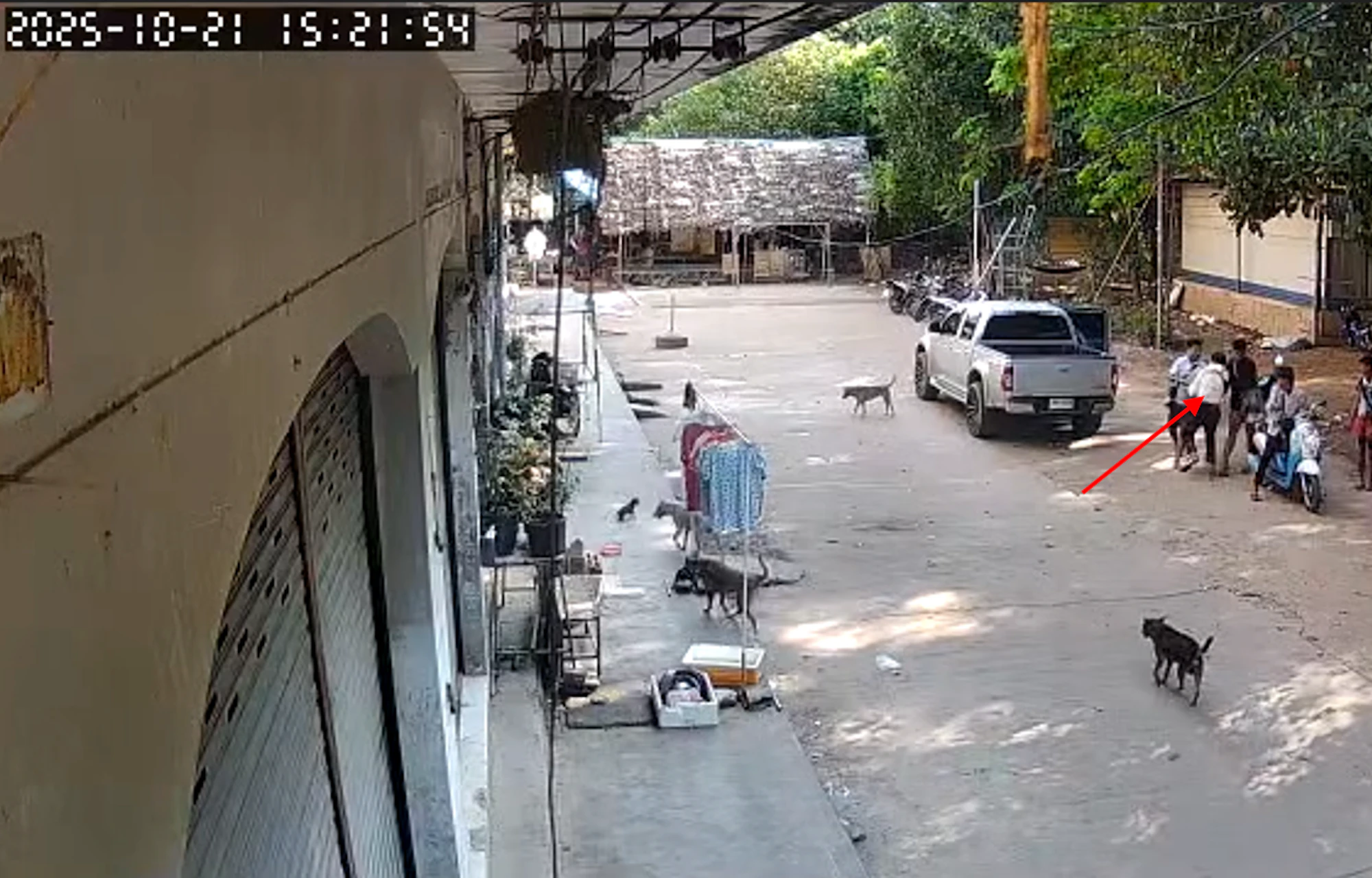
Coercion during transit is documented and, in some instances, violent. In one incident geolocated by Myanmar Witness to the Moei River area in Mae Sot, CCTV footage timestamped 21 October 2025 shows a group of around ten individuals forcing a man, reported as a Chinese national, into a vehicle, with audio in Burmese audible in the footage. Additional cases include victims being drugged in cars on arrival, beaten into vehicles, and, in one case, abducted at gunpoint at a Cambodian roundabout.

Myanmar Witness geolocated an alleged kidnapping incident in Mae Sot at around [16.685804, 98.517415], October 2025. It is believed this kidnapping is related to the coercion of individuals across the border into Kayin State (Source redacted due to privacy concerns).

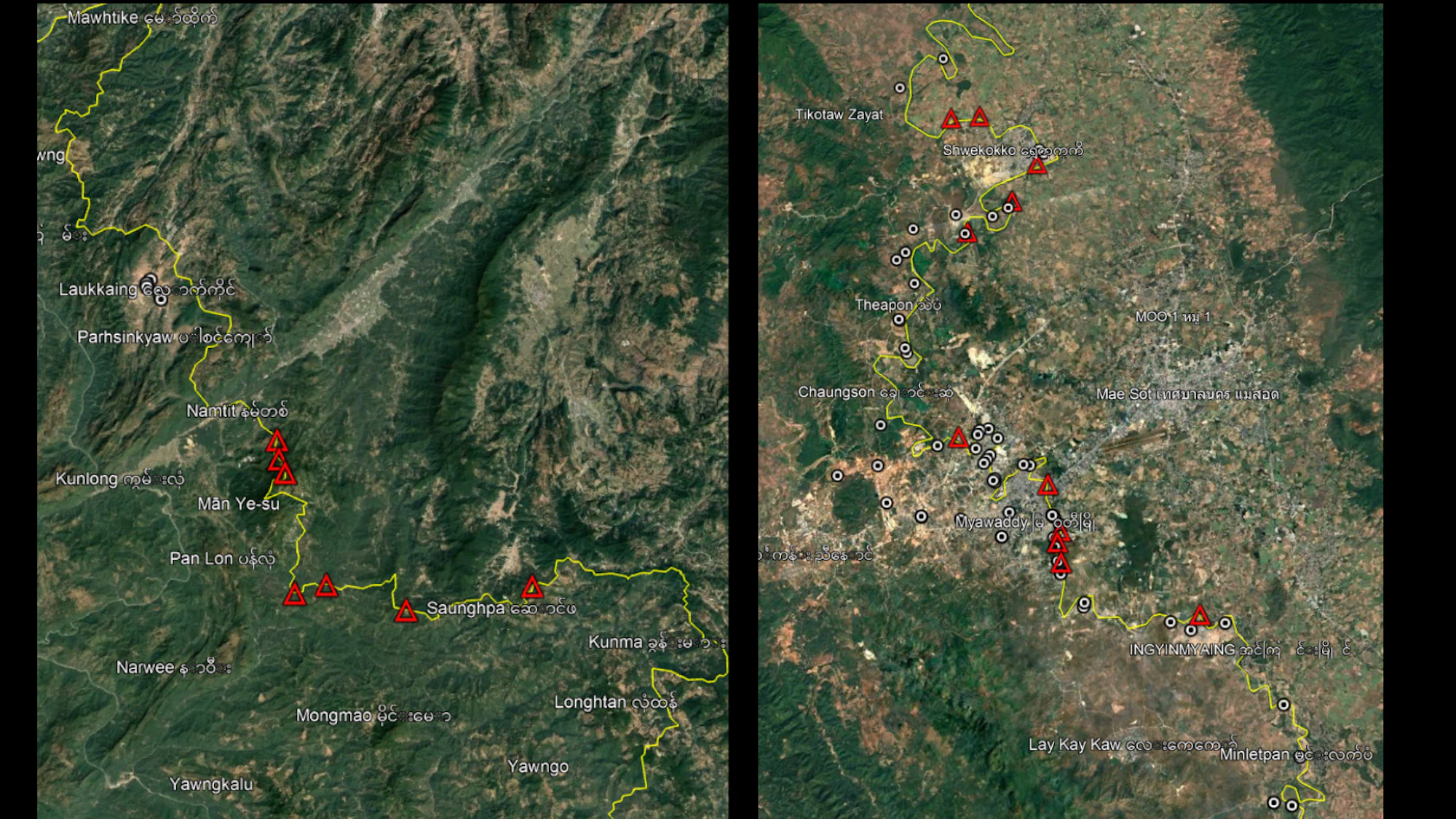
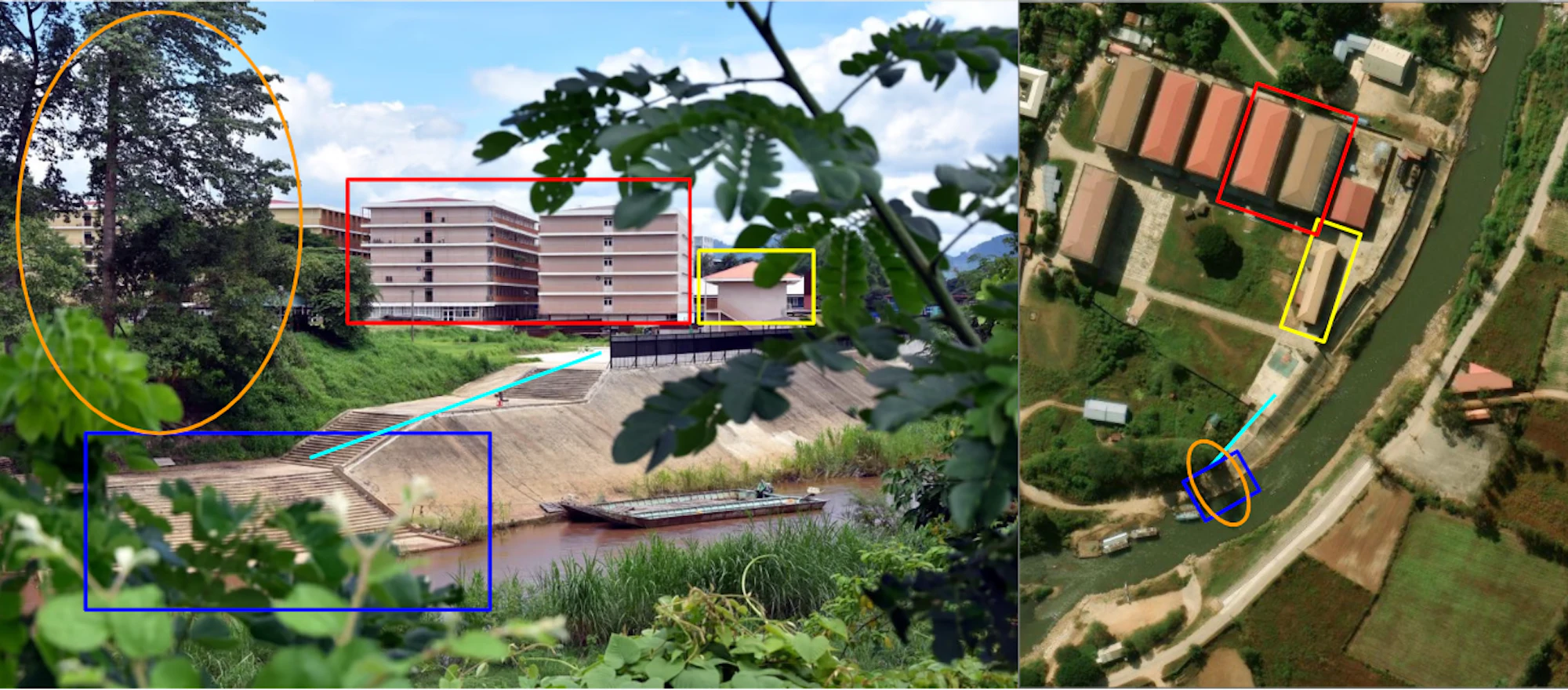
Myanmar Witness also identified river crossing infrastructure proximate to several compounds. At TTM Park in Myawaddy, geolocated imagery showed river boats near a border crossing directly adjacent to the site. 

Myanmar Witness’s identification of border crossing sites (red triangles) in [Left] Shan State and [Right] Kayin State, situated close to scam-related geographies (white pinpoints) as visualised in Google Earth Pro.

Geolocation of TTM Park in Myawaddy Kayin State at [16.715281, 98.494753], showing a nearby border crossing and river boats potentially used for human trafficking into the scam park (Sources: [Left] redacted due to privacy concerns, [Right]. Apple Maps, n.d (no date) Retrieved 28 May 2026.

Passports confiscated, quotas assigned

Myanmar Witness’s dataset of victim testimonies, missing persons reports, and incident records, collected primarily from social media and supplemented by official reporting, documents very poor conditions across multiple sites and nationalities. Crucially, however, this sample does not claim to be representative; patterns are drawn from consistency across sources rather than any single account.

Collected reports describe arrival procedures as immediate and uniform: passports and phones are confiscated, families are reportedly contacted with ransom demands, and workers accrue fines for poor performance while receiving little or no pay after initial inducements. Working shifts, as described in collected accounts, are typically 18 hours long, with individuals managing between four and 22 phones and following scripted fraud sequences. Monthly targets for defrauding victims are assigned; one case described a requirement to defraud the equivalent of one million yen (approximately £4,700) before being permitted a personal phone.

Physical abuse is documented by Myanmar Witness as systemic, the primary enforcement mechanism for target failures, escape attempts, and work refusal. Beatings are the most commonly recorded form. Electric shocks, food deprivation, and solitary confinement are also documented across multiple compounds. Huanya Park is specifically linked in collected reports to claims of ‘water dungeon’ torture; more extreme abuses documented include nail pulling, eardrum burning, and amputations. A January 2026 Amnesty International report separately identified torture, rape, forced abortions, and murder across dozens of compounds.

A February 2026 UN report estimates that at least 300,000 people from 66 countries are currently forced to work in online scam operations across the region. Myanmar Witness’s dataset documents victims from more than a dozen countries. The youngest individual documented in the dataset is reported as a 14-year-old male. Myanmar Witness also flags one case involving a victim with schizophrenia and a hearing impairment as indicating the possible targeting of disabled individuals.

A particularly significant pattern in collected reports is the commodification of workers: individuals are reported to be assigned monetary values and sold between compounds when they underperform. One escapee from Shwe Kokko who sought help from Myawaddy police was allegedly resold to Apollo Campus; a Chinese businessman who escaped was reportedly recaptured and sold between operators before being returned for the equivalent of approximately £33,000. Myanmar Witness notes this dynamic severely complicates family tracking and repatriation efforts.

Myanmar Witness’s data indicates victims are predominantly male, possibly reflecting broadly targeted job advertisements that exploit financial pressure and the perceived status of office work. Women are documented in collected reports as facing distinct harms: targeted through aspirational roles framed around ‘AI modelling’ and typing, and subject to sexual exploitation and forced prostitution. At Apollo Campus, four Thai women were reportedly kidnapped and extorted by a Chinese criminal gang; a Malaysian woman received electric shocks for failing to meet fraud targets; a Filipino woman was arrested on return to the Philippines in 2025, treated in repatriation efforts as simultaneously a victim and a perpetrator.


Are crackdowns working?

Myanmar Witness’s satellite analysis and monitoring suggest that crackdowns are not working effectively. 

High-profile operations, including Cambodia’s July 2025 crackdown, the Myanmar military’s raid on KK Park, and Thai power supply cuts to border compounds, have focused on physical disruption rather than dismantling the underlying network. Satellite imagery shows core infrastructure at supposedly cleared sites remains largely intact. Victims reported that compound leaders received advance warning of raids and relocated workers beforehand; Myanmar Witness geolocated footage, supported by AFP reporting, that several hundred people were moved to a site approximately three kilometres from KK Park on 23 October 2025, likely Huanya Park.

Myanmar Witness geolocated claims of individuals being moved across sites as military clearance operations of KK Park were ongoing at around [16.630574, 98.537467] (Source: removed for privacy reasons). 

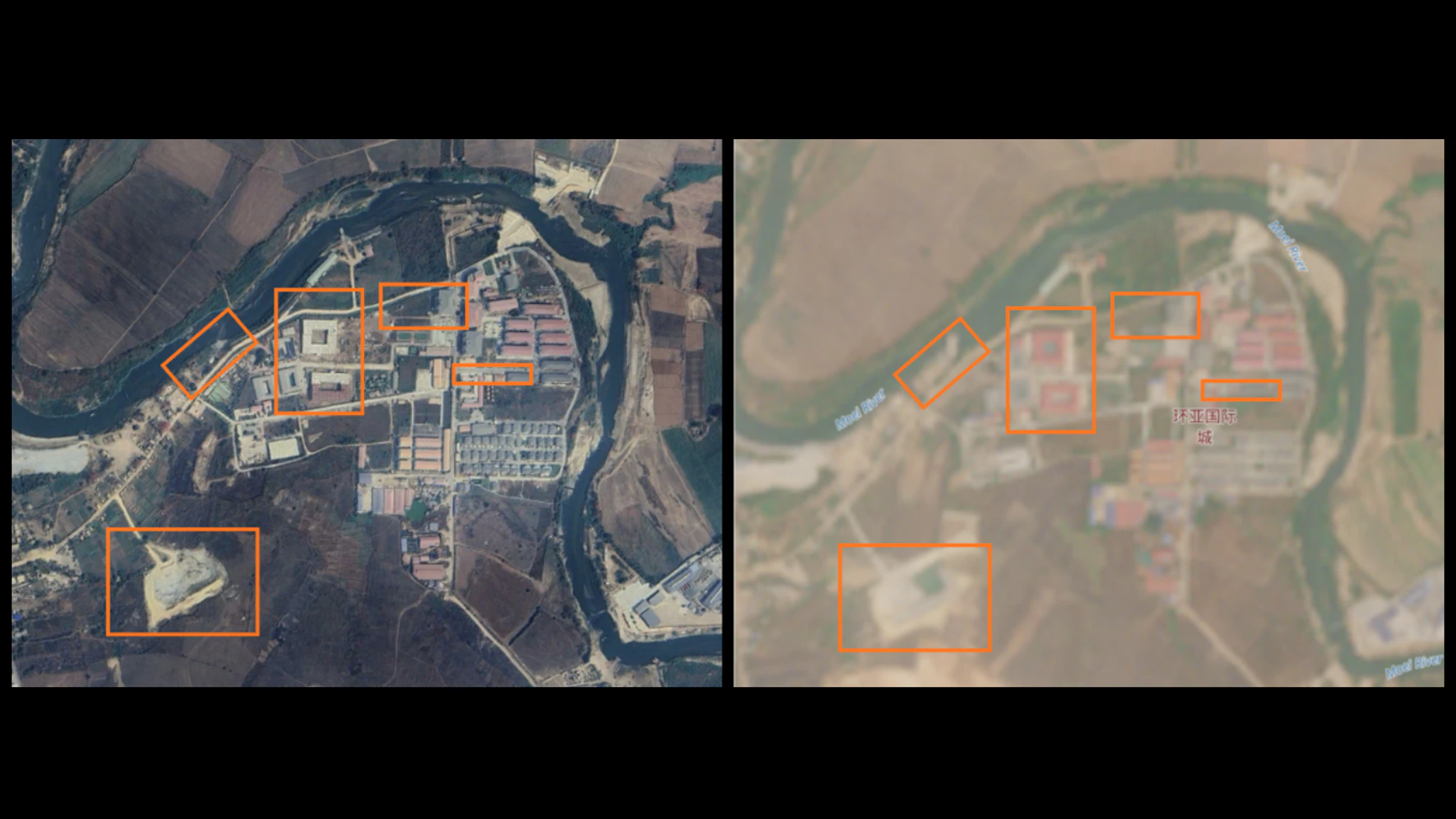
Even nominally “inactive” sites show signs of adaptation rather than shutdown. Apollo Campus, for example, shows no clear indicators of closure in Sentinel-2 imagery from February 2025 to March 2026, and reports claim victims remain trapped there. Recruitment activity linked to the site has continued on Telegram, and land in the Myawaddy area continues to be sold through associated companies.

[Left] Satellite imagery from 18 February 2025 compared to low-resolution Sentinel-2 imagery from [Right] 4 March 2026 at [16.646166, 98.519812] showing recent updates to the infrastructure around Huanya Park (Sources: [Left] Google Earth Pro, © 2025 CNES/Airbus, [Right] Contains modified Copernicus Sentinel-2 data [2026])

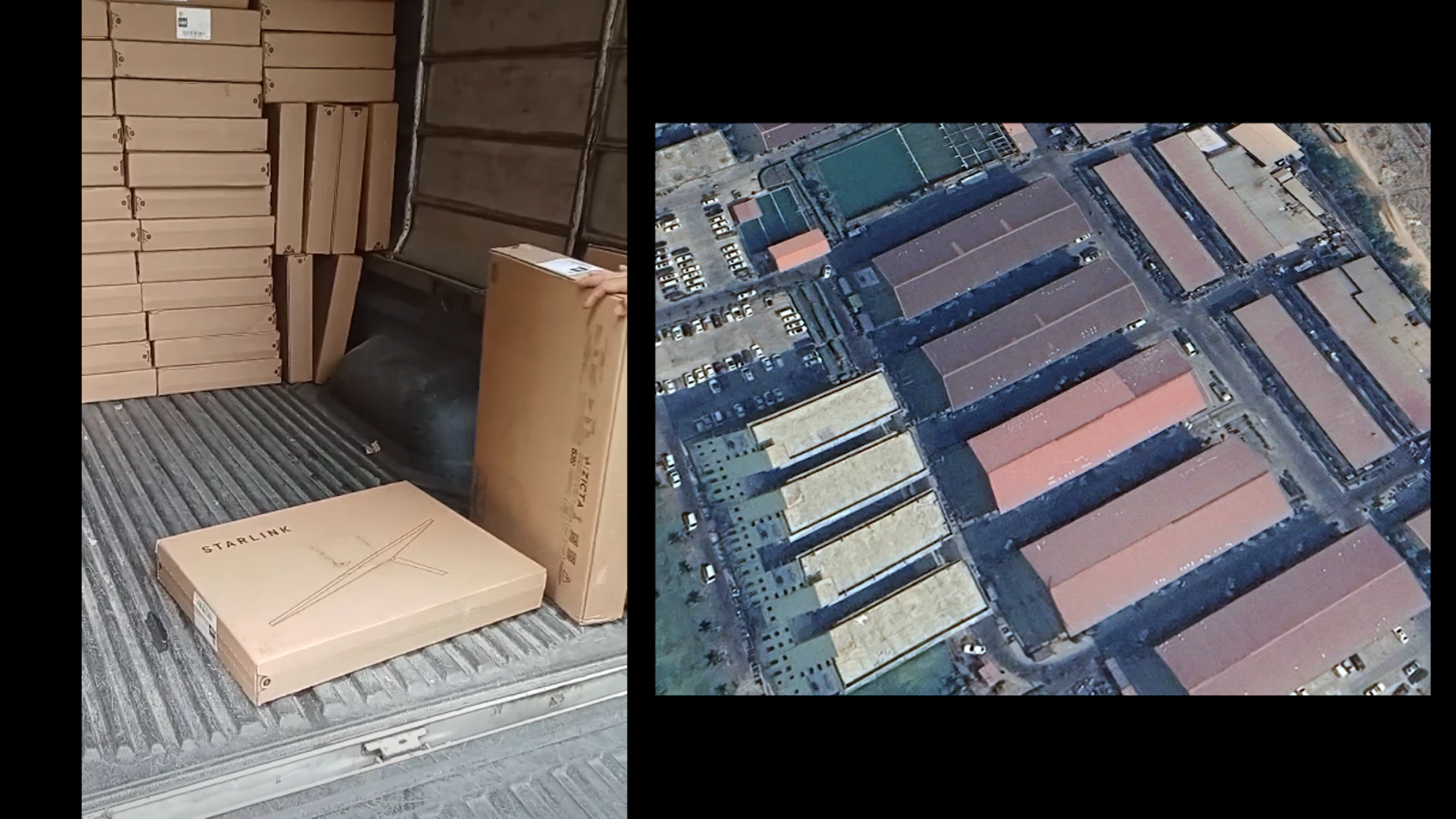
Connectivity has proven equally resilient. Following Thai power cuts, compounds appear to have turned to Starlink satellite internet, devices visible on rooftops in high-resolution imagery at multiple sites, as well as suspected clandestine under-river cable infrastructure. In March 2026, Thai authorities in Mae Sot discovered internet cables running through underground pipes beneath the Moei River, connecting to Huanya Park’s side of the border.

[Left] Starlink devices allegedly arriving in Mae Sot and KK Park roofing with visible Starlink devices attached at [16.631925, 98.558366] (Source: [Left] redacted due to privacy concerns, [Right] Google Earth Pro, © 2025 CNES/Airbus ).

KK Park’s dispersal has accelerated what Myanmar Witness describes as geographic fragmentation: operations shifting to smaller rural sites that are harder to identify via satellite imagery, and recruitment pivoting toward Cambodia and generic “Southeast Asia” destinations rather than Myanmar specifically. The network appears to be adapting rather than dissolving.


More to follow

This article is the first in Myanmar Witness’s series on scam compounds in Myanmar. Future reporting will focus on the actor networks as well as the examination of gendered harms in evolving scam practices.

In the meantime, Myanmar Witness continues to update its interactive geospatial map of scam compounds in Myanmar as evidence collection expands. Explore it here. If you would like to find out more information about any of these incidents, or our upcoming reporting on scam compounds, please reach out to [email protected]. 


Note: Myanmar Witness has collected claims related to scam ‘compounds’ and ‘centres’, which have been used interchangeably by different outlets. Myanmar Witness has chosen to refer to these sites as ‘scam compounds’, as it more directly reflects their physical geography and the built environment inside them, including housing, shops and multiple businesses that may be present.

Latest reports, direct to your inbox

Be the first to know when we release new reports - subscribe below for instant notifications.

Share Article