Myanmar military-led election 2025-2026: Phase 1 begins amid ongoing conflict in townships

6 min read
Myanmar Witness

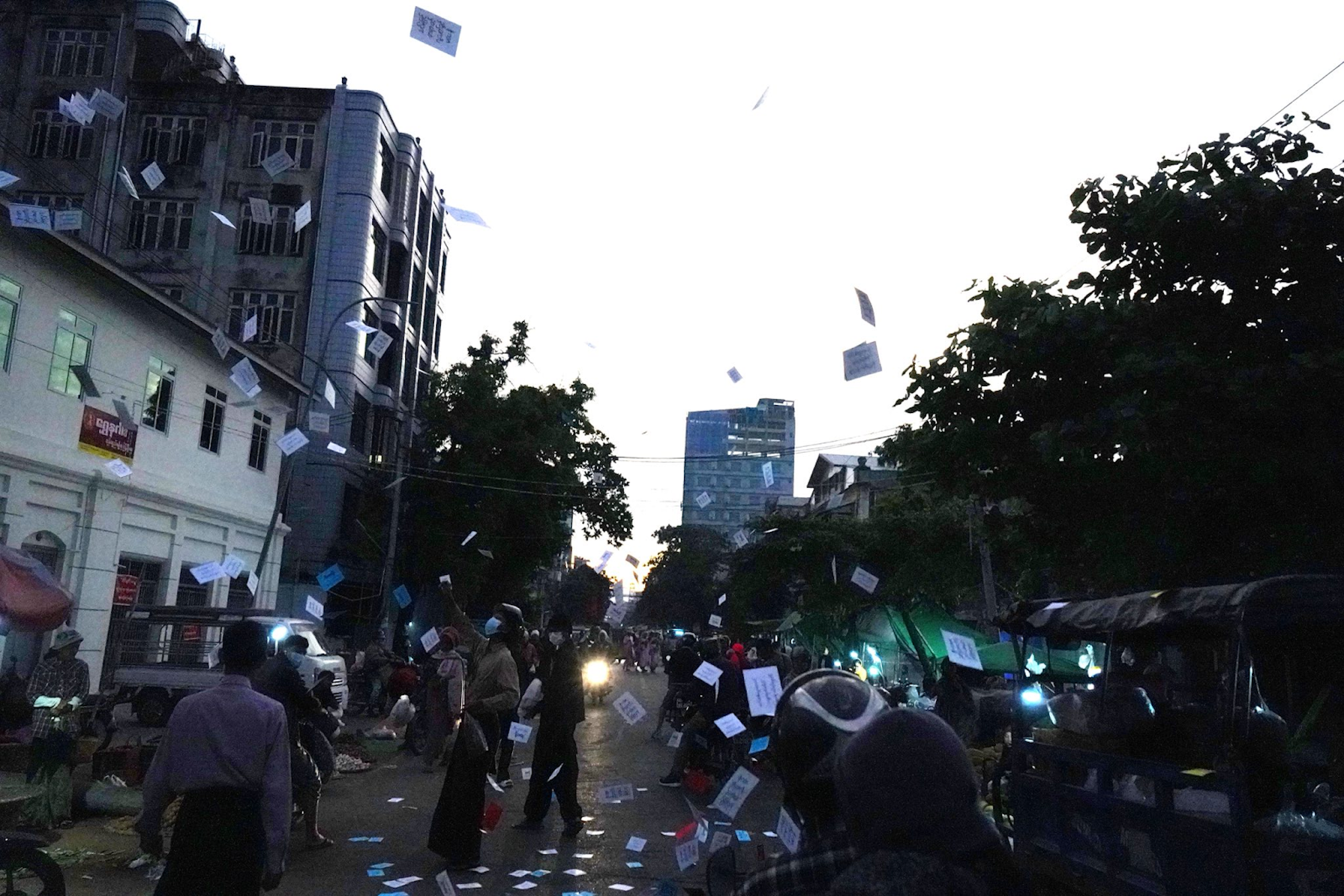
The distribution of election boycott leaflets in Myanmar in December 2025 (Source: Tayzar San)
This election is being referred to as the ‘2025 Multi-Party Democratic General Election’, and it is to be held in three phases. According to official announcements, the Phase 1 election took place on 28 December 2025, and was to be limited to townships officially designated as “stable” by Myanmar’s military authority.
Since the announcement of these elections in August 2025, Myanmar Witness has been monitoring and assessing whether townships selected for Phase 1 of the election are, in practice, free from recent conflict incidents.
Myanmar Witness has identified and documented 94 conflict-related incidents in the townships outlined as active and as “stable” places of voting in Phase 1 of the elections.
Of the 102 townships permitted to vote on 28 December 2025, Myanmar Witness identified that 19 (nearly one in five) experienced at least one conflict-related incident in the four months ahead of the election, up until 30 November 2025.
These findings raise concerns about voters’ safety, access, and the credibility of the electoral process, as well as the areas described as “stable” in Myanmar.
Latest reports, direct to your inbox
Be the first to know when we release new reports - subscribe below for instant notifications.
Background and context
Phase 1 of the elections began on 28 December 2025; however, early voting was permitted for some voters outside of Myanmar and, in some cases, for those displaced from registered townships within Myanmar. This includes Tatmadaw families. Official results are expected to be published by the end of January 2026.
The election covers three legislative bodies:
- The Pyithu Hluttaw (House of Representatives),
- The Amyotha Hluttaw (House of Nationalities), and
- The Regional and State Hluttaws.
As in previous systems, 25 percent (%) of parliamentary seats are reserved for military-appointed representatives, limiting the proportion of seats open to popular vote.
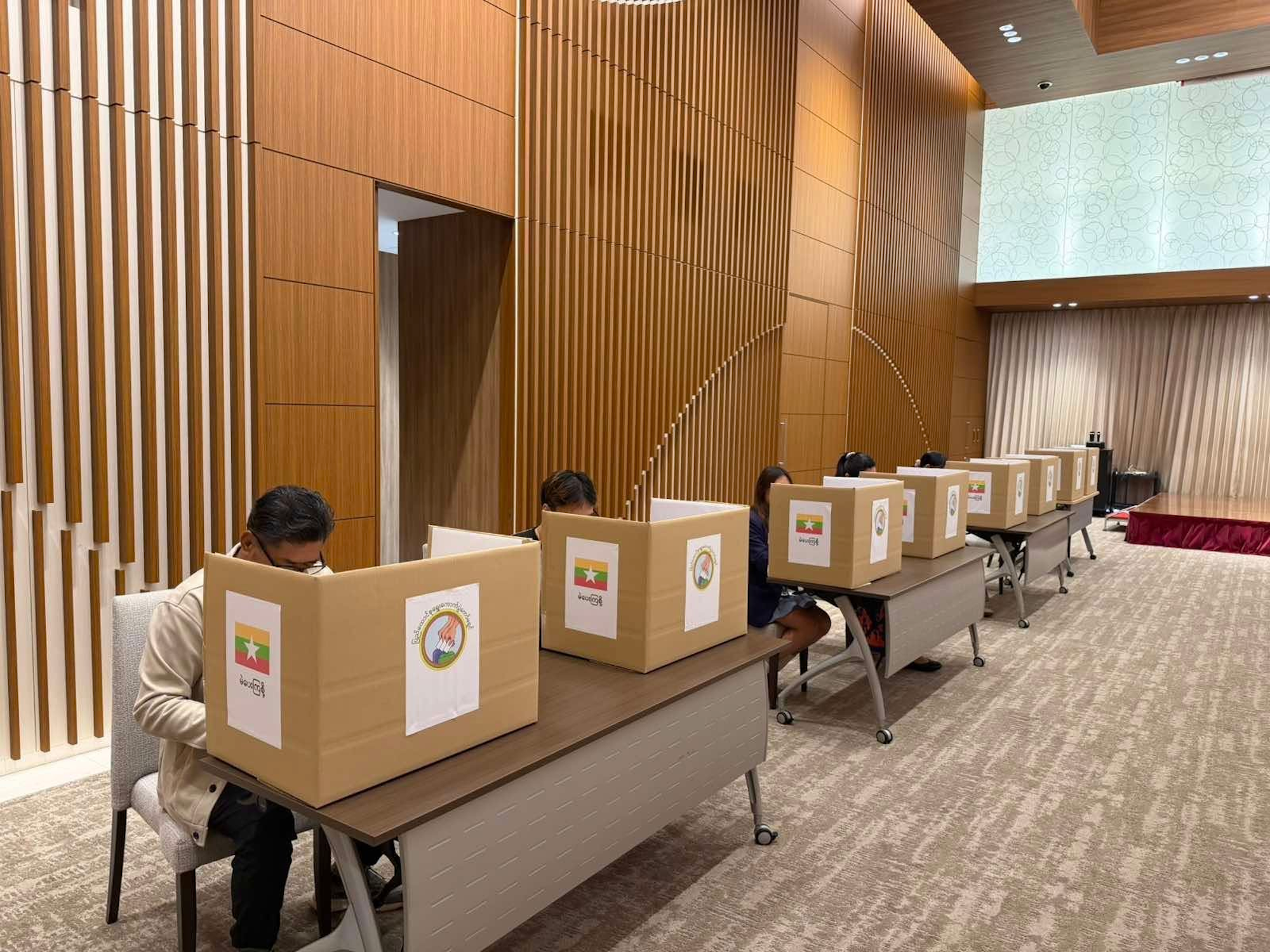
Image of voting booths in the Myanmar Embassy in Tokyo (Source: Embassy of the Republic of the Union of Myanmar via Facebook)
Notably, significant changes have been made to the electoral system. The Pyithu Hluttaw, which previously elected one representative from each of the 330 townships, is no longer elected nationwide as temporary constituencies have been created for a single election cycle due to security and administrative constraints. The Amyotha Hluttaw retains 168 total seats but now operates under a mixed First-Past-The-Post (FPTP) and Proportional Representation (PR) system. At the state and regional level, each township now elects one representative through FPTP and one through PR.
The elections are taking place amid intensified violence, as well as intimidation and arbitrary arrests, particularly under the newly enacted ‘Election Protection Act’ that carries long sentencing lengths and the death penalty. The United Nations High Commissioner for Human Rights, Volker Türk, highlighted that these conditions leave little space for free or meaningful participation in these elections.
Phase 2 of the elections is scheduled for 11 January 2026, allowing another 100 townships the chance to vote and Phase 3 on 25 January 2026, concerning 63 constituencies. However, inconsistencies have been identified across official sources regarding township inclusion. This includes announcements that several townships will not participate in the election at any stage. For example, in the list of townships for Phase 2, two townships have been listed, while other sources note them as either not participating at all or engaging in Phase 3.
Furthermore, elections have been restricted in townships classified as a security risk. September 2025 reporting indicates that 121 constituencies were not expected to hold elections. However, there has been some inclusion of these constituencies in the December 2025 reports of Phase 3. Despite this, the short notice in those constituencies may have detrimental effects on voter turnout in those townships.
To Note: The list of townships participating in each phase was taken from English publications on Myanmar government websites and the Global New Light of Myanmar (GNLM), state-run media. Several inconsistencies were found and corrected by cross-referencing with the Data 4 Myanmar map.
Conflict incidents in Phase 1 voting areas
Myanmar Witness recorded 94 incidents across the voting townships involved in Phase 1 of the election. Nineteen of the 102 townships designated as “stable” experienced at least one conflict-related incident during the study period, potentially undermining the assumption that Phase 1 townships are classed as uniformly safe environments for electoral engagement.
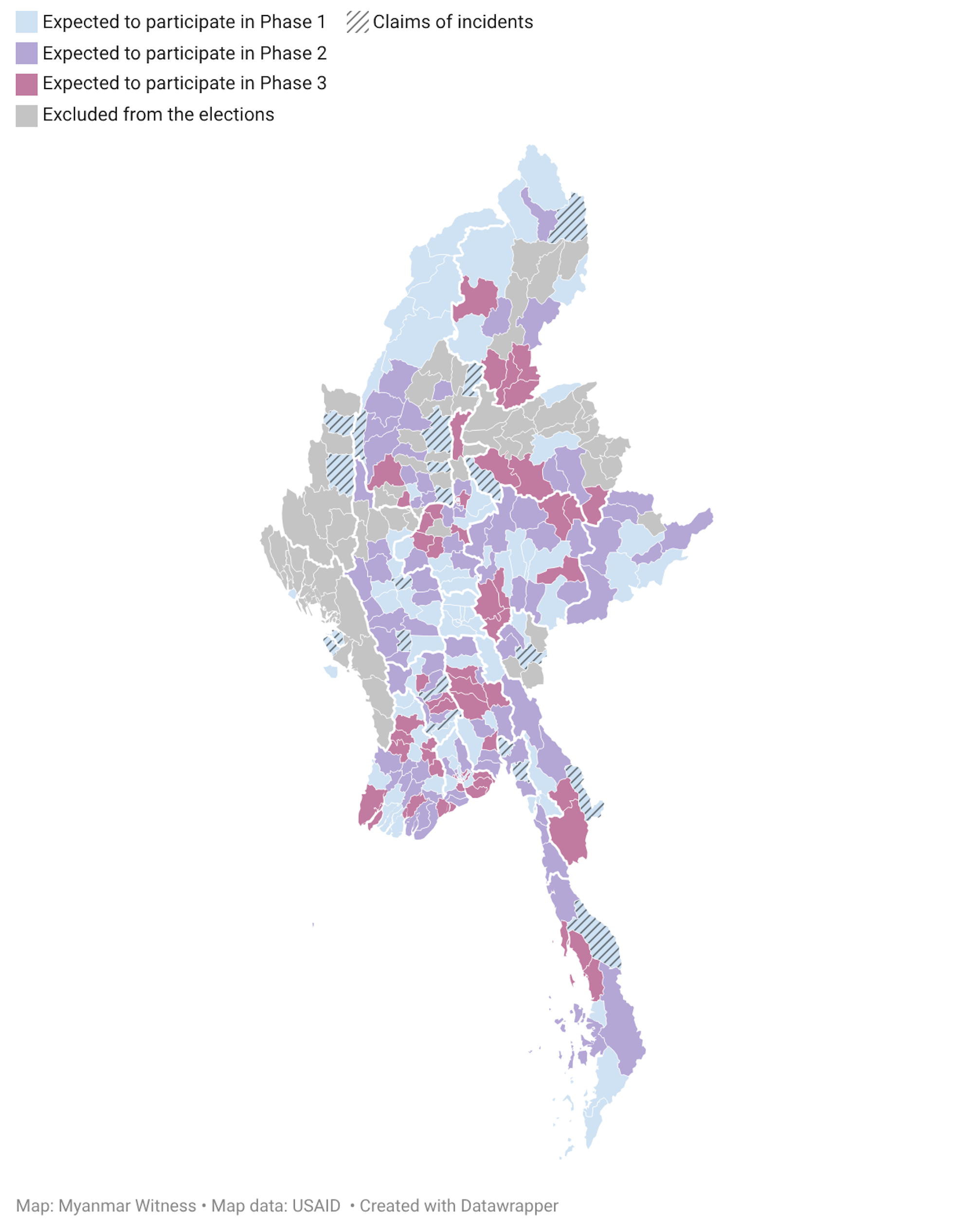
Myanmar Witness’s mapping of townships by election phase and participation status, along with recorded conflict-related incidents taking place in those townships in Phase 1 (source: Mapping created by Myanmar Witness on Datawrapper)
Myanmar Witness’s analysis highlights that while some states and regions had no townships in Phase 1 affected, others had multiple townships experiencing at least one or more conflict-related incidents between August and November 2025. This further supports the uneven and differing security challenges across areas designated as “stable” for voting.
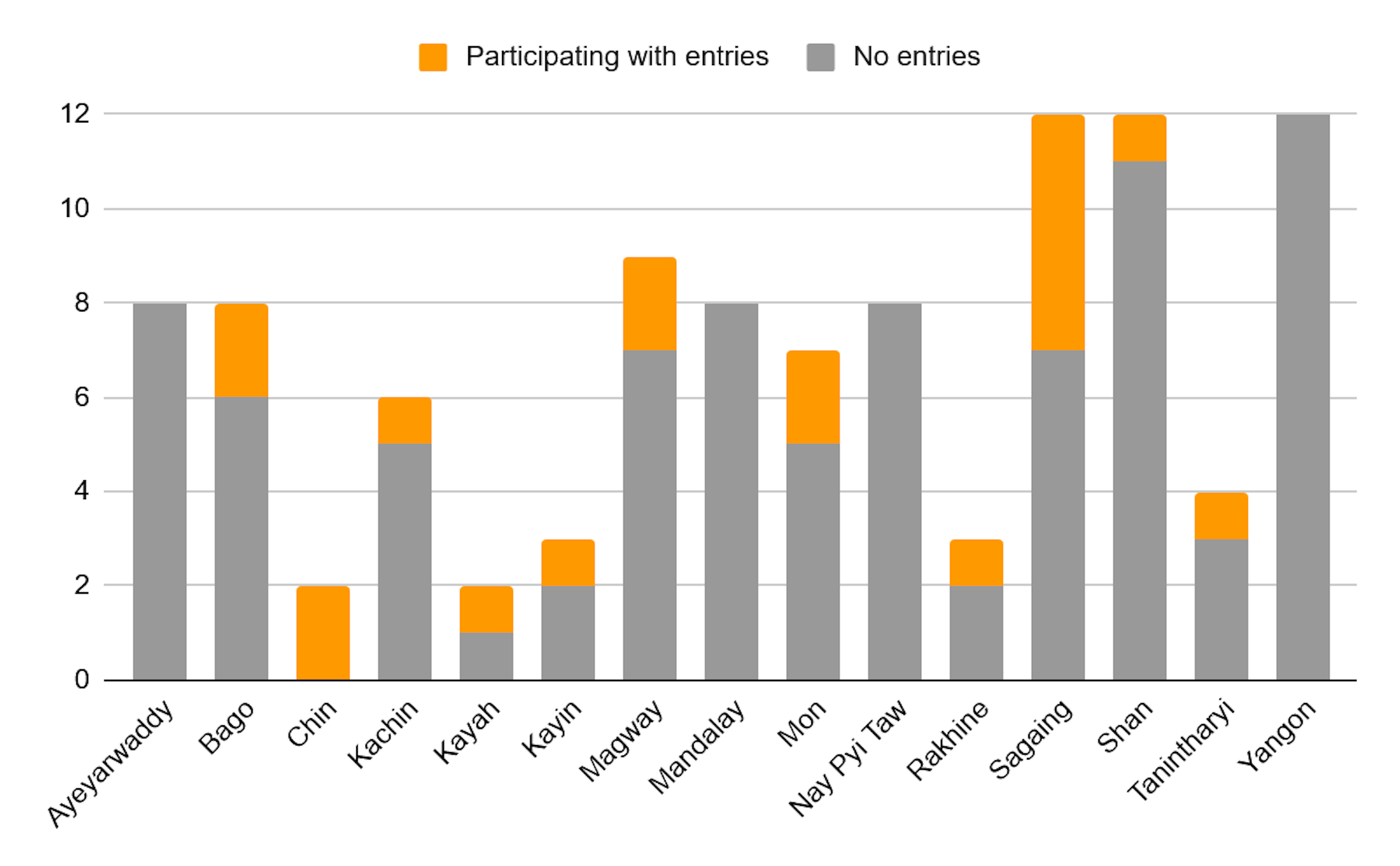
A graph created by Myanmar Witness to demonstrate the differing levels of recorded incidents in participating townships in the Myanmar Phase 1 electoral process
Analysis by State/Region
Myanmar Witness’s monitoring was aimed at assessing how conflict-related incidents intersected with the townships involved in Phase 1 of the election.
While Myanmar Witness makes no assertions as to why specific areas were selected for Phase 1 participation, the distribution of included townships appears uneven. Nay Pyi Taw is reviewed as showing the highest level of inclusion and is likely considered a secure area for elections, with no recorded incidents. While Rakhine, Shan and Chin States, which are ethnically diverse and have long-standing records of conflict dynamics, show more limited inclusion. For example, Chin State had only two participating townships, and both experienced conflict-related incidents between August and November 2025. Similarly, Myanmar Witness recorded incidents in nearly half of the participating townships in Sagaing Region, despite some limited Phase 1 inclusion.
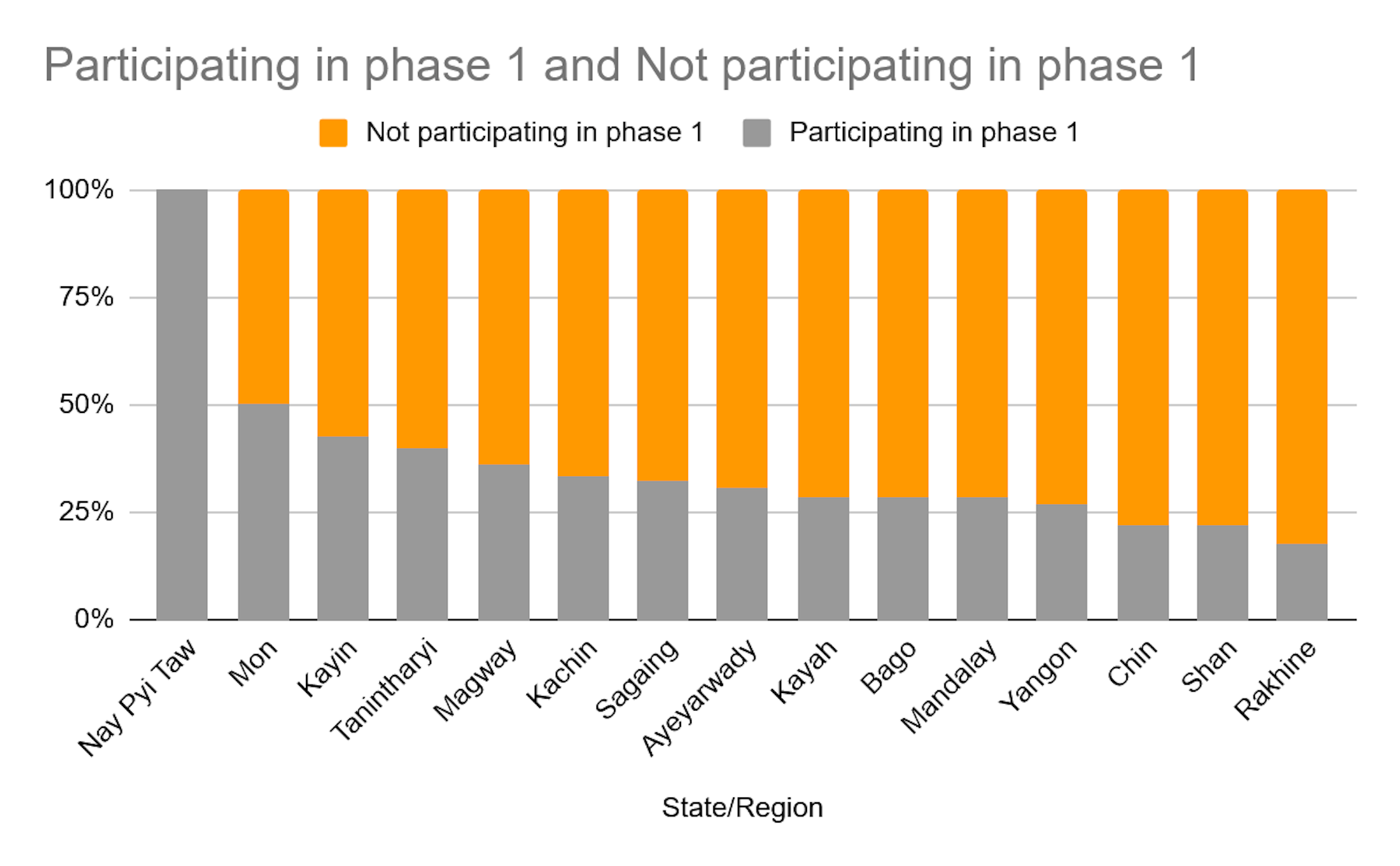
Myanmar Witness graph ranking States/Regions by the number of townships included in Phase 1 of the voting process
The table below illustrates Phase 1 townships’ inclusion, along with documented incidents across states and regions. This highlights that the levels of participation and security challenges vary significantly.
| State/Region | Total Townships | Townships in Phase 1 | Townships with recorded incidents | % of Phase 1 Townships with incidents | Incident Types Recorded |
| Ayeyardwady Region | 26 | 8 | 0 | 0% | No reviewed claims/reports recorded |
| Chin State | 9 | 2 | 2 | 100% | Airstrikes, casualties |
| Kachin State | 18 | 6 | 1 | 16.67% | Airstrikes, fires, casualties |
| Kayah State | 7 | 2 | 1 | 50% | Airstrikes |
| Kayin State | 7 | 3 | 1 | 33.33% | Airstrikes, fires, casualties |
| Magway Region | 25 | 9 | 2 | 22.22% | Airstrikes, fires, landmines, casualties |
| Mandalay Region | 28 | 8 | 0 | 0% | No reviewed claims/reports recorded |
| Mon State | 10 | 5 | 2 | 40% | Airstrikes, landmines, casualties |
| Nay Pyi Taw | 8 | 8 | 0 | 0 | None |
| Rakhine State | 17 | 3 | 1 | 33.33% | Airstrikes, casualties |
| Sagaing Region | 37 | 12 | 5 | 41.67% | Airstrikes, landmines, fires, casualties |
| Shan State | 55 | 12 | 1 | 8.33% | Landmines, casualties |
| Tanintharyi Region | 10 | 4 | 1 | 25% | Airstrikes, fires, casualties |
| Yangon Region | 45 | 12 | 0 | 0% | No reviewed claims/reports recorded |
Myanmar Witness’s documentation of recorded incidents across states and regions with both high and low Phase 1 inclusion, as reflected above, suggests that the designation of “stable” townships is a relative assessment rather than the absence of recent conflict.
Analysis by incident
Airstrikes
Myanmar Witness has recorded reported airstrikes in 11 townships that have been selected for Phase 1 between August and November 2025. Even isolated airstrikes can cultivate a pervasive climate of fear and discourage civilians from gathering publicly, travelling, or participating in religious or educational activities. In this context, the continued risk of airstrikes suggests that participation may be nominal rather than substantive, with residents prioritising personal safety over electoral engagement.
Landmines
Landmine incidents were recorded in four townships selected for Phase 1 of the voting process. The presence or suspected presence of landmines may further constrain political participation by restricting civilian movement and access to roads, farmland, and public spaces. For example, one geolocated and chronolocated incident in Sagaing was regarding a landmine that detonated, destroying a bridge that connects Mandalay (east) and Sagaing (west), thus this kind of action could limit people from travelling, perhaps to vote. Furthermore, for voters, especially in rural areas, the risks associated with travel may outweigh the perceived benefits of participating in the electoral process, particularly if they have already been constrained in their political participation leading up to elections.
Fires
Fires were recorded in seven townships selected in Phase 1 of the election. Fire incidents resulting from either military operations or armed clashes affect homes and livelihoods in Myanmar. These incident types can disrupt community cohesion, displace residents, and result in the loss of documentation necessary for voter registration and participation in the electoral process. In Phase 1, residents of townships that have experienced such incidents may be discouraged from political engagements as a result of their lived realities, reducing not only public confidence in the legitimacy and relevance of the process but also their administrative ability to engage.
Casualties
Myanmar Witness has recorded incidents involving casualties in 14 townships selected for Phase 1. Injury and death linked to conflict-related harm further suppress political participation and reinforce fear in communities already affected by instability and the ongoing conflict.
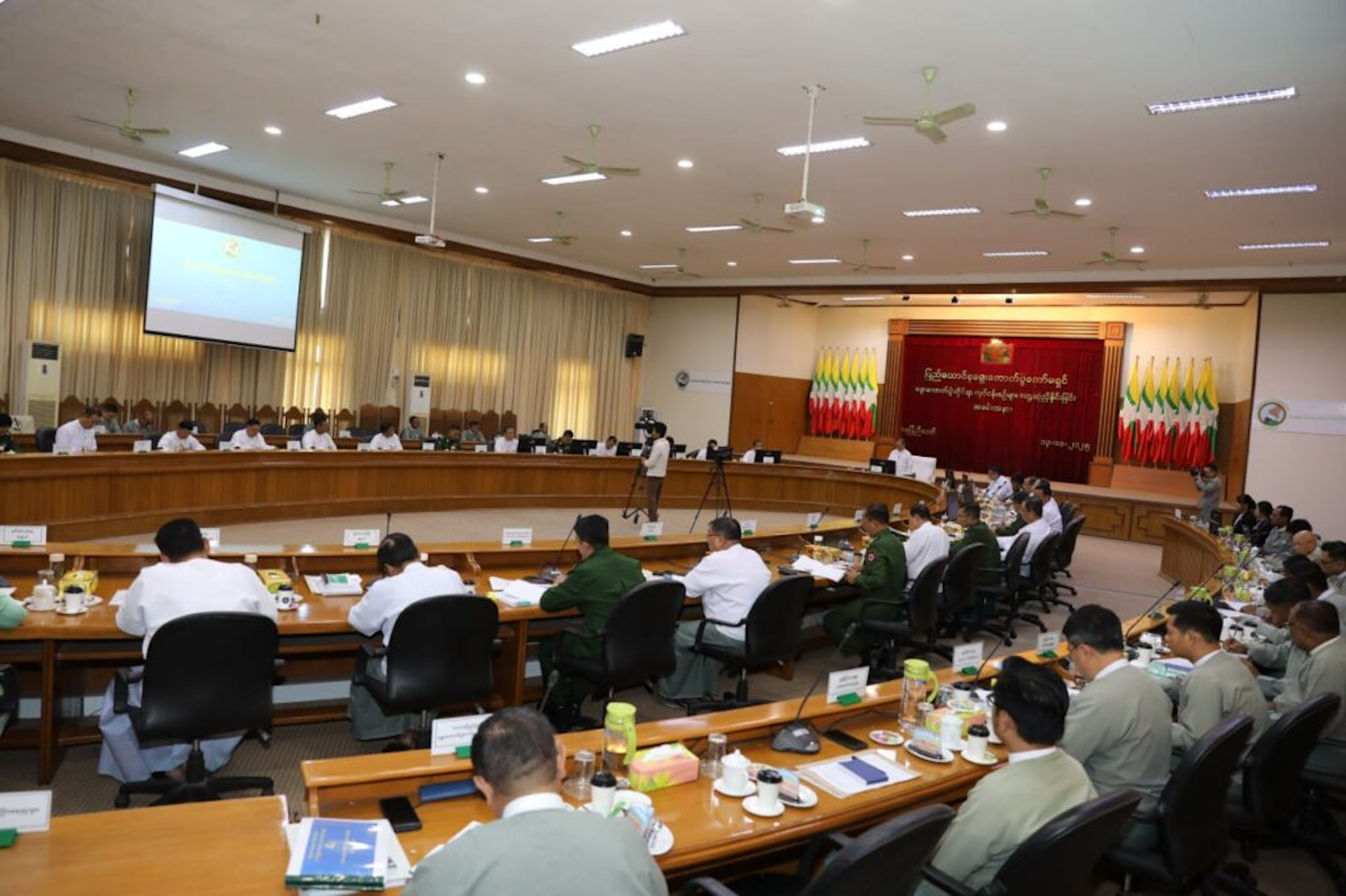
A coordination meeting on the successful holding of elections is held at the Union Election Commission office in Naypyidaw on 13 November 2025 (Source: Myanmar Ministry of Information).
Conclusion
Myanmar Witness has identified 94 conflict-related incidents in the townships designated as “stable” places of voting in Phase 1 of the elections. The recorded occurrence of these incidents calls into question the criteria used to define “safe” electoral spaces.
The persistence of airstrikes, landmine presence, fires and casualties suggests that safety is relative rather than absolute.
Political participation in these areas is likely to be selective, shaped by fear and insecurity rather than by genuine political choice. In this context, Phase 1 participation should not be interpreted as evidence of broad political stability or inclusive democratic engagement. The conflict environment, uneven inclusion of townships, and ongoing conflict incidents raise concerns about the inclusiveness, safety, and credibility of the electoral process in Myanmar.