Actors
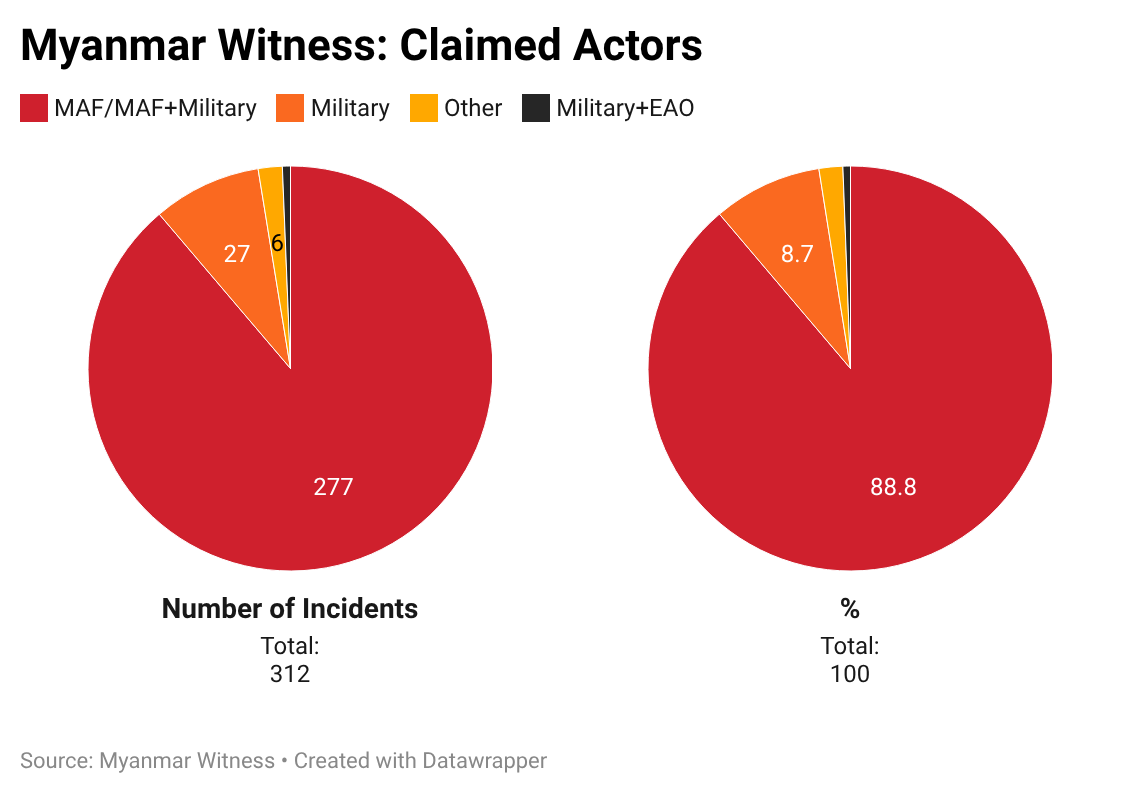
While Myanmar Witness cannot fully verify the actors responsible for reported airstrikes hitting religious buildings, the Myanmar Air Force (MAF) was cited in 277 incidents (89% of the total). This includes primary airstrikes followed by other aerial attacks involving paramotors, drones and heavy weapons across six incidents.
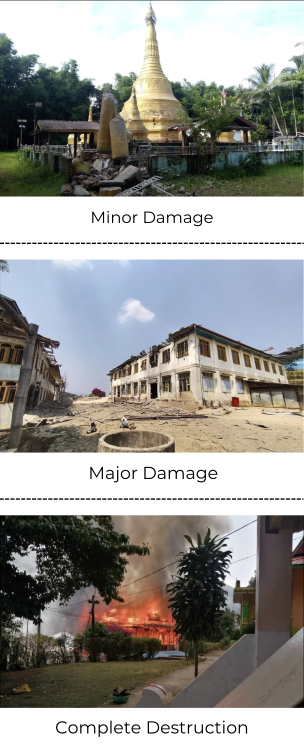
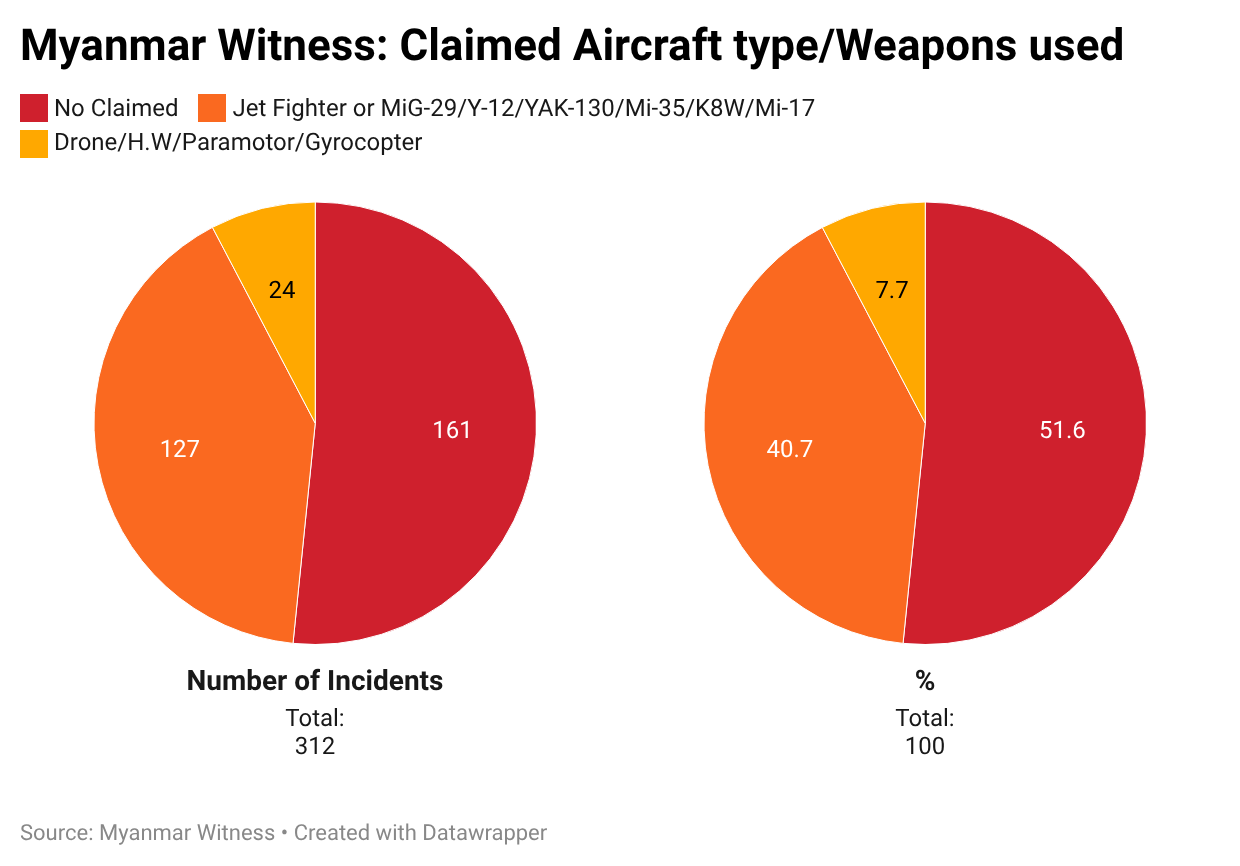
Aircraft claims appeared in 127 incidents (41%), and these included the use of MiG-29, Mi-35, Mi-17, Y-12, YAK-130, and K-8W (figure 8). From the incidents attributed to the MAF, 184 (66%) caused major or complete destruction. This is consistent with heavy ordnance capabilities and thus supports the damage analysis documented in this investigation.
Remaining incidents (<11%) were attributed to either Ethnic Armed Organisations (EAO), People’s Defence Forces (PDF), Pyu Saw Htee, or were unidentified (and therefore categorised as ‘other’).
Conclusion
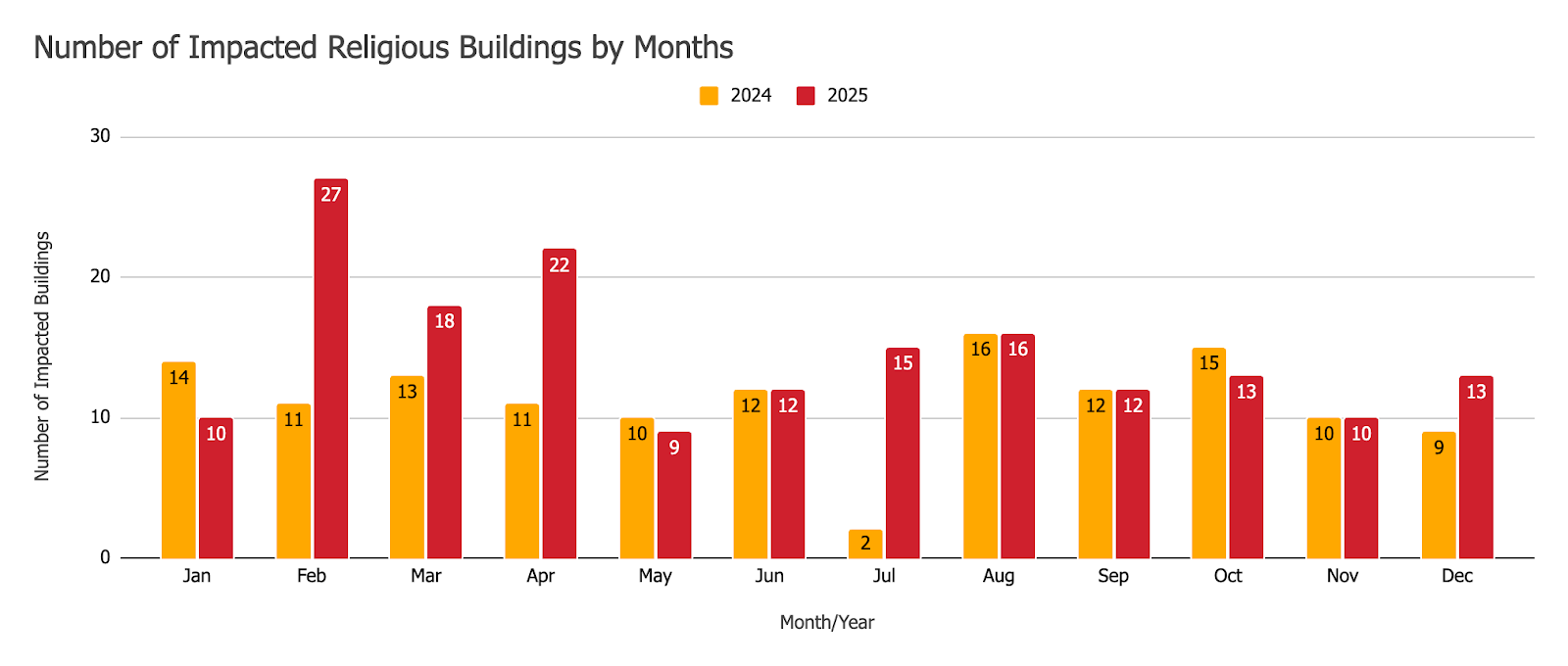
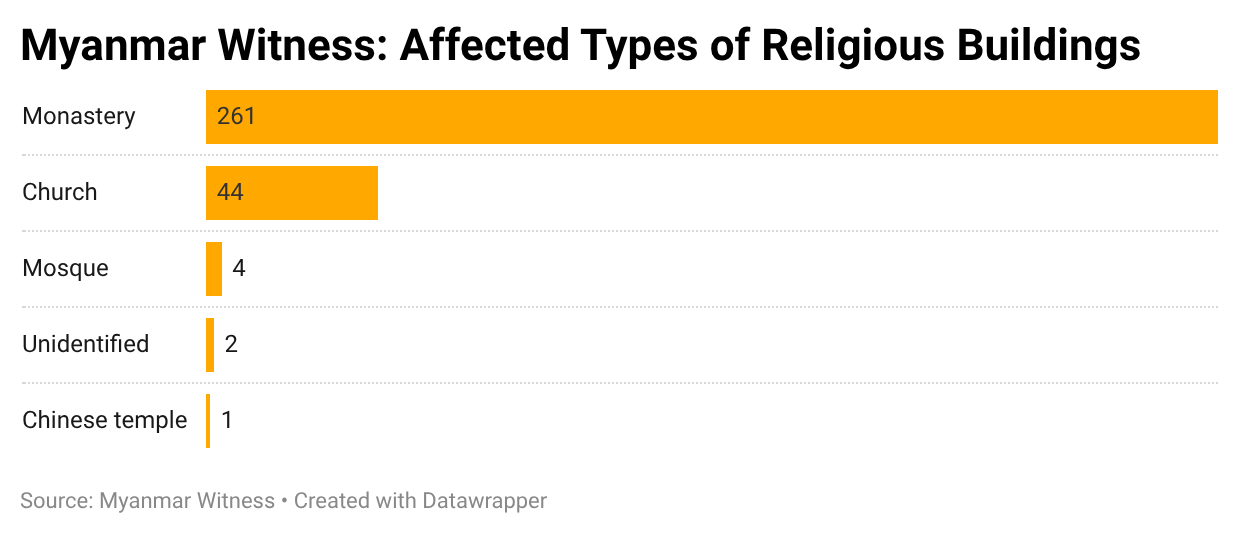
Between 2024 and 2025, Myanmar Witness documented 312 airstrikes affecting religious buildings across Myanmar, including monasteries, churches, mosques, and temples.
With 13 of 15 states/regions impacted, these incidents highlight the heightened risk to civilians visiting religious sites. This danger is particularly acute in Sagaing Region and Shan State, which experienced the highest concentration of documented incidents.
The MAF was cited as the perpetrator in 89% of the claims, supported by further mentions of fighter aircraft in over 40% of reports and widespread explosive damage. While there was a lack of visual evidence to confirm full attribution, the MAF remains the only entity in Myanmar with access to fighter jets.
Monasteries were documented as the most affected building type. This potentially reflects their prominence in society, from their visually distinct architecture to being large enough to shelter IDPs and host community events. However, Myanmar Witness’s IDP report notes that such sites have also sometimes been used by military and resistance groups. Thus, the use of monasteries varies but demonstrates how important these sites are for local communities.
These patterns highlight the unsafe conditions at religious sites and signal an urgent need for protection measures. Myanmar Witness will continue to monitor reported incidents that affect religious buildings in Myanmar.