Myanmar military-led election 2025-2026: ongoing conflict in townships limits freedom of expression while USDP secures victory

2 min read
Myanmar Witness

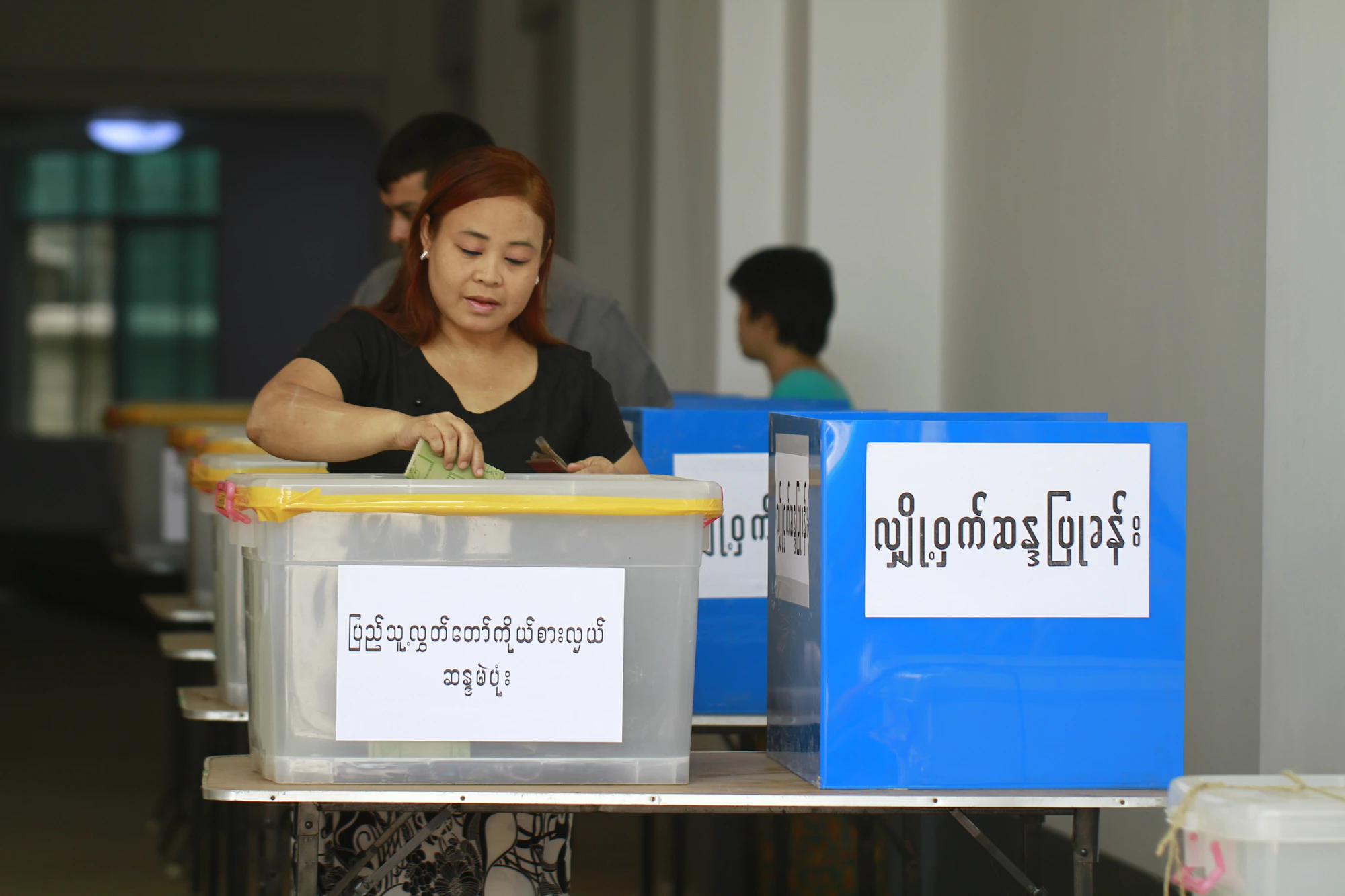
Burma By-Election 2012 (Source: Wikimedia Commons)
Myanmar Witness’s investigation found a consistent disconnect between the designation of “stable” townships for electoral participation, the phased schedule and the reality of ongoing conflict and reported arrests on the ground. This investigation analysed conflict incidents, including airstrikes, fires, landmines, drone and paramotor activity and casualty events, which repeatedly occurred in townships that were officially deemed safe for voting. During this process, it was notable that constituencies within ethnically diverse and conflict-affected states were excluded from the elections altogether.
Key findings:
● The political field was significantly restricted. Eighty-four parties, including the National League for Democracy (NLD), were disbanded and barred from taking part in the elections. Meanwhile, 63 parties that were largely aligned or accepted by the military were allowed to participate in the elections.
● Elections were only held in areas that the military deemed “manageable” or “secure”. Initially, at least 121 constituencies were excluded due to security concerns, though some were later included in Phase 3. For example, in Chin and Rakhine states, less than 25 percent (%) of townships were allowed to vote.
● The electoral system was reconfigured, and 25% of parliamentary seats remained reserved for military appointees, thus limiting the scope of genuine and free competition.
● The Election Protection Act, along with other laws, were utilised to arrest and even prosecute hundreds of people, including activists, protest leaders and citizens. For example, several individuals were often arrested for peaceful expression or minor acts such as distributing stickers or tearing up political leaflets.
● Across all three phases of voting, townships scheduled to vote experienced conflict-related incidents during the four-month pre-election period, before voting even began.
● Phase 3 had the highest proportion of affected townships, with Sagaing (စစ်ကိုင်း) and Tanintharyi (တနင်္သာရီ) recording incidents in every voting township.
● During the election period of 28 December 2025 – 25 January 2026, at least one incident was recorded on all but three days nationwide, with 19 participating townships having experienced events within a week before, a week after, or on their election date.
Taken together, the ongoing conflict, selective territorial inclusion, and legal repression indicate that the process was used to consolidate military power rather than reflect genuine democratic choice.
Download to read the full report now.
Latest reports, direct to your inbox
Be the first to know when we release new reports - subscribe below for instant notifications.