Shwe Kokko Scam Compound: A Crackdown Under Scrutiny

2 min read
Myanmar Witness

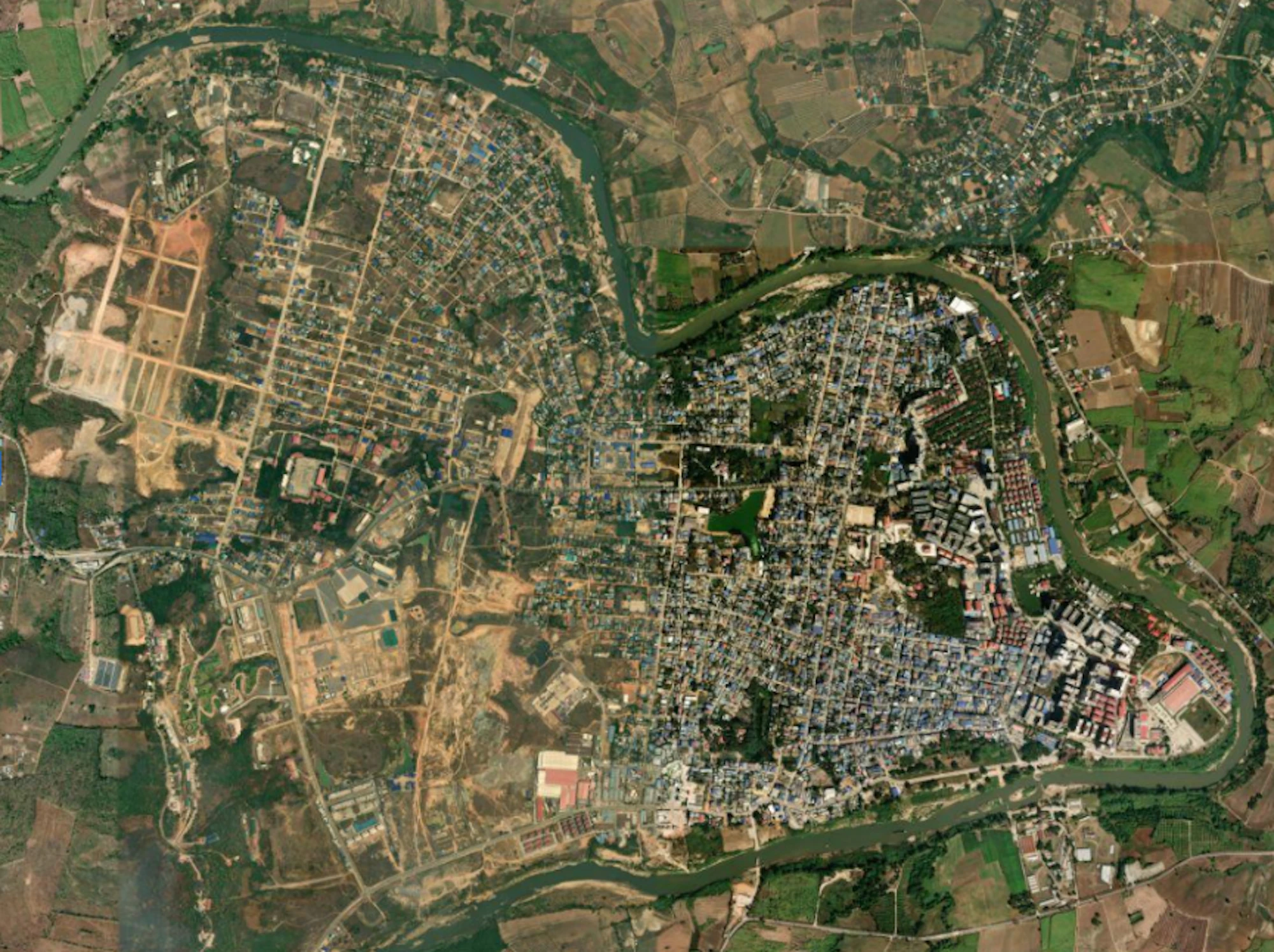
Overview of Shwe Kokko (source:© Apple Maps, 2026, Maxar Technologies)
Executive Summary
On 25 May 2026, the Myanmar military government announced a crackdown on Shwe Kokko, a known scam compound. The operation was carried out by the Myanmar military with support from the Karen National Army (KNA), formerly the Karen Border Guard Force (KBGF). State media reported that 77 out of the 322 buildings identified as illegal were targeted for demolition, with the operation continuing until 26 July 2026.
Myanmar Witness analysed the ‘crackdown’ series and found that although the state’s official narrative and visuals did broadly align with the demolitions to begin with, from July 2026 a number of discrepancies were identified when compared with available evidence. This includes differences between reported and geolocated building locations, changes to roofs and structure heights ahead of demolitions, and the use of AI-edited imagery.
In order to understand the state’s measures and plans for its operation, Myanmar Witness also reviewed three official state media statements written in English, as well as one statement given by the KNA.
These statements provided a narrative to minimise responsibility and shift blame onto other actors, while emphasising the scale of the state’s action. With the narrative and visual evidence presented together, it raises questions about how far this operation was aimed at actually dismantling scam networks in the country, and how its intentions were to project this appearance of showing a decisive action towards domestic and international audiences.
Although this report examines the demolition within Shwe Kokko, it is less about proving that every building destroyed was or was not connected to scam activity, but rather about highlighting that the state’s official narrative and its visuals of the crackdown are not consistently supported by the available evidence.