RSF activity and conflict impact in Kordofan

4 min read

Sudan Witness

Sudan Witness's photo

Planet satellite imagery from 21 January 2026 showing significant burn scars appearing around Habila, South Kordofan [11.95,30.03] (source: image © 2026 Planet Labs)

Share Article

New Sudan Witness analysis documents an escalation in indications of violence in Sudan’s Kordofan region, as pro-RSF calls for violence online coincide with satellite evidence of fighting, displacement, and trench construction around key cities.

Key findings

In January 2026, CIR identified a marked increase in RSF and pro-RSF messaging referencing South Kordofan, including explicit calls for violence. Key findings include:

  • Pro-RSF social media accounts circulated graphic content purportedly showing the aftermath of fighting in January 2026, accompanied by inflammatory rhetoric.
  • Satellite imagery shows damage consistent with active fighting in South Kordofan, including Habila, Al Kuweik, and Kadugli, as well as in West Kordofan, notably El Fula.
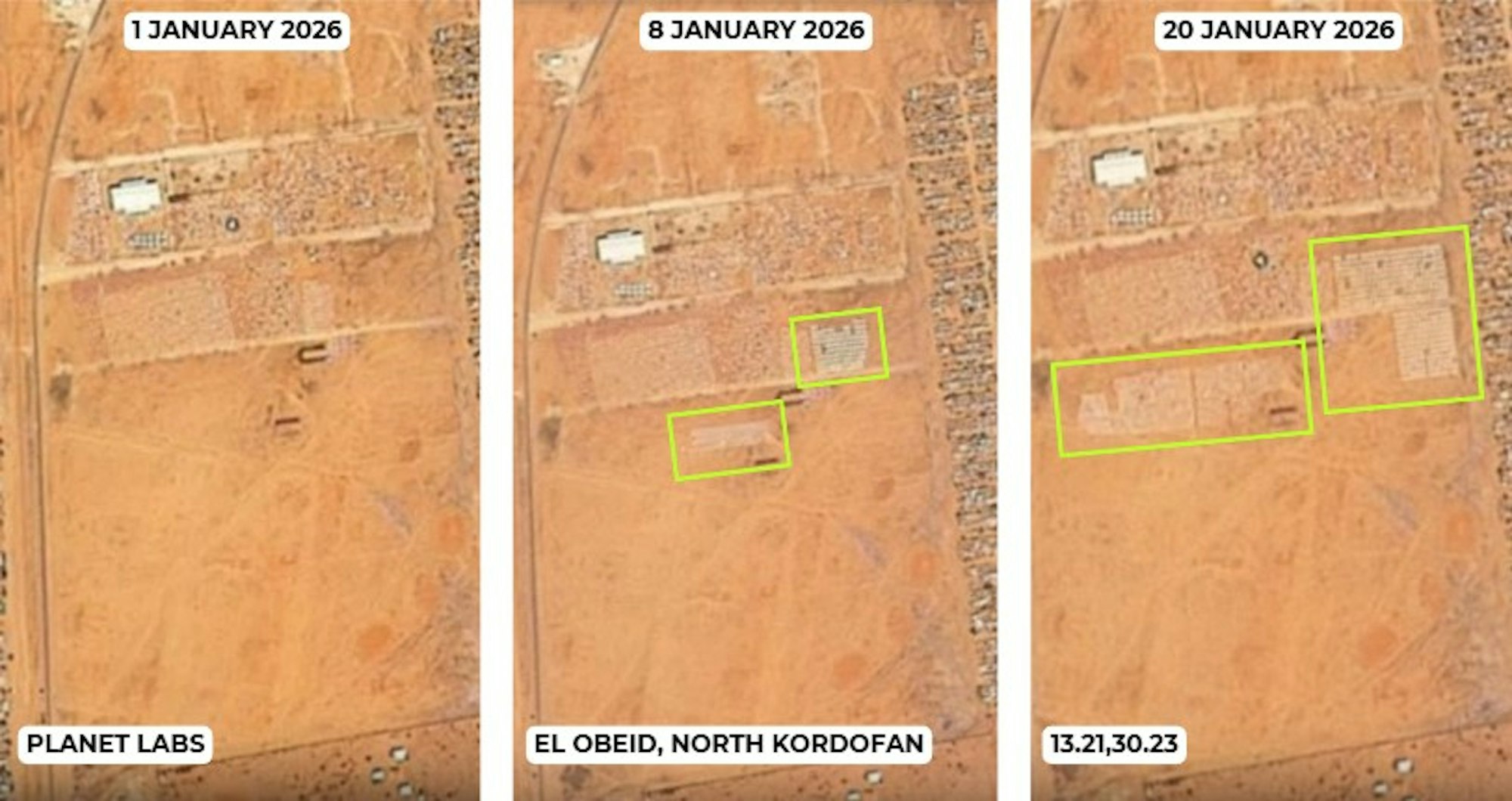
  • Satellite imagery indicates the expansion of an internally displaced persons (IDP) camp near El Obeid in North Kordofan, reflecting ongoing displacement linked to the conflict.
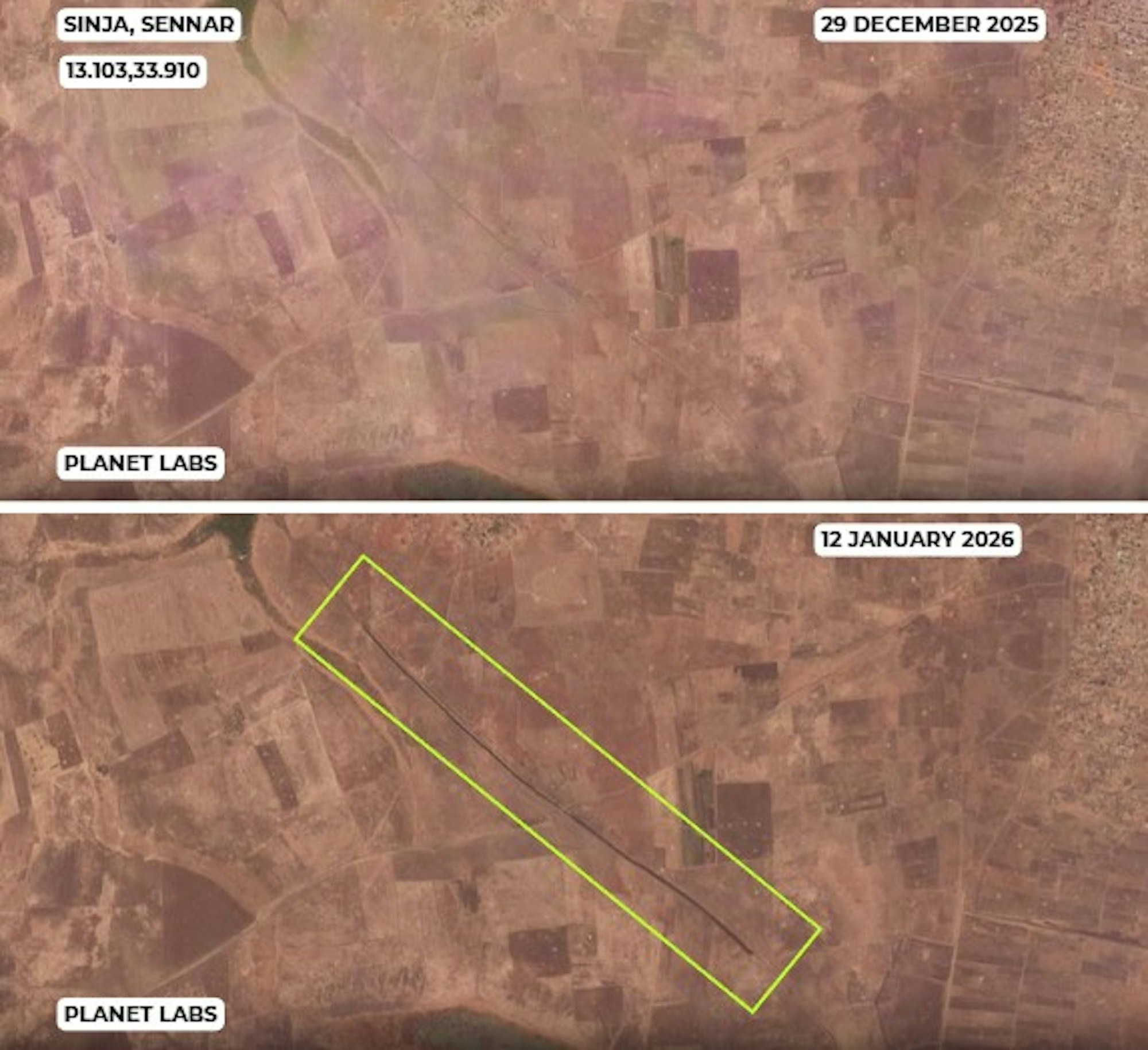
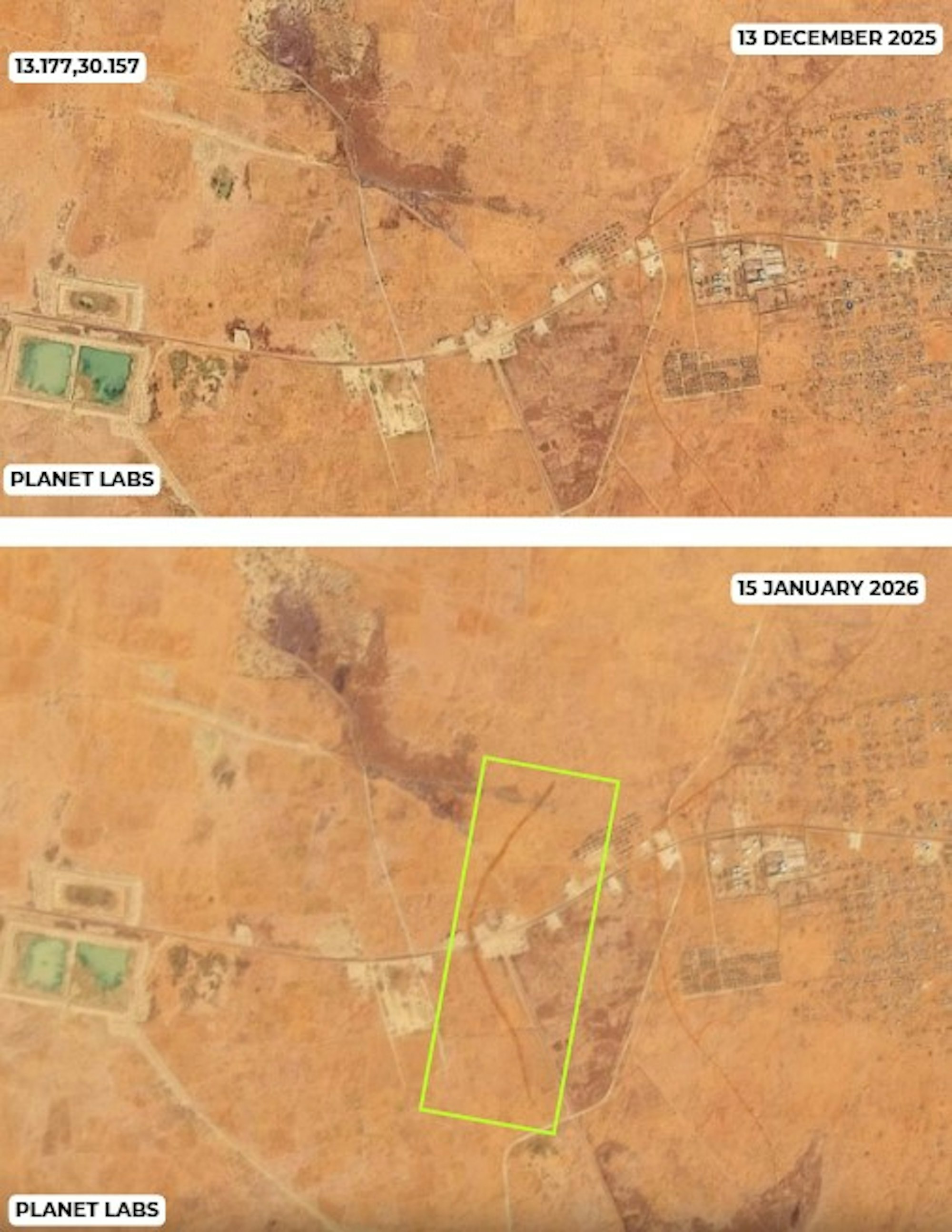
  • Satellite imagery shows the emergence new trenches around the cities of Sinja in Sennar state and El Obeid in North Kordofan, similar to the one used by the RSF to besiege El Fasher in North Darfur, raising concerns that they will be used in a similar way, trapping civilians and impeding their ability to flee to safety.

RSF calls for violence

RSF and pro-RSF social media channels circulated videos and images calling for violence – and, in some cases, claiming battlefield victories – in Sudan’s Kordofan region between 8 and 18 January. This activity followed the RSF’s takeover of the 22nd Division base in Babanusa, West Kordofan, on 1 December 2025, which had been under siege since 22 January 2024, and suggested potential efforts by the group to expand its presence into South Kordofan.

On 8 January, the RSF posted a video on its official Telegram channel in which an RSF fighter claimed victories in South Kordofan, indicating a possible intent to extend operations in the region. CIR also observed a concurrent increase in explicit calls for violence circulating across pro-RSF Telegram channels.

On 14 January, a moderator of a pro-RSF Telegram channel with more than 5,000 followers posted a graphic image depicting SAF soldiers alongside a severed head, reportedly from fighting in Al Kuweik earlier that day. The caption explicitly referenced South Kordofan and called for violence, stating: “We will repeat the El Fasher massacre in South Kordofan” (سوف نعيد مجزرة الفاشر في جنوب كردفان).

On 18 January, the video from which the image appears to have been taken was posted to another pro-RSF Telegram channel. The footage shows SAF soldiers celebrating while carrying a severed head at the police station in Al Kuweik, South Kordofan, an area where evidence of fighting between the RSF and SAF was observed on 14 January.

Evidence of damage and armed activity

South Kordofan

Analysis of satellite imagery indicates damage consistent with armed conflict in Habila, Al Kuweik, and Kadugli in January.

Habila: Planet imagery captured between 30 December 2025 and 21 January 2026 shows burn scars emerging around the settlement (figure 1).

Kadugli: Planet imagery captured between 21 and 24 December 2025 reveals the emergence of burn scars across multiple areas of the city.

Al Kuweik: CIR verified footage posted on 14 January by a pro-SAF X account, showing SAF soldiers celebrating in central Al Kuweik, located approximately 30 kilometres north of Kadugli, after reportedly repelling an RSF attack. Planet satellite imagery from 13 January shows burn scars appearing around the settlement consistent with those seen after armed clashes.
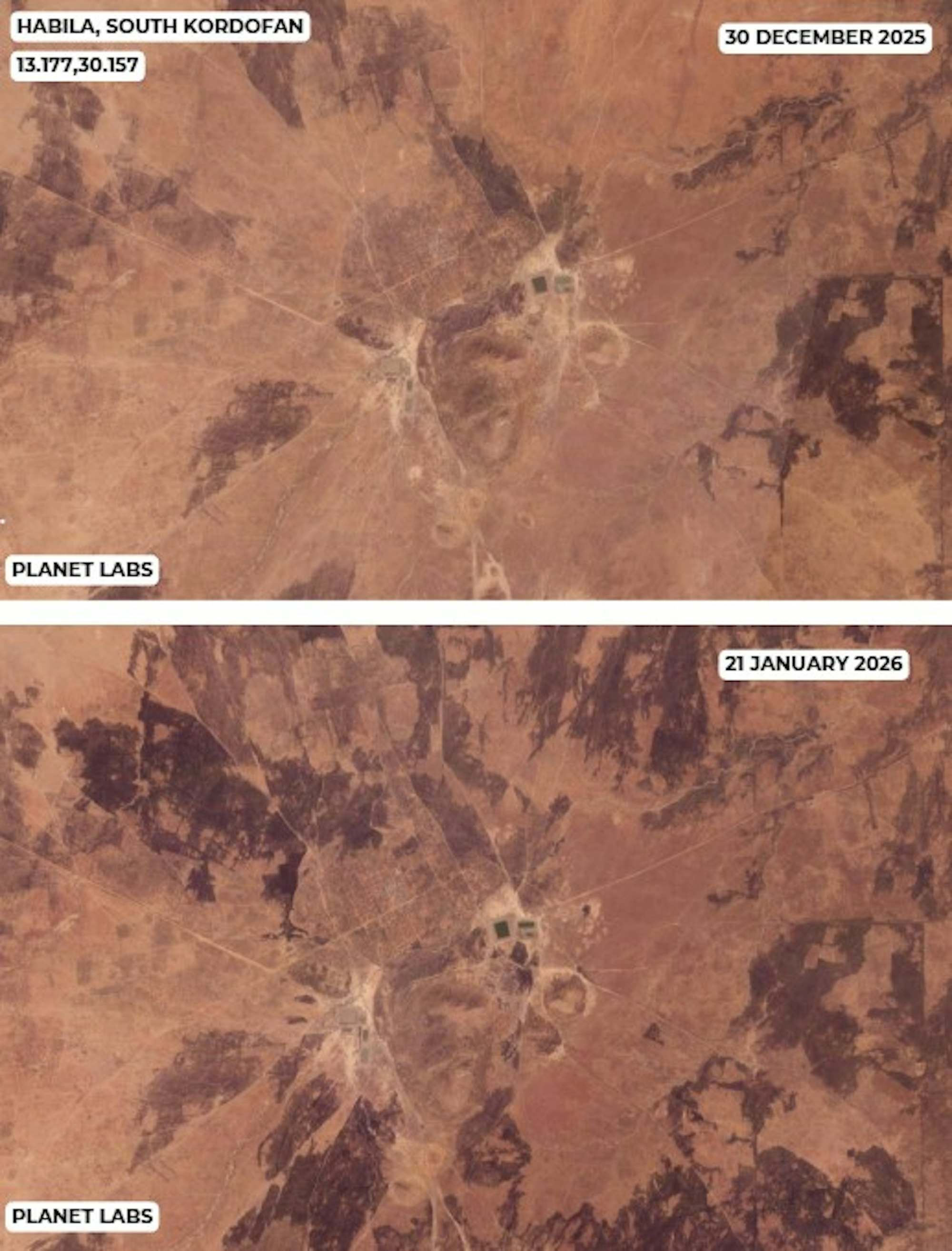
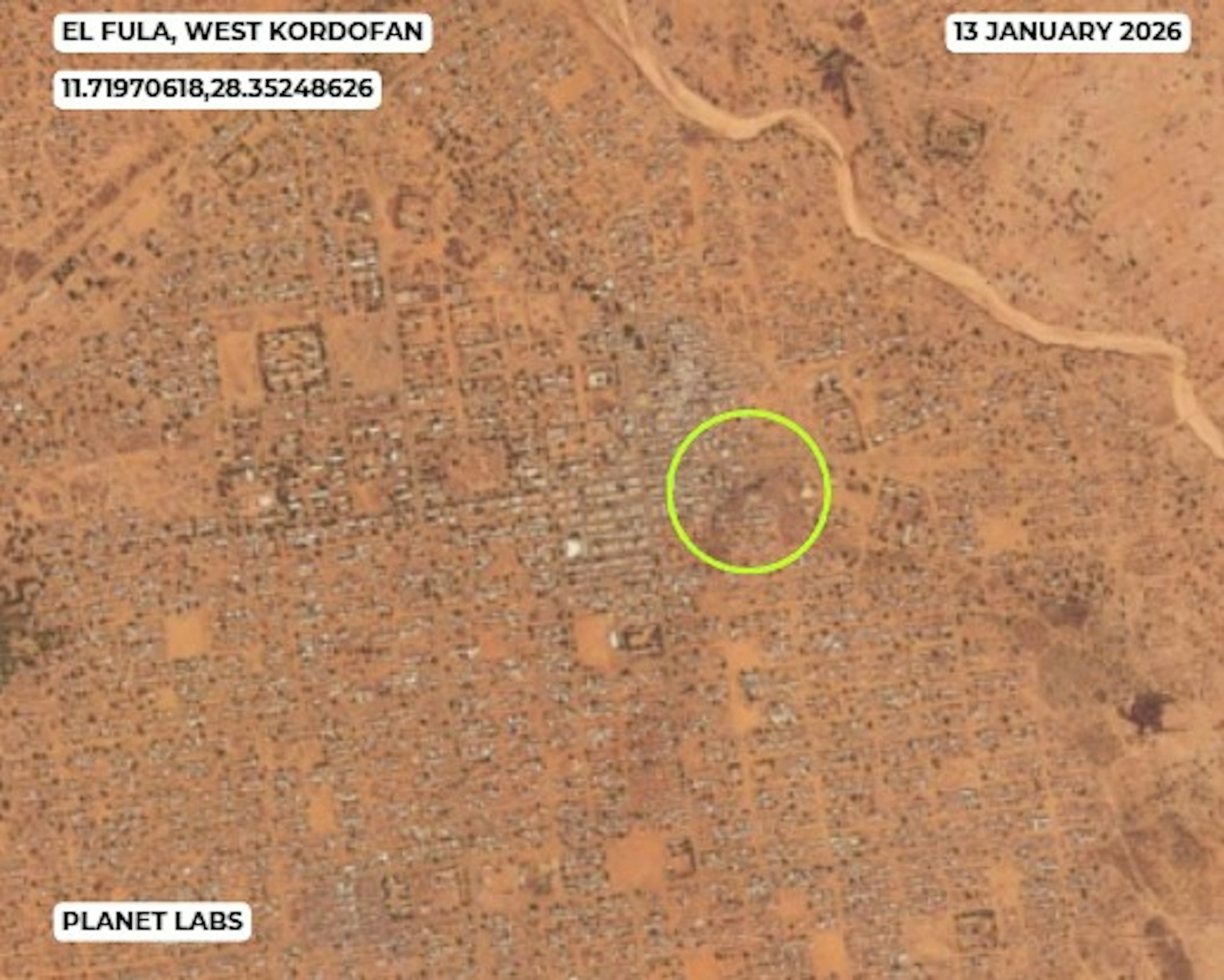
Figure 1: Planet satellite imagery from 30 December 2025 and 21 January 2026 showing significant burn scars appearing around Habila, South Kordofan [11.95,30.03] (source: image © 2025/2026 Planet Labs)

West Kordofan

El Fula

CIR also verified active fires and damage in the city of El Fula, West Kordofan. Comparative analysis of Planet imagery from 8 and 11 January shows burn scars emerging at El Fula market. Subsequent Planet imagery from 13 January captured an active smoke plume rising from the market area in El Fula (figure 2).

Figure 2: Planet satellite imagery from 13 January 2026 showing a smoke plume coming from the market in El Fula, West Kordofan [11.71970618,28.35248626] (source: image © 2026 Planet Labs)

North Kordofan

El Obeid

On 6 January, independent Sudanese outlet Radio Dabanga reported that a drone strike on 5 January on El Obeid, North Kordofan, had allegedly killed 10 civilians. CIR has not been able to verify damage from the reported drone strike. However, Planet satellite imagery from 1 to 20 January 2026 shows a steady increase in the number of tents at an IDP camp in the northern parts of El Obeid (figure 3).

On 18 January, Sudan Tribune, an English-language news outlet covering Sudan, reported on the camp’s expansion, citing an alleged RSF drone attack on the El Obeid power station on 4 January. The United Nations International Organisation for Migration (IOM) estimated that approximately 50,000 people were displaced across the Kordofan regions between late October and 19 December 2025.

The observed growth of the IDP camp highlights the continuing impact of the conflict on civilian populations in the region.

Figure 3: Planet satellite imagery showing the growth of an IDP camp in El Obeid, North Kordofan [13.21,30.23] (source: image © 2026 Planet Labs)

Construction of trenches

Satellite imagery from December 2025 through January 2026 shows the emergence of trenches around two cities in Sennar and North Kordofan states in December and January, resembling the one surrounding El Fasher in North Darfur. Trenches appeared along the southwestern edge of the city of Sinja in Sennar state between 29 December 2025 and 12 January 2026 (figure 4). Additional trenches emerged on the western outskirts of El Obeid in North Kordofan between 13 December 2025 and 21 January 2026 (figure 5).

CIR was unable to determine who constructed the trenches, or their intended purpose. However, their design and placement closely resemble the trench used by the RSF during its 18-month siege of El Fasher, prior to the group’s violent takeover of the city on 26 – 27 October 2025. The emergence of similar fortifications in Sennar and North Kordofan raises concerns that they could be used in similar siege tactics, potentially trapping civilians within urban areas and restricting their ability to flee to safety.

Figure 4: Planet imagery showing the development of a trench on the southwestern side of Sinja, Sennar state, between 29 December 2025 and 12 January 2026 [13.103,33.910] (source: image © 2025/2026 Planet Labs)

Figure 5: Planet satellite imagery from 13 December 2025 to 15 January 2026 showing a large trench being developed on the western side of El Obeid, North Kordofan [13.177,30.157] (source: image © 2025/2026 Planet Labs)

Latest reports, direct to your inbox

Be the first to know when we release new reports - subscribe below for instant notifications.

Share Article