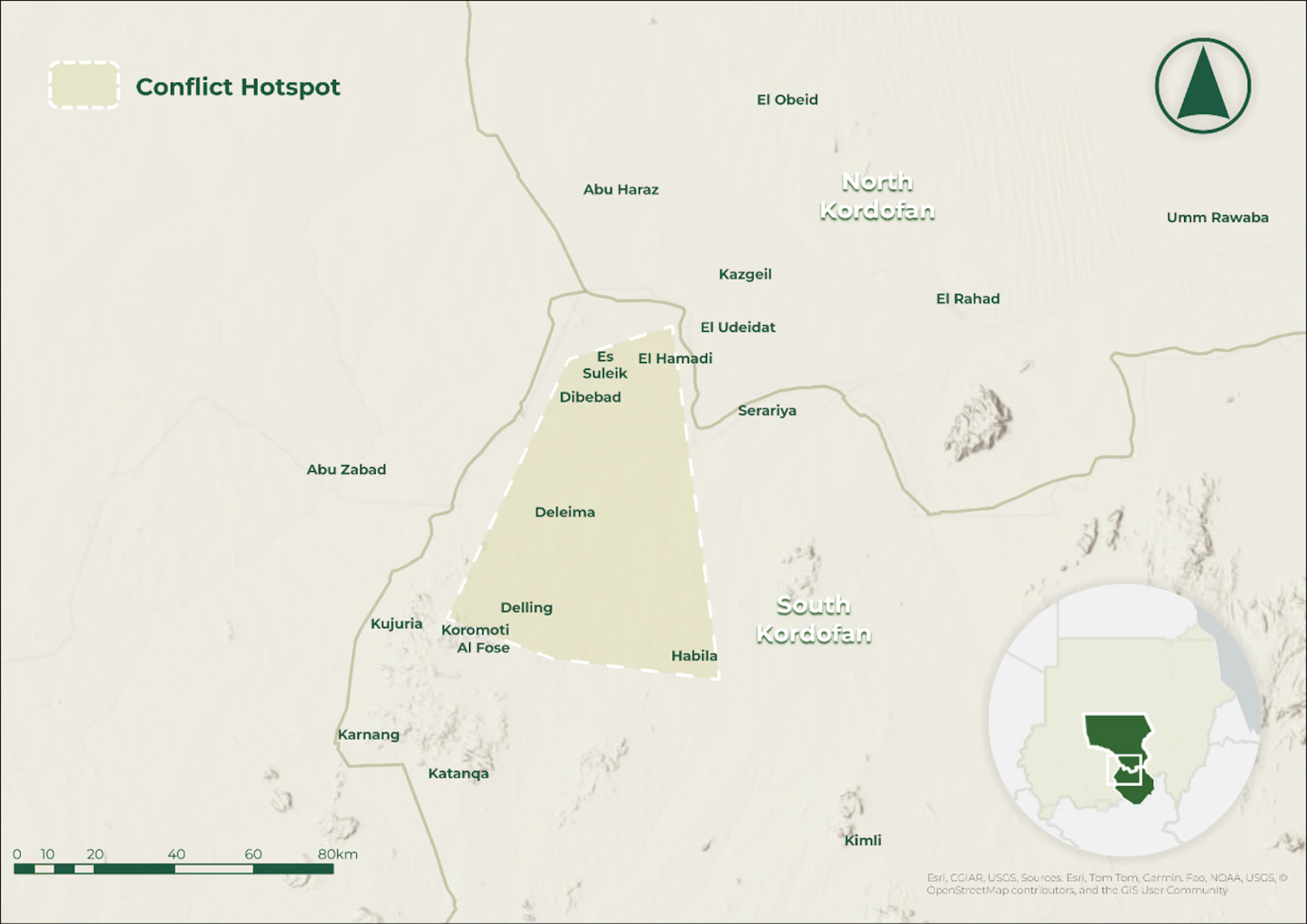
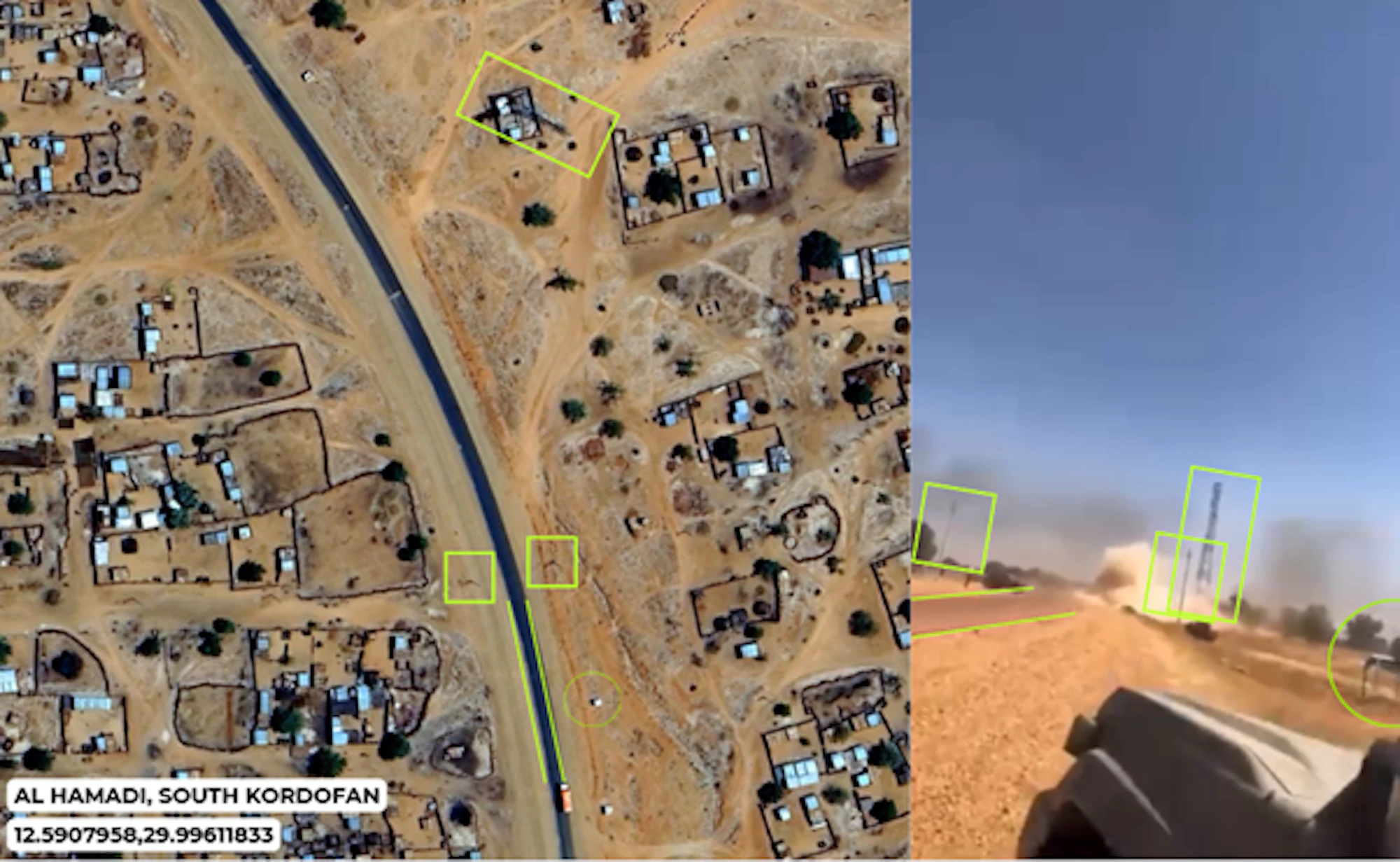
- CIR verified the presence of fighters in RSF uniforms in and around Dilling on 19 March, and fighters in SAF uniform in the centre of the city on 6 April. CIR also verified the presence of both RSF and SAF forces in Al Hamadi on 18 April, located northeast of Dilling on the main route toward the North Kordofan border and the regional capital, El Obeid.
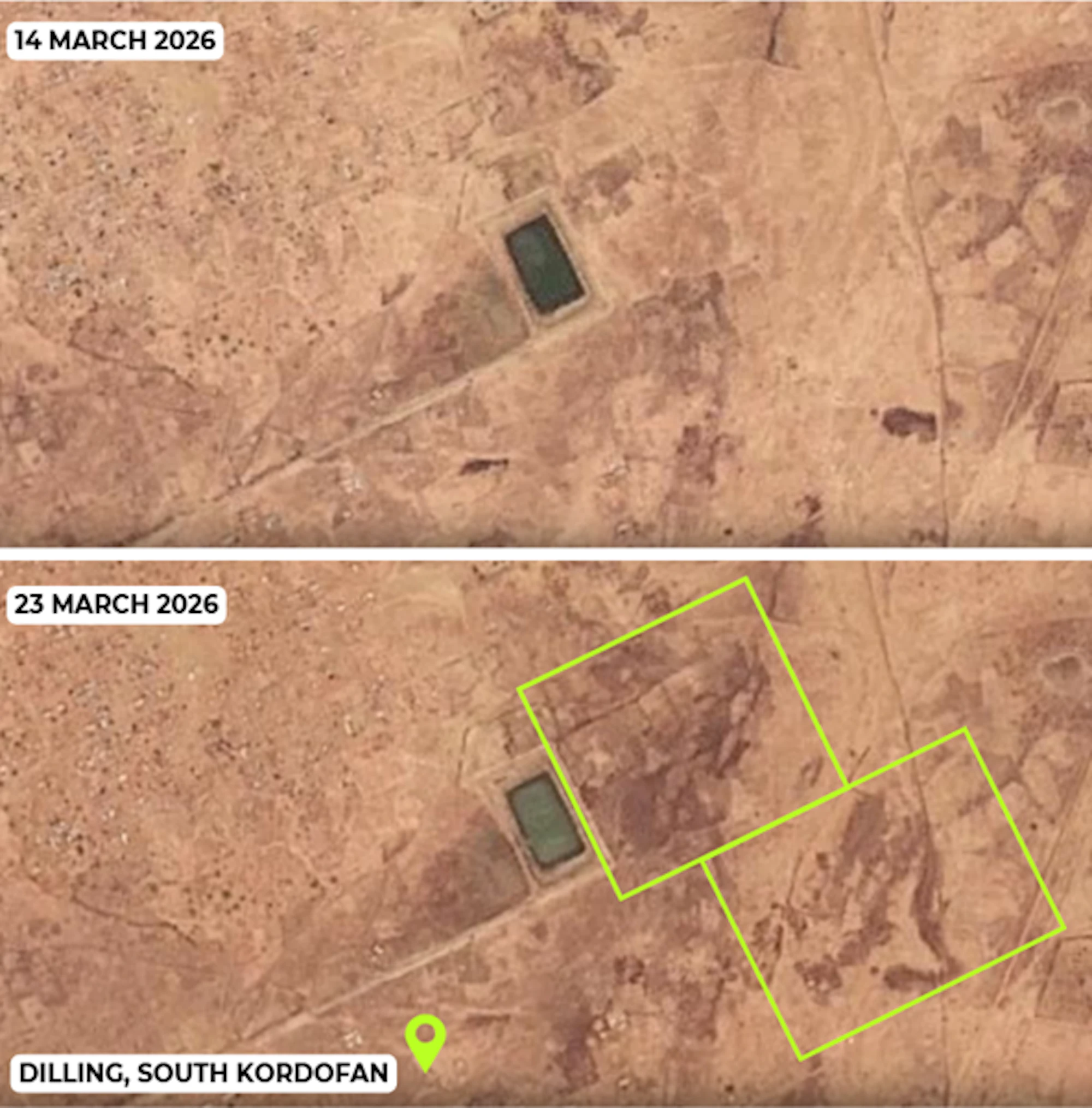
- CIR observed evidence of conflict activity in the vicinity of civilian infrastructure across Dilling between 1 March and 16 April. Satellite analysis confirmed burn scars near residential areas, Dilling University, the military hospital, and the city’s water reservoir. CIR could not confirm the extent of damage to infrastructure based on available data, but analysis suggests these burn scars are linked to repeated shelling near civilian infrastructure.
- Just over a week later, on 18 April, CIR verified the presence of both RSF and SAF in Al Hamadi. Geolocated footage confirms a significant build-up of military vehicles and intense fighting on the main road through the city.
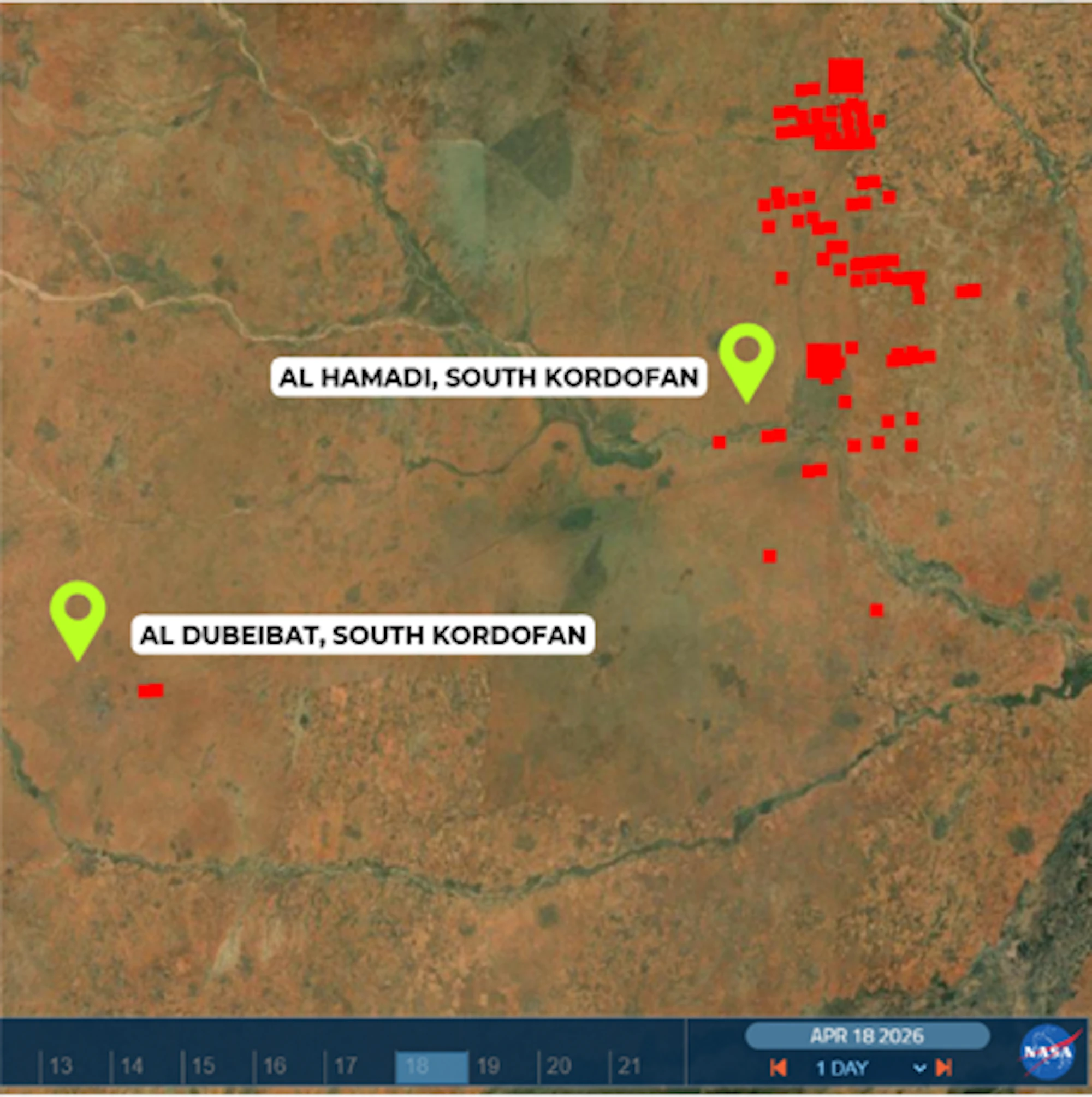
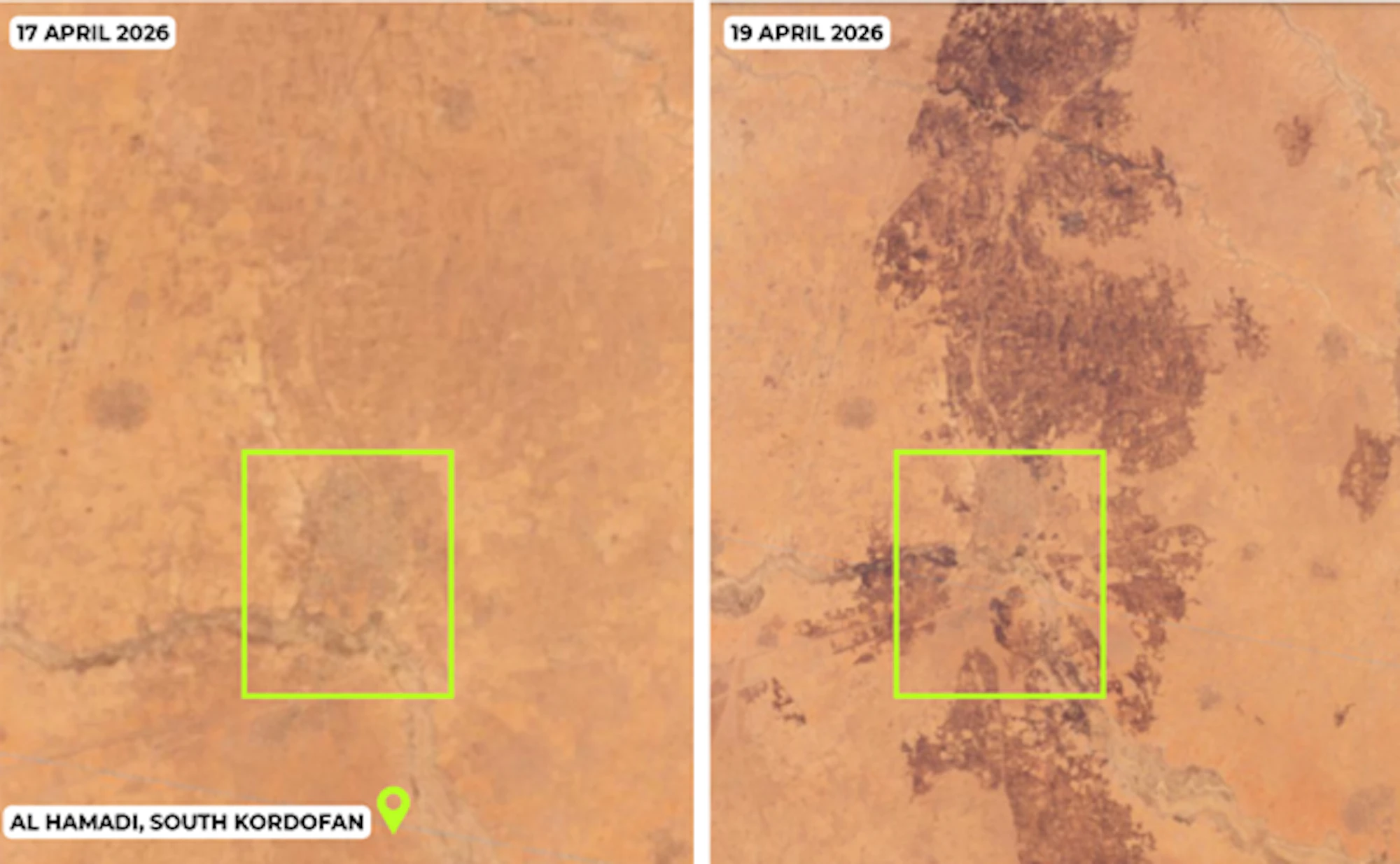
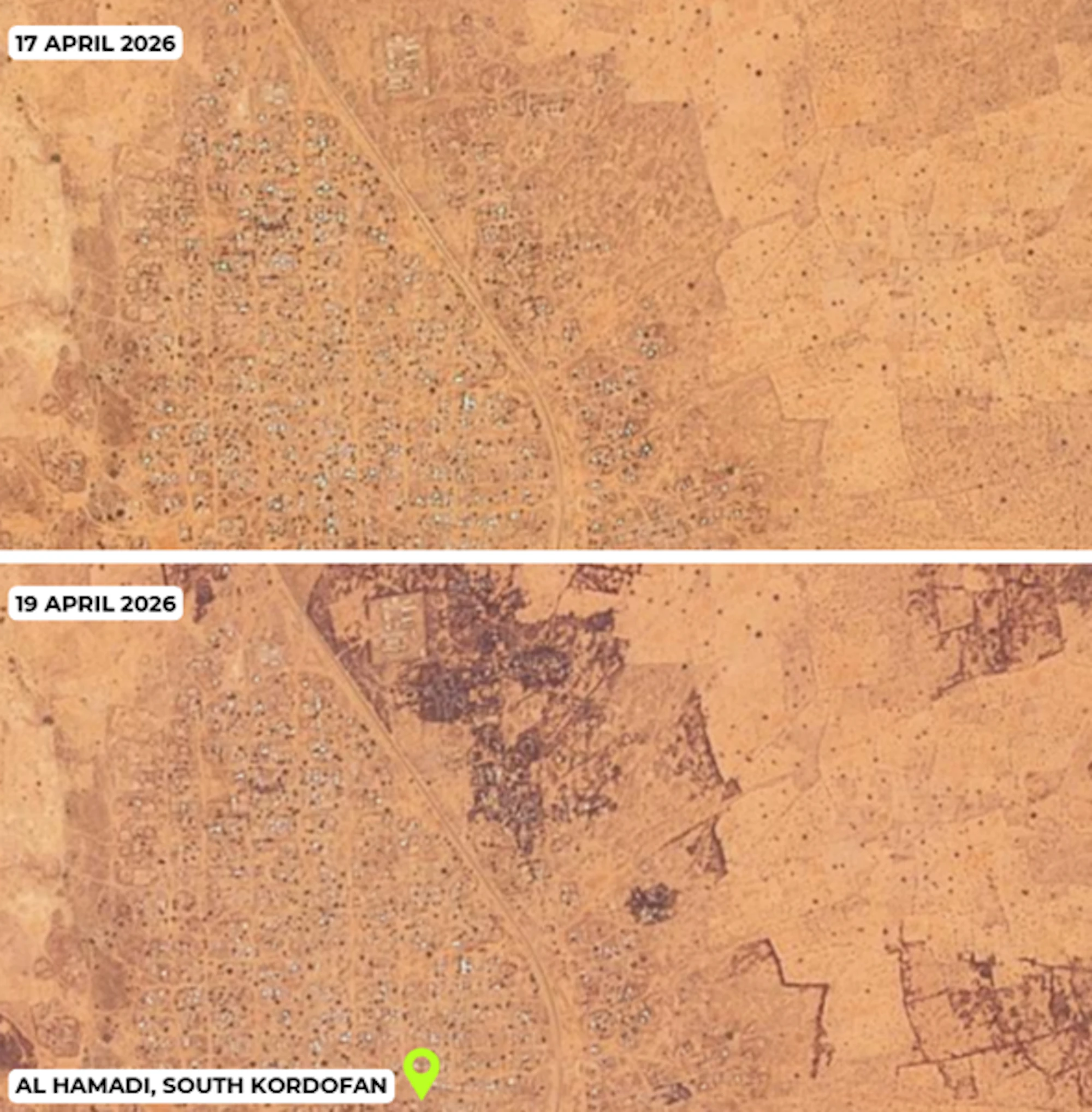
- CIR confirmed large-scale fires across Al Hamadi on 18 April, corroborating reports of armed clashes in the area. NASA FIRMS detected at least 70 heat signatures in and around the city, with Planet satellite imagery from 17 and 19 April confirming burn scars in the vicinity of residential areas — both an indicator and a driver of civilian displacement.
- Both the RSF and SAF made competing claims about who had control of Al Hamadi following the clashes on 18 April. CIR verified the presence of fighters in RSF affiliated uniforms in central Al Hamadi on 19 April, however, contradicting SAF claims that the RSF had retreated from the area.
- CIR is unable to confirm who controls Dilling or Al Hamadi at the time of writing, and therefore the extent to which the RSF has made further inroads into the Kordofan region.
- Over 100 civilians were killed in Dilling between February 2026 and 20 April, according to Radio Dabanga, with more than 50,000 at acute risk. The United Nations International Organisation for Migration’s Displacement Tracking Matrix (IOM DTM) recorded over 88,000 displaced from Kordofan between October 2025 and January 2026, before the clashes in March and April, 37% of whom originated from South Kordofan.
RSF eastward advance
The ongoing fighting across Kordofan is the latest phase of the RSF’s sustained eastward advance across Sudan following the RSF takeover of El Fasher in October 2025, which granted the group control over all five of Sudan’s Darfur states. CIR reported on the RSF takeover of Babanusa on 1 December 2025, which marked an inflection point, opening routes further east into the Kordofan heartland, as reported on by Sudan Witness in January 2026. Babanusa is a strategically significant city in West Kordofan due to its roads leading south towards Heglig and the South Sudan border.
In the weeks that followed, the RSF continued to push east through South Kordofan. Radio Dabanga reported on 3 March that the RSF had engaged in sporadic clashes around Al Kuwayk and Kadugli, indicating an expanding front line across the region ahead of the fighting in Dilling and Al Hamadi documented in this report. CIR verified the presence of fighters in both RSF and SAF uniforms across South Kordofan in March and April 2026, including in Dilling, Al Hamadi, Kazgil, Dubeibat, and Shawaya.
The RSF’s continued eastward advance toward and into Dilling, South Kordofan, and the subsequent northward spread of fighting toward the North Kordofan border, represents a sustained effort to consolidate territorial control across central Sudan.
Dilling: systematic damage occurring near civilian infrastructure
Armed actor presence
Since the SAF broke the siege on Dilling in January 2026, as reported by Al Jazeera, fighting between the SAF and RSF has continued in the region. The RSF is reportedly being supported by the Sudan People’s Liberation Movement North (SPLM-N), according to Sudan Tribune on 28 March. CIR verified the presence of combatants in SAF-affiliated uniforms in the city and RSF-affiliated uniforms on the outskirts of the city in March and April 2026.
On 19 March, a pro-RSF Telegram channel shared a video showing men in uniform, commonly worn by RSF fighters, at the Petrolins Crude Oil (PETCO) site in Dilling, confirming an established RSF foothold close to the city.
CIR also verified two videos posted on 6 April on a pro-SAF Telegram channel showing military vehicles driving through Dilling. One video, shared on Telegram on 6 April, showed soldiers celebrating on the outskirts of Dilling. The other video, also posted to Telegram, shows what appear to be the same SAF vehicles as seen in the first video reaching the centre of the city.
Evidence of conflict activity
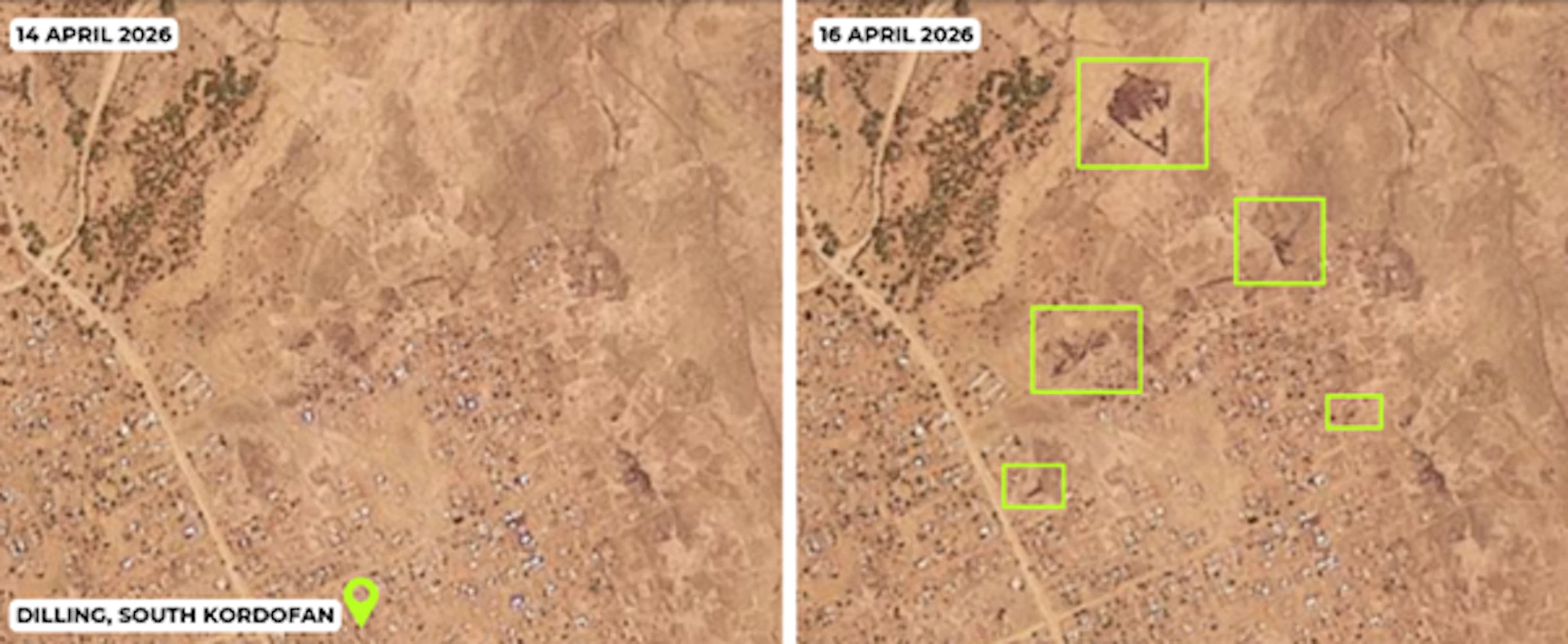
CIR identified burn scars appearing in the vicinity of civilian infrastructure across Dilling between 1 March and 16 April 2026, including residential areas, healthcare facilities, educational institutions, and the city’s primary water supply. CIR is unable to verify the cause of these burn scars, and fires spread easily during this time of the year. However, the changes observed on satellite imagery are consistent with conflict activity seen in other areas of Sudan during the conflict.
Burn scars consistent with conflict activity appear on Planet satellite imagery across residential neighbourhoods on the western side of Dilling between 1 and 30 March, in the city centre on 14 March, in southern Dilling between 25 and 28 March, and in two further southern areas between 12 and 13 April and 14 and 16 April (figure 2). By 14 April, burn scars also appear in residential areas in northern Dilling.