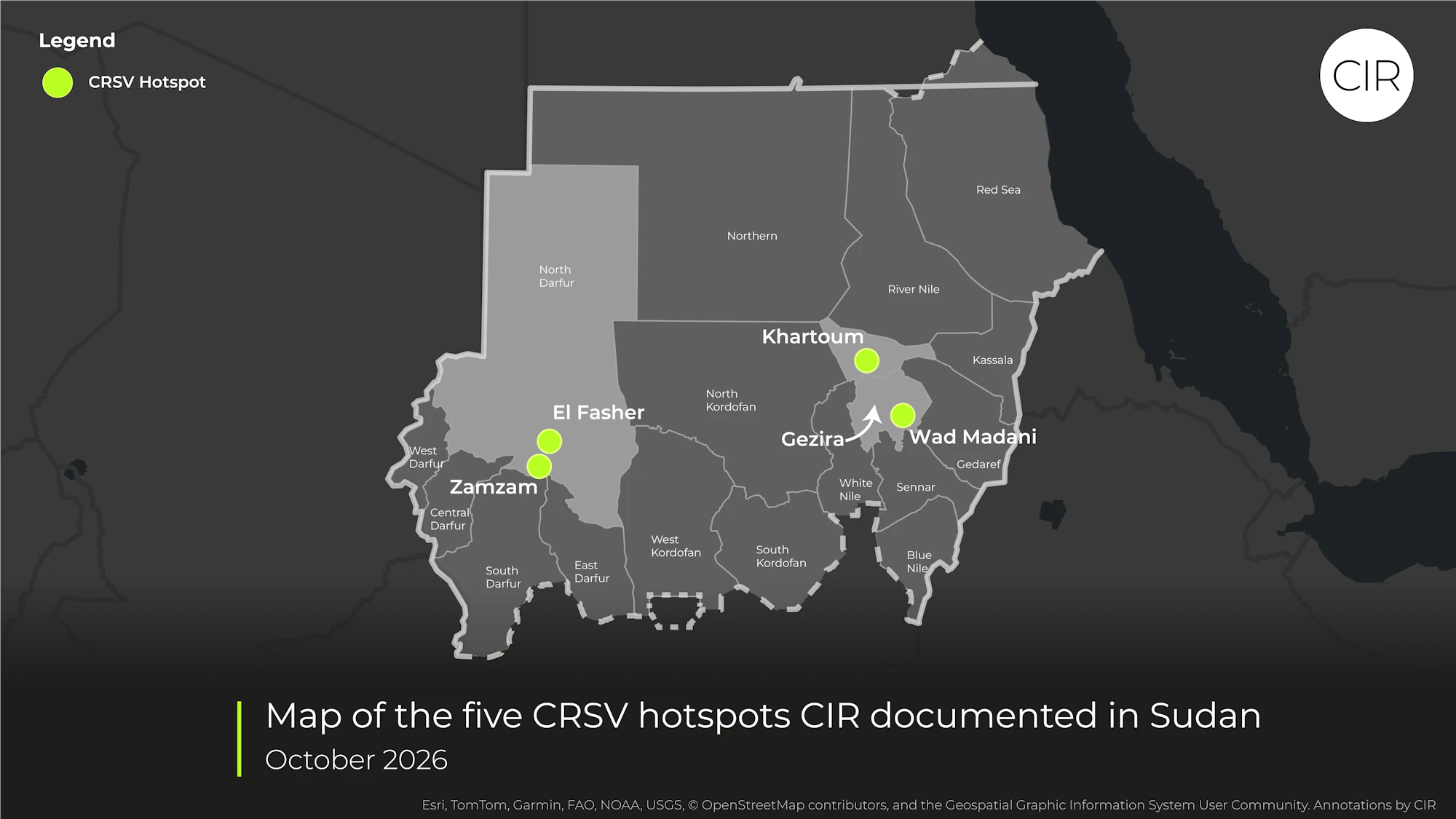
Since war broke out in Sudan between the Sudanese Armed Forces (SAF) and the Rapid Support Forces (RSF) in April 2023, armed actors from both sides of the conflict have perpetrated conflict-related sexual violence (CRSV) consistently across the country. Rape, gang rape, sexual slavery, abduction, forced nudity, and sexual assault have been documented against women, girls, men, and boys by Sudanese civil society organisations, international organisations, the United Nations, and journalists.
The true amount of CRSV is likely higher than what has been reported. Local service providers in Tawila told The New Humanitarian that around 100 survivors had sought care at one health centre alone since an RSF takeover of El Fasher on 26 October 2025, but stigma, limited specialised staff, and the absence of legal protection services meant that the true number of cases was likely far higher. While survivors are unable to access support or share their stories, commanders continue to operate with impunity.
Using innovative open-source research methods, CIR investigated five geographical and temporal “hotspots” where particularly high volumes of sexual violence were reported. This is one of the first systematic attempts to map country-wide CRSV patterns in Sudan, where access restrictions, insecurity, and survivors’ fear of reprisals limit conventional documentation. CIR went beyond identifying patterns of violence to also identify armed groups and commanders for whom there are reasonable grounds to believe were directly or indirectly responsible.
Mapping the violence
CIR relied on a triangulation approach to identify five CRSV hotspots across Sudan since the start of the war in April 2023, drawing on a combination of:
- Secondary reporting from highly credible and reliable sources;
- Primary source information from trusted Sudanese partner organisations;
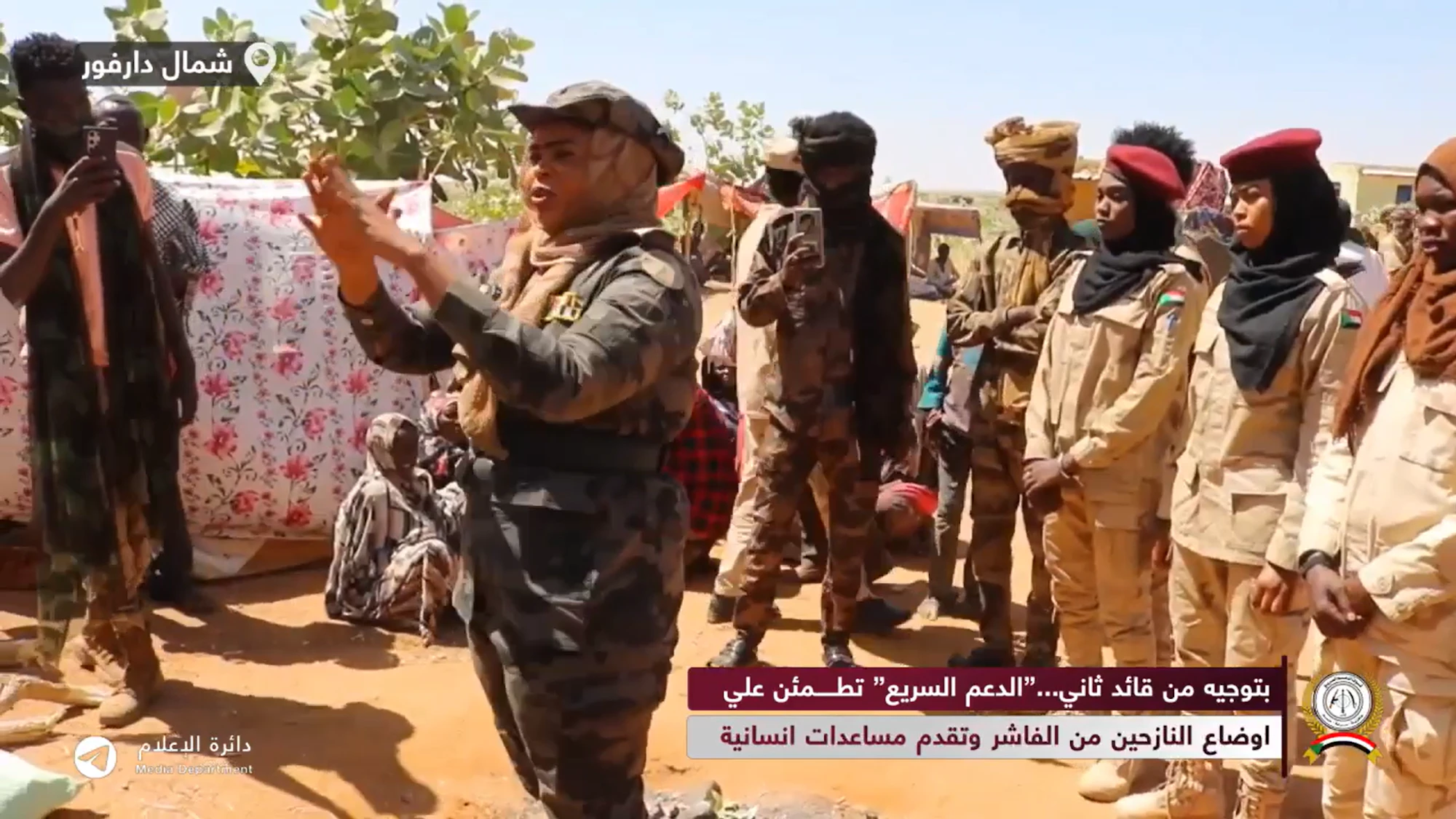
- Open-source “red flag” indicators in authentic and verified footage such as photos and videos posted to social media (including burnt villages, nudity, and forced separation of men and women);
- Analysis of gendered hate speech and incitement to CRSV in authentic and verified footage.
CIR only analysed hotspots that met at least three of these criteria and held enough data for meaningful attribution analysis. Unless stated otherwise, all footage in CIR’s report is verified, meaning two separate analysts confirmed its authenticity, geographic coordinates and, when possible, date of filming.
Command responsibility
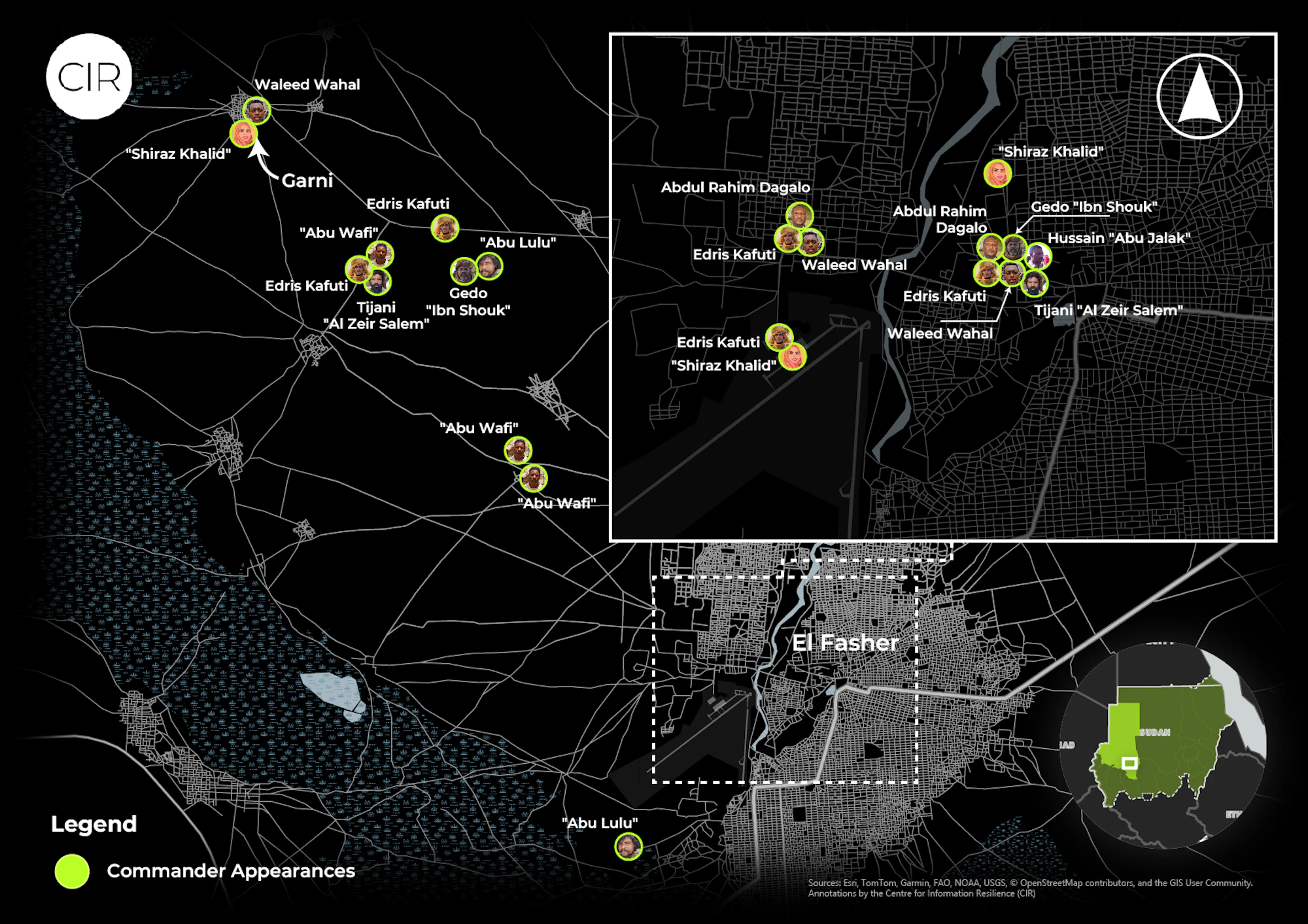
Across all five hotspots, CIR identified 25 individual commanders whom there are reasonable grounds to believe are directly or indirectly responsible for sexual violence perpetrated on the ground. These commanders are members of seven different armed groups active in Sudan: the RSF; SAF; RSF-aligned Tamazuj; SAF-aligned Sudan Shield Forces, SAF-aligned General Intelligence Service, SAF-aligned Special Mission Forces, and SAF-aligned Baraa Bin Malik Brigade.
CIR analysts identified these commanders in open-source footage from each hotspot, focusing on individuals meeting at least one of the below criteria per hotspot:
- Appeared in geospatial proximity to reported CRSV incidents; and/or
- Appeared in geospatial proximity to CRSV indicators; and/or
- Directly incited CRSV; and/or
- Held senior positions of command in the relevant geographic area and time frame and appeared at least once in verified footage during the relevant geographic area and time frame (even if not in close proximity to CRSV incidents or indicators).