Escalating Israeli military activity in Lebanon

5 min read

CIR

CIR 's photo

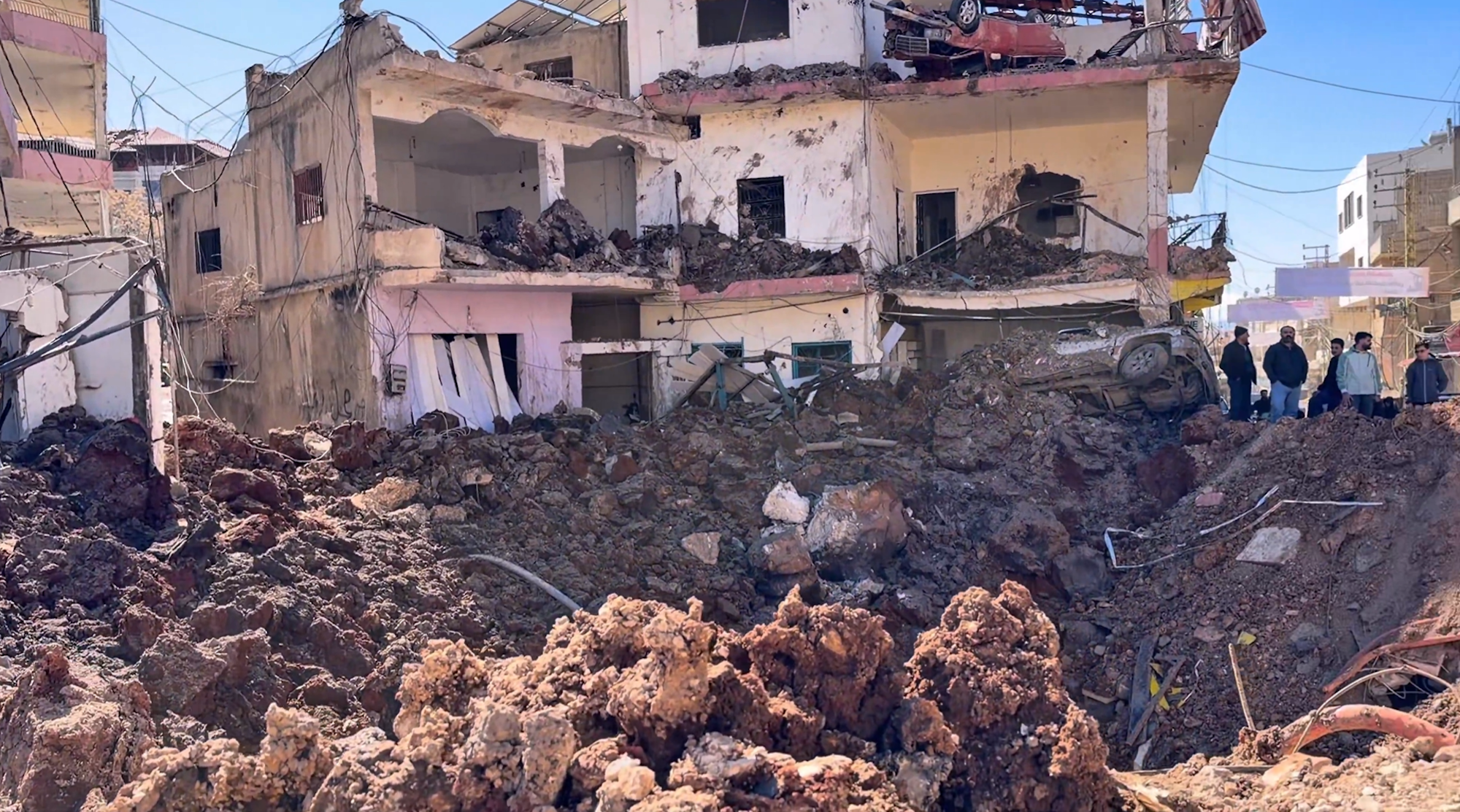
Still from footage posted on 7 March 2026 showing damage to the town of Nabi Chit in the Beqaa Valley, eastern Lebanon. Source: X

Share Article

Since 2 March 2026, hostilities between Israel and Hezbollah have intensified significantly across Lebanon, marked by sustained Israeli airstrikes, expanding ground activity, and civilian displacement. Using open-source investigative methods, CIR verified 99 Israeli airstrikes and their aftermath across Lebanon between 2 and 9 March, including 41 incidents in Beirut. This indicates Israeli operations are extending beyond southern border areas into densely populated urban environments. 

According to the Lebanese Ministry of Health, as of 9 March 2026, the escalation has resulted in 486 deaths and 1,313 injuries, with total casualties increasing by 105.9% between 5 and 8 March. The Lebanon Disaster Risk Management authorities reported via their official WhatsApp channel 538 active collective shelters housing approximately 119,700 internally displaced persons (IDPs), while 667,831 individuals have self-registered as displaced, reflecting the scale of population movement triggered by evacuation orders and continued strikes.
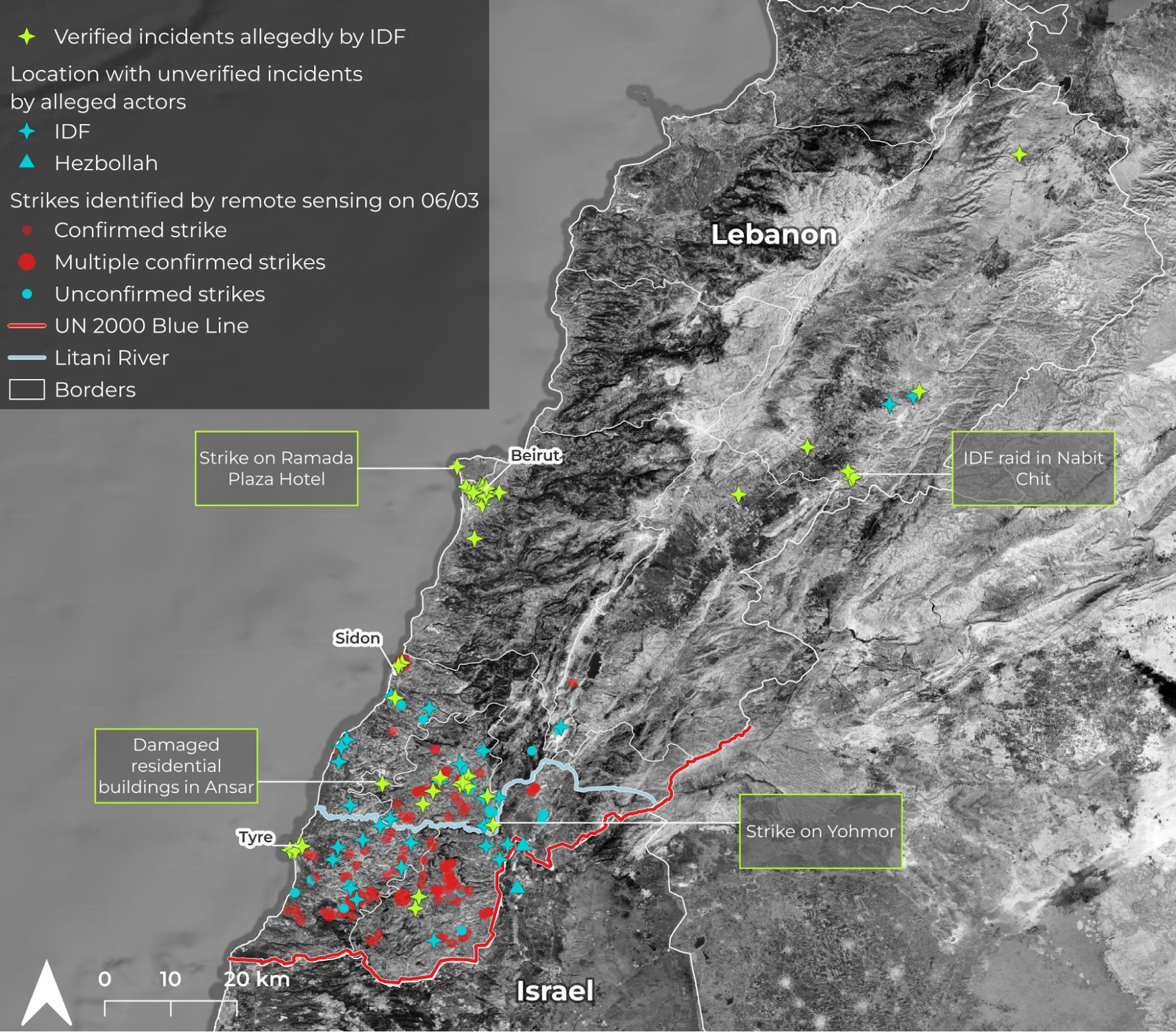
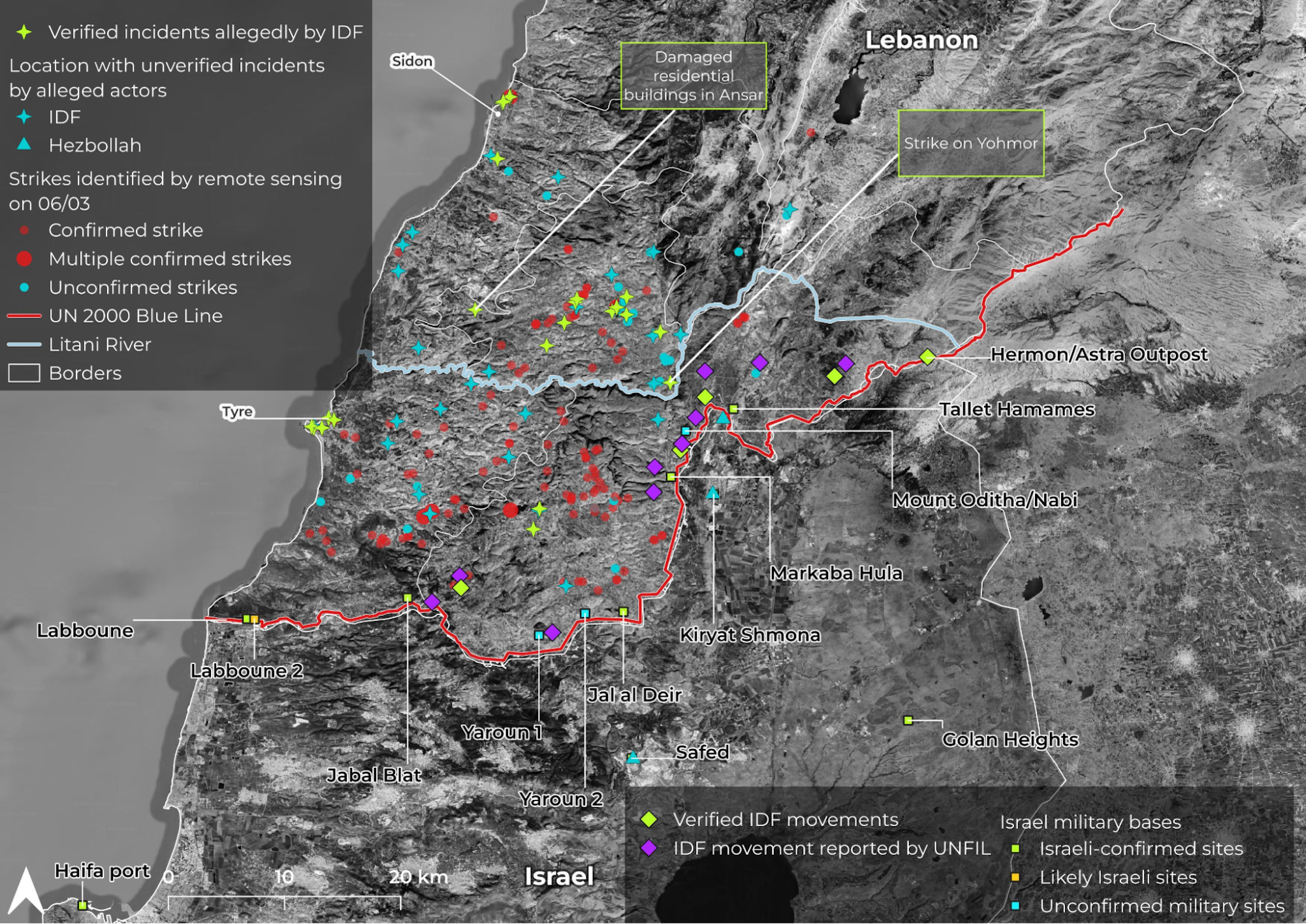
Map of incidents reportedly caused by the IDF from 7 to 9 March 2026 across Lebanon. Map image credit: Google Earth Pro, Landsat/Copernicus (01/01/2021)

Waves of Israeli airstrikes hit Lebanon

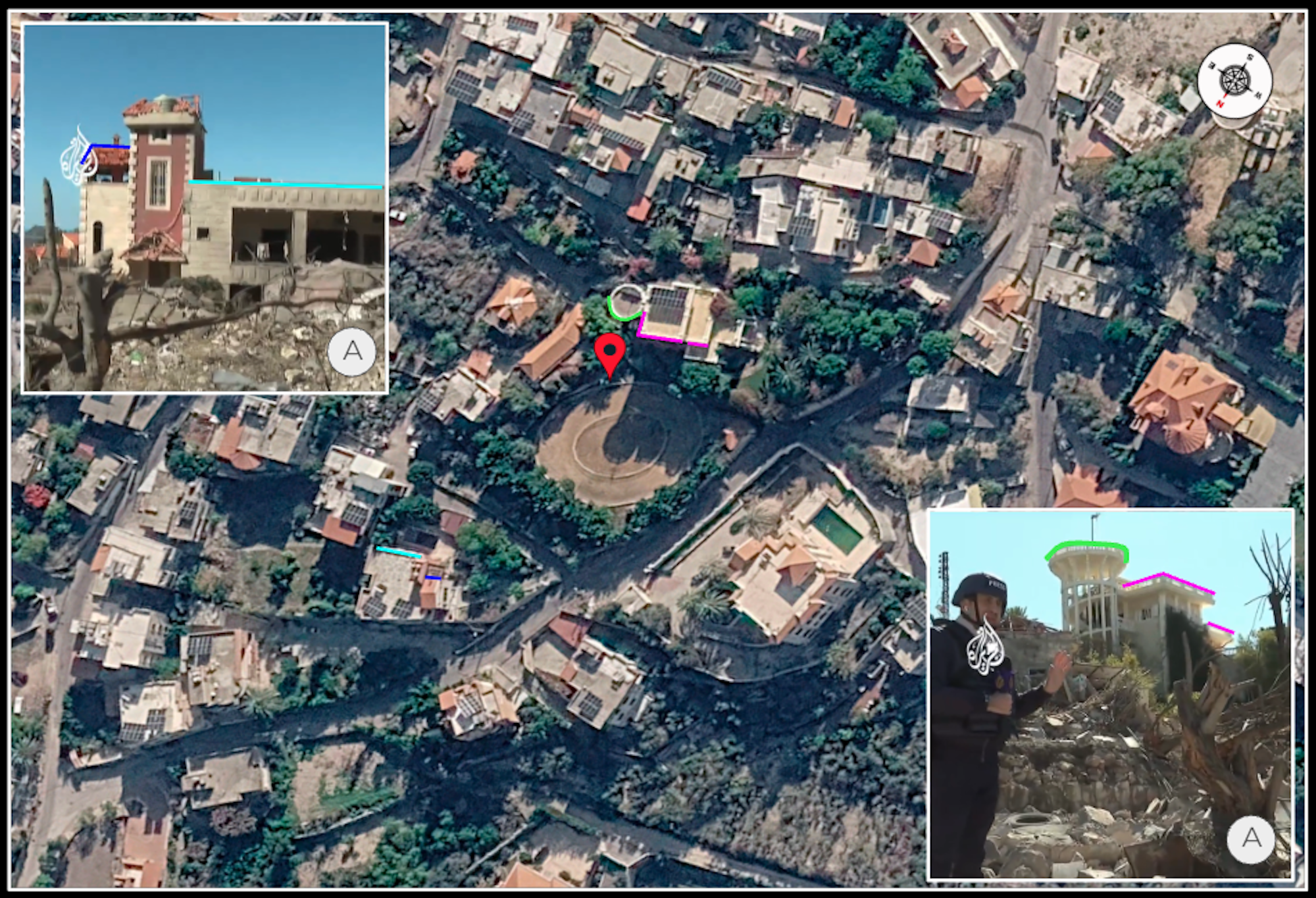
CIR verified footage from 8 March 2026 showing aftermath damage in Ansar village, north of the Litani River, Nabatieh governorate. The footage shows significant damage to multiple buildings and vehicles, and a significant amount of debris and rubble in the impacted area. 

Al Jazeera Arabic shared footage of the incident with a text overlay, “Destruction left by bombing on the town of Ansar in southern Lebanon”.

On 7 March 2026, the IDF’s Arabic Spokesperson, Avichay Adraee, shared an evacuation order stating, “We reiterate our urgent appeal for you to evacuate your homes immediately and head immediately north of the Litani River” and emphasised “you must move immediately north of the Litani River.” Despite this appeal, CIR verified that the incident occurred north of the Litani River, in the area which civilians were directed towards. 

Figure 5: CIR geolocated footage from 8 March 2026, showing damage to residential buildings in Ansar, Nabatieh governorate, at coordinates: 33.3776, 35.3518. Sources: Google Earth Pro, Airbus (22/11/2025); X: A

Since 7 March 2026, the IDF has continued to announce “wave[s] of airstrikes” in southern Lebanon and Beirut, with the IDF’s Arabic Spokesperson, Avichay Adraee, publishing further evacuation orders for southern Lebanon and one evacuation order for Beirut’s southern suburbs.

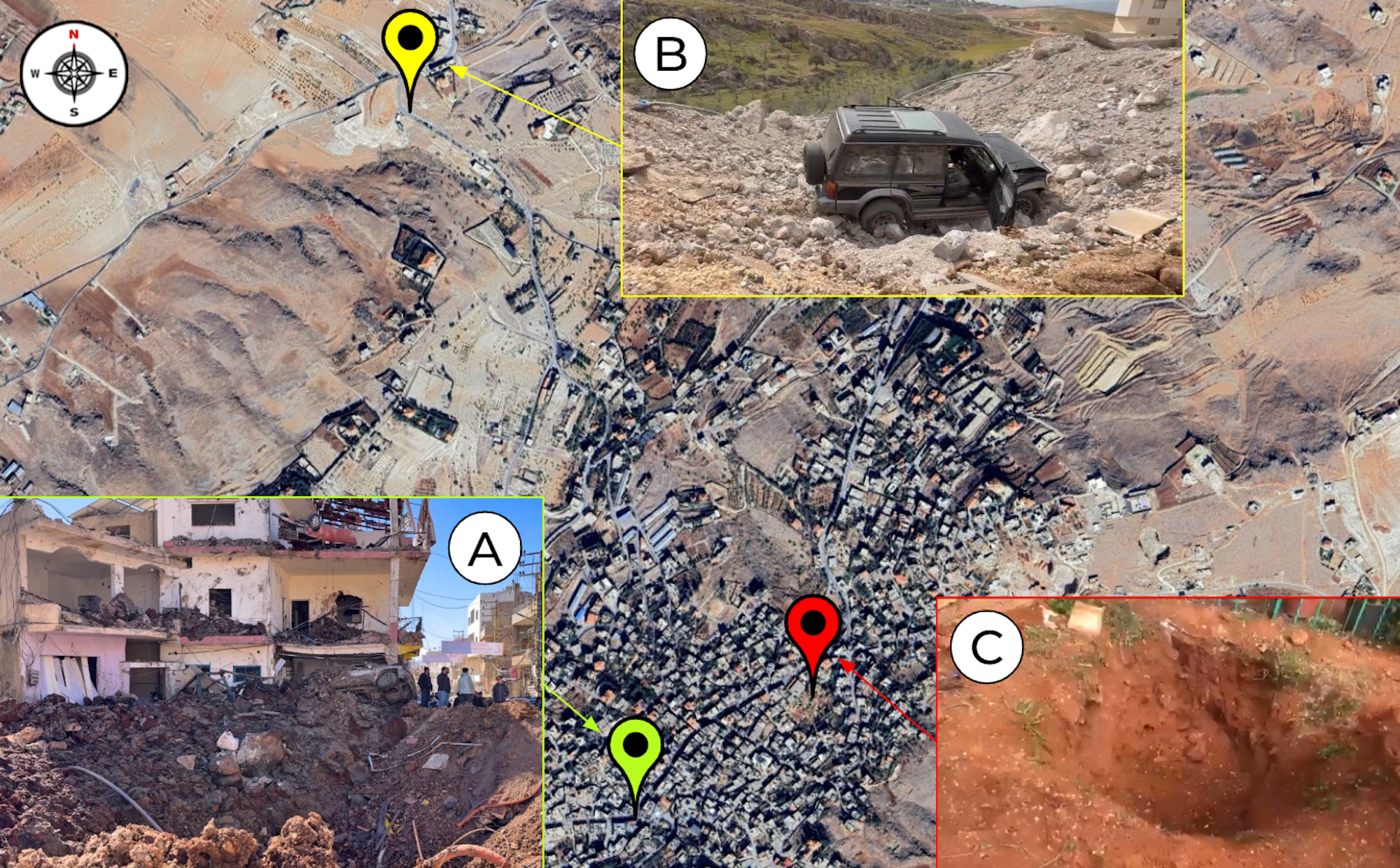
CIR verified eight pieces of content from 7 March 2026 relating to Israeli airstrikes and an alleged IDF special forces operation in Nabi Chit, eastern Lebanon. The footage shows a large impact crater at the intersection of Rural Road and Yagfouy Road, collapsed floors in surrounding residential buildings, damaged civilian vehicles, and disturbed ground at multiple locations within the village, including a newly dug site in a cemetery. BBC News reported that the operation was linked to an attempt to recover the remains of missing Israeli navigator Ron Arad. While Lebanese authorities reported significant casualties associated with the incident, CIR was unable to independently verify casualty figures through available visual evidence.

CIR verified seven pieces of footage from 7 March 2026 showing damage to the town of Nabi Chit in the Beqaa Valley, eastern Lebanon, including an impact crater and damaged buildings (green marker), a damaged road (yellow marker) and a newly dug hole in a cemetery (red marker). Sources: Google Earth Pro, Airbus (29/10/2025); X: A; B; C.

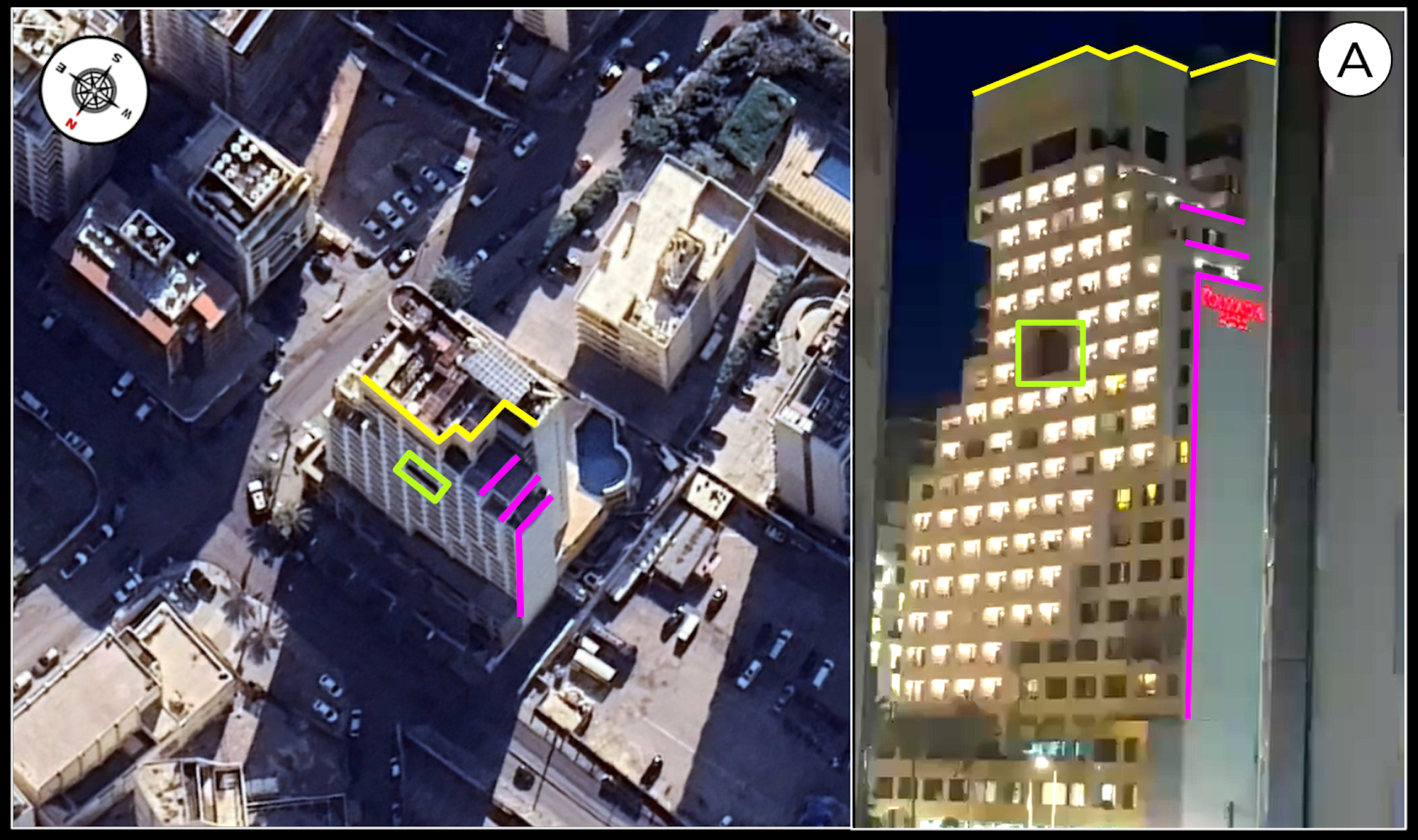
In Beirut, CIR verified footage showing damage to a lower-floor room of the Ramada Plaza Hotel in the Raouche neighbourhood following a reported Israeli strike on 8 March 2026, reportedly killing four people and injuring at least 10. Visible damage included blown-out windows and exterior scorching consistent with an explosive impact. The IDF stated the strike targeted commanders affiliated with Iran’s Islamic Revolutionary Guard Corps (IRGC); however, CIR could not independently verify the identities of those reportedly targeted.

CIR geolocated footage from 8 March 2026, showing damage to the Ramada Plaza Hotel in the Raouche neighbourhood of Beirut, at coordinates: 33.8915, 35.47286. Sources: Google Earth Pro, Airbus (01/02/2025); X: A.

Indications of ground invasion of Lebanon

Ground operations also appear to be expanding. The Jerusalem Post reported on 9 March 2026 that “the [IDF’s] 36th Division has penetrated deeper into southern Lebanon as part of the conflict with Hezbollah” in the Rab El Thalathine area. CIR identified an IDF statement from 9 March 2026 which acknowledged that the 36th Division were “operating to locate and strike terror infrastructure and eliminate terrorists in southern Lebanon”, though the statement did not mention which area the troops were located in.

The map below shows the verified locations of IDF troops within southern Lebanon, as well as troops’ locations reported by UNIFIL on 4 March 2026. The map also shows verified and unconfirmed IDF bases in southern Lebanon, as well as recent strikes in the area. 

Map of verified and unconfirmed IDF troop locations and bases in southern Lebanon. Map image credit: Google Earth Pro, Landsat/Copernicus (01/01/2021).

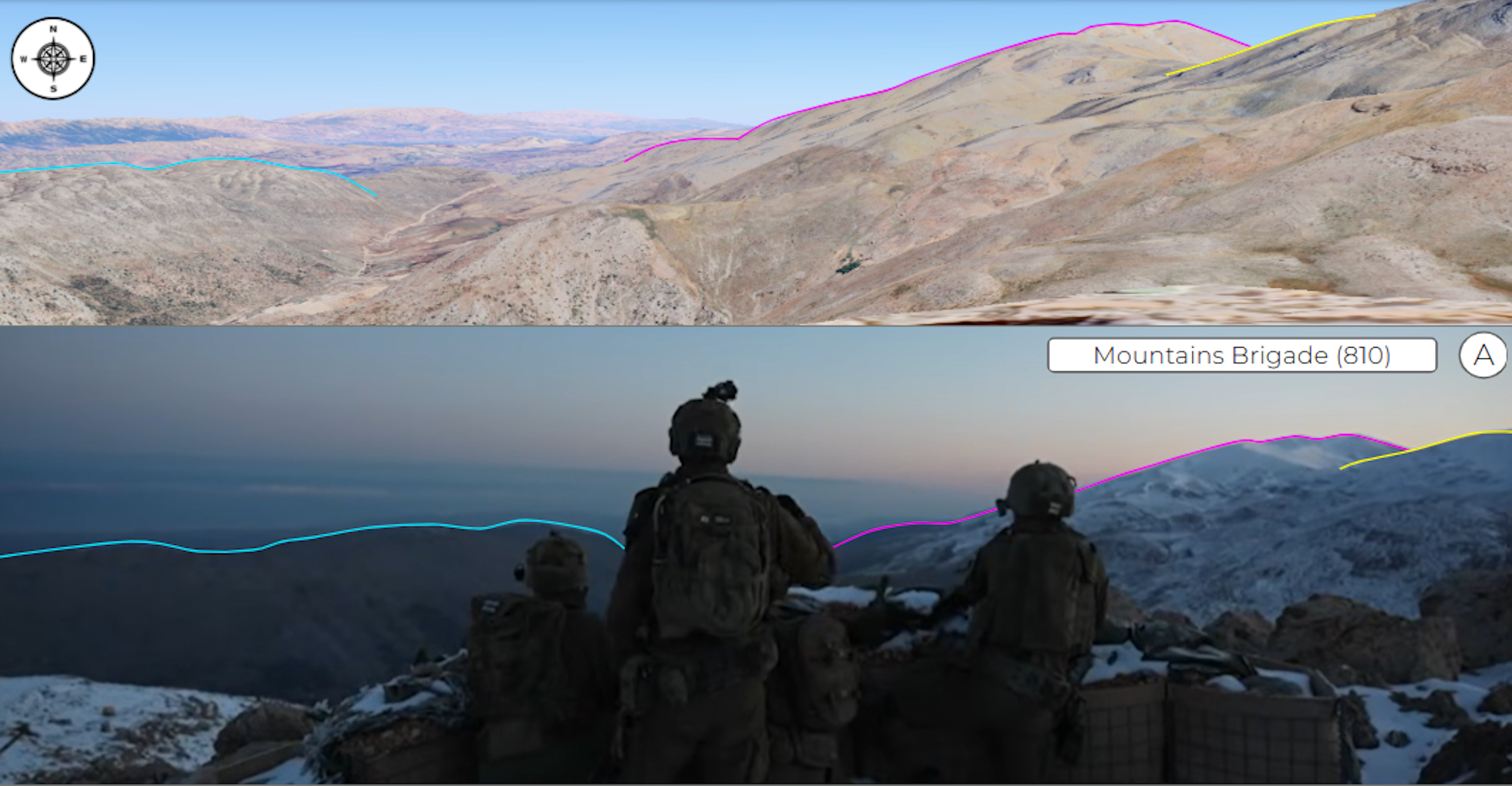
On 3 March 2026, CIR verified one piece of footage shared by the IDF, showing four IDF troops from the 810th Mountain Brigade at a hilltop position near Shebaa Farms and the Hermon IDF base, in southern Lebanon. The troops can be seen overlooking the hilltops in southern Lebanon, and are located approximately 150 metres within Lebanese territory. The IDF captioned the video, “Forces of the ‘Mountains’ Brigade (810) in the Mount Dov area in Lebanon”.

CIR geolocated footage from 3 March 2026 showing four IDF troops approximately 150 metres inside Lebanese territory near Shebaa Farms, at coordinates: 33.3342, 35.7678. Sources: Google Earth Pro, Airbus, Maxar (05/12/2025); YouTube: A.

CIR later verified five separate pieces of content showing Israeli troops operating inside Lebanese territory, including footage of IDF forces entering the village of Qaouzah approximately 2.75 kilometres north of the Blue Line – the official demarcation separating southern Lebanon from northern Israel and the Golan Heights, representing the furthest verified incursion during the reporting period. Verified imagery additionally shows the deployment of heavy armoured units, including Merkava IV main battle tanks and Namer armoured vehicles.

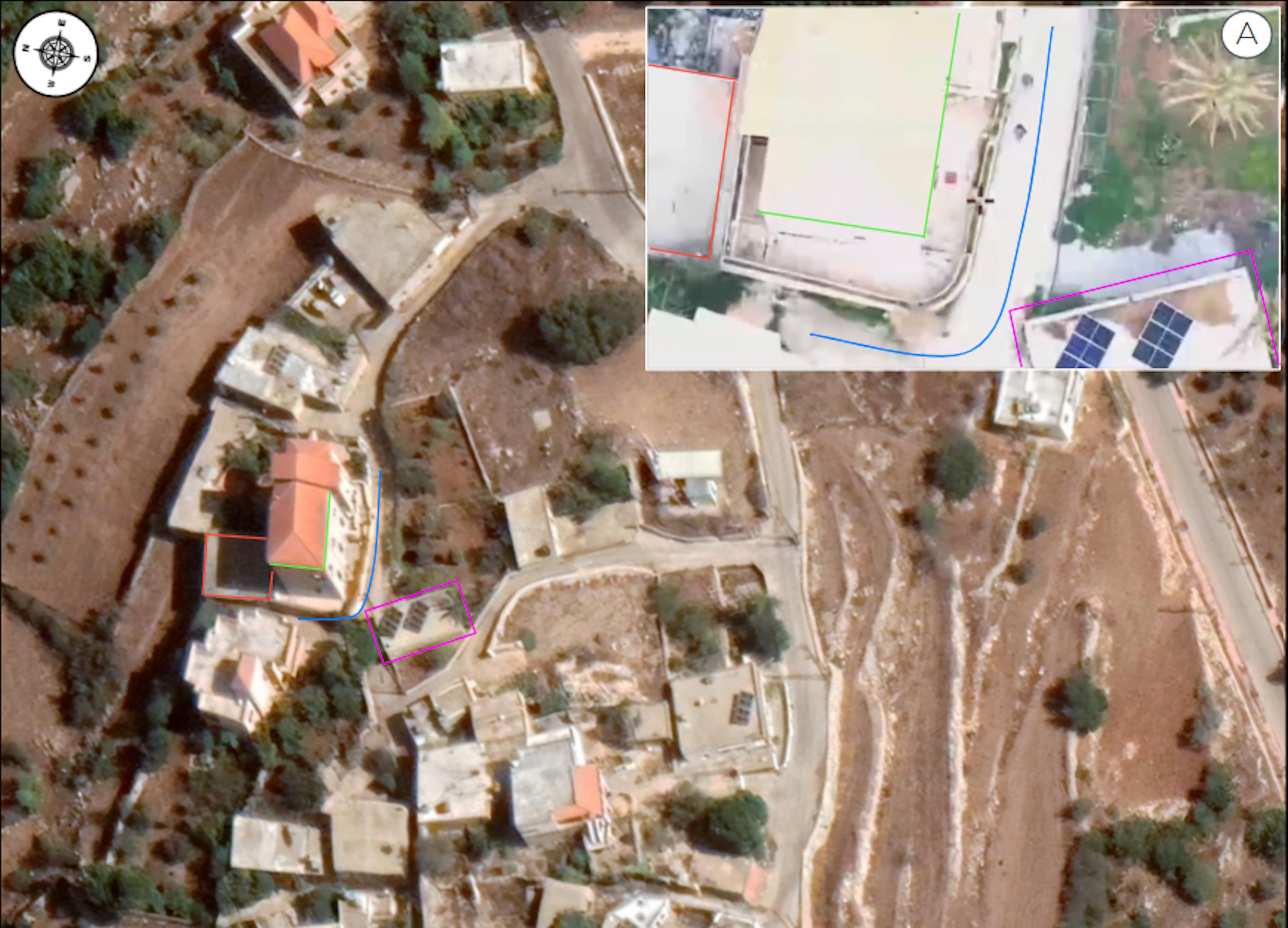
CIR verified IDF footage from 9 March 2026, showing troops entering the village of Qaouzah approximately 2.75 kilometres inside Lebanese territory, at coordinates: 33.1219, 35.3388. Sources: Google Earth Pro, Airbus (29/10/2026); X: A.

A longer-term pattern of border fortification

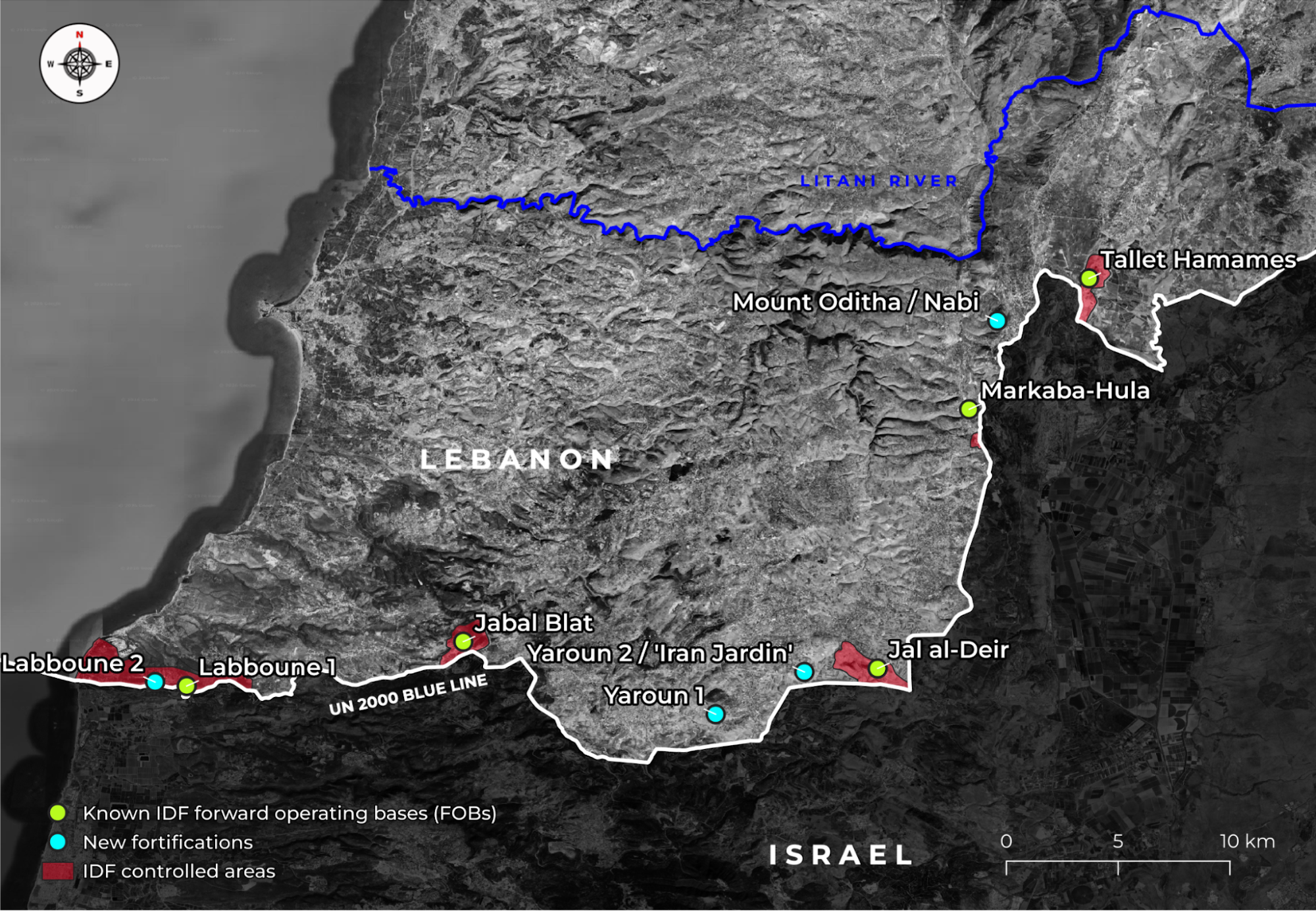
CIR’s monitoring of satellite imagery in the region over the past year indicates that recent military activity forms part of a longer pattern of Israeli fortification along the Israel-Lebanon border. Since mid-2025, CIR has identified nine fortified sites near the Blue Line, including five Forward Operating Bases (FOBs) publicly announced by the Israel Defense Forces (IDF), as well as four additional military positions inside Lebanese territory built between October 2025 and January 2026, that have not been publicly confirmed by either Israel or Lebanon.

Illustrative map of locations of fortifications associated with the IDF near the UN 2000 Blue Line. Source: GoogleEarthPro/CNES Airbus, 29/10/2022.

Satellite imagery shows a gradual shift from temporary defensive earthworks to more permanent fortified infrastructure, featuring reinforced materials, perimeter walls, and watchtowers consistent with semi-permanent military installations rather than short-term staging positions. 

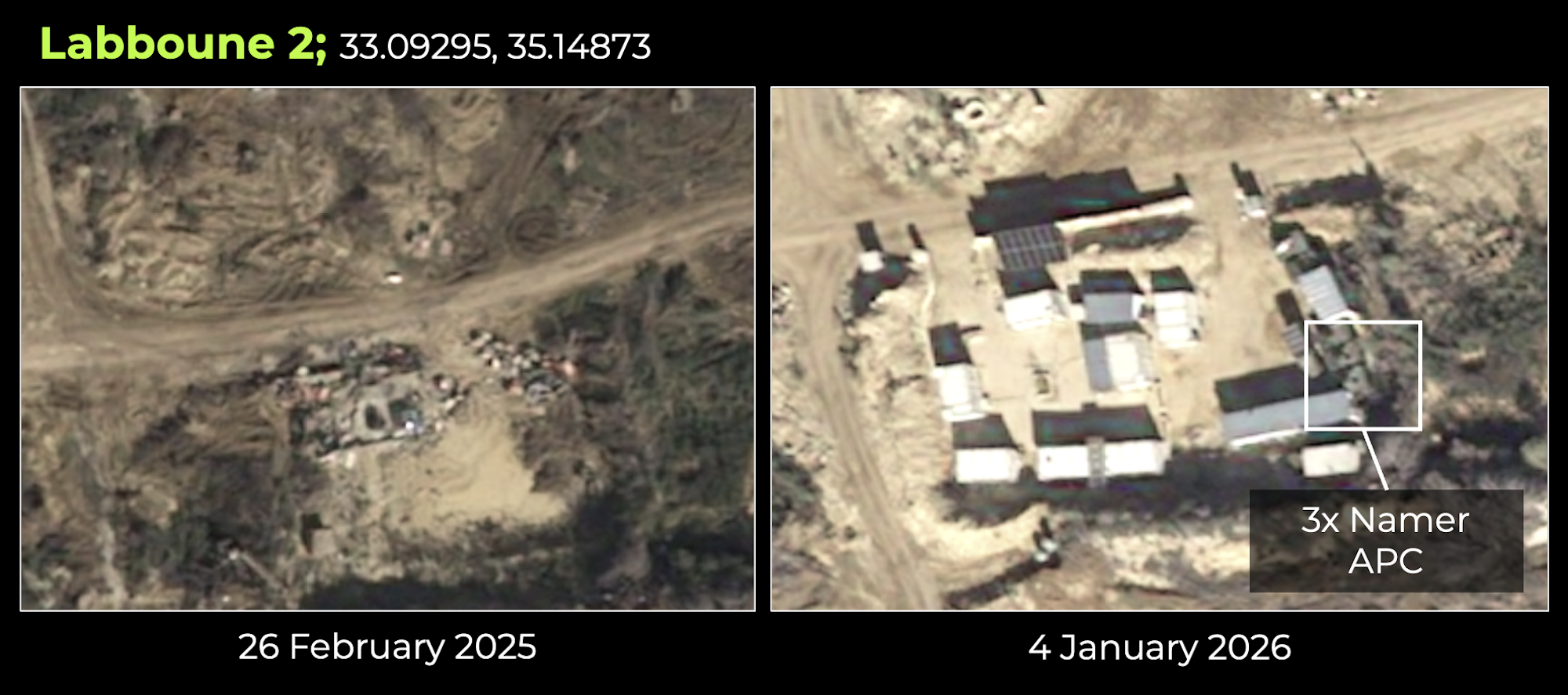
At the Labboune 2 site, located approximately 211 metres from the Blue Line, CIR verified the presence of IDF Namer armoured vehicles in January 2026. Given the verified presence of IDF vehicles, the site’s proximity to the Blue Line, and its design similarities to other known Israeli military positions in southern Lebanon, CIR assesses it is highly likely that the IDF constructed Labboune 2.

The Labboune 2 site showing construction of fortifications and IDF military equipment visible in January 2026 Source: Airbus.

Recent construction and expansion activity appears to form part of  a longer pattern of Israeli fortification along the Israel-Lebanon border, raising questions about the scope of Israel’s military presence beyond the terms of the November 2024 ceasefire. Recent incidents verified by CIR point to expanding Israeli military activity in Lebanon, combining sustained airstrikes with increasingly visible ground incursions, while rising civilian casualties and displacement highlight the growing humanitarian risks as hostilities continue.


CIR continues to monitor these developments. To stay up to date with our rapid reporting, follow @Cen4infoRes on X. 

Latest reports, direct to your inbox

Be the first to know when we release new reports - subscribe below for instant notifications.

Share Article