The lasting harm of landmines in Myanmar: reported civilian injuries and disability

2 min read
Myanmar Witness

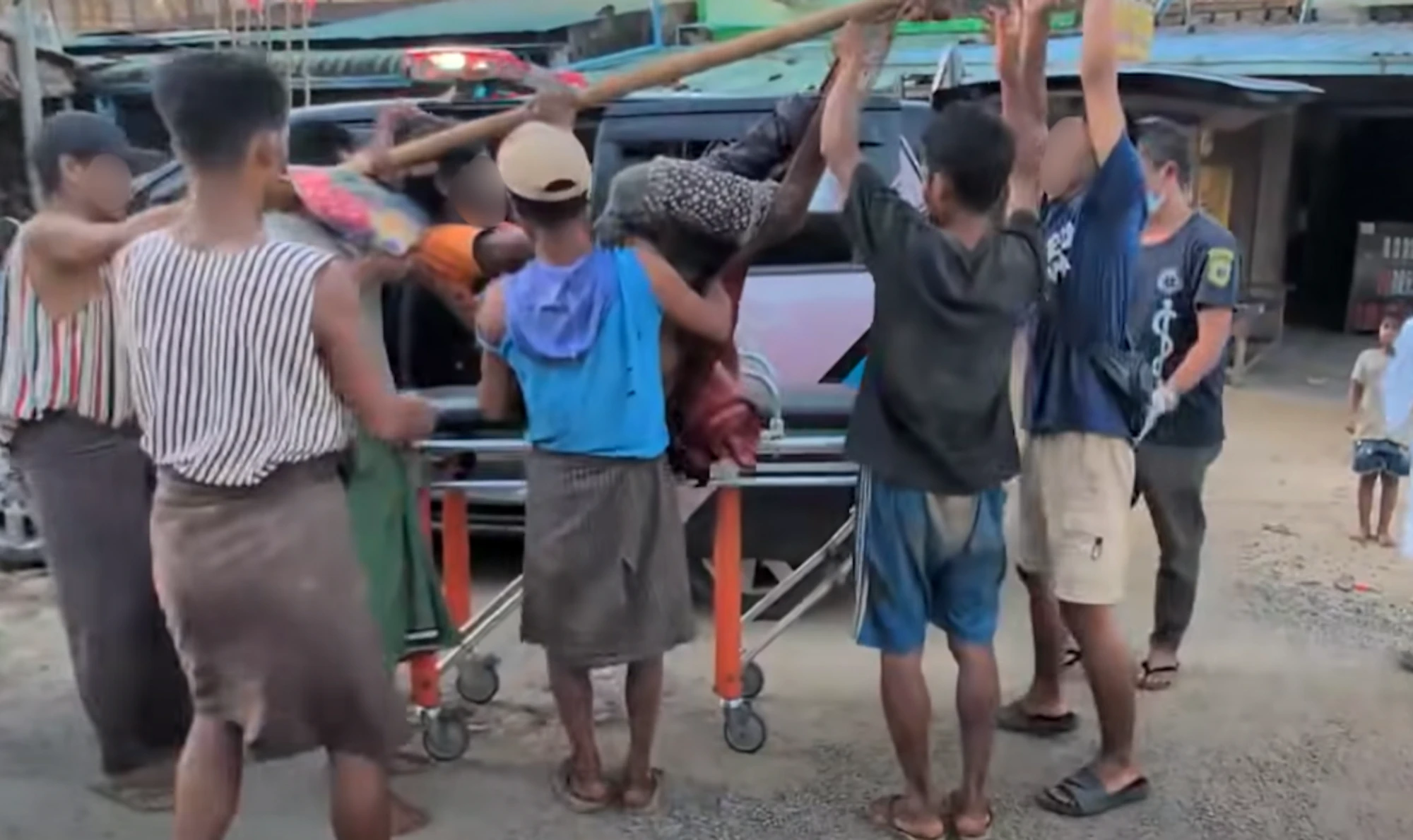
Screenshot from a video showing a male individual receiving assistance after reportedly sustaining injuries from a landmine incident while collecting firewood in Mone Township.
Myanmar Witness documented 170 reported landmine and ERW incidents across 12 regions and states between April 2025 and March 2026. Within that it involved 56 of the country’s 330 townships. With 52 reports, the highest concentration was recorded in Shan State, followed by Rakhine State with 50, and Kachin State with 16. Note that these figures reflect varied open-source reporting and civilian harm patterns rather than an exhaustive map of total explosive contamination in the country.
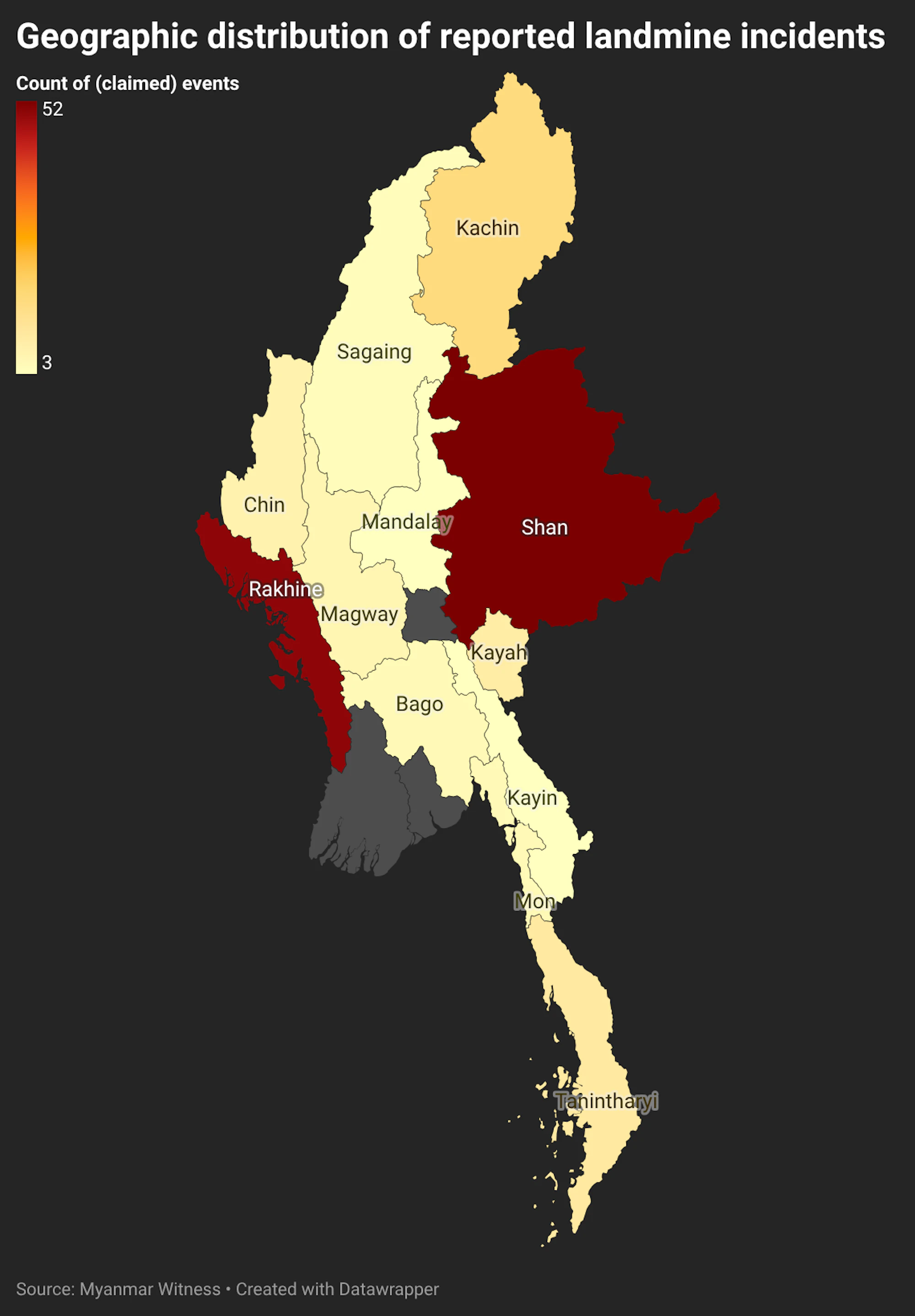
A map showing the count of claimed landmine and ERW incidents within Myanmar.
One defining pattern that emerged from Myanmar Witness’s investigation is the locations of the reported incidents, which highlighted the risks civilians face in everyday spaces. For example, public areas accounted for the largest share of reported locations, including roadsides and riversides. This was followed by residential and community spaces where landmine incidents were reported near homes, gardens, monasteries and markets. These findings indicate that civilians routinely encounter explosive hazards in their ordinary activities such as travelling, working, farming or worshipping.
Additionally, the documented human cost within Myanmar Witness’s dataset is also significant to underscore, as it accounts for 230 reported casualties, including 57 fatalities and 173 traumatic injuries. Notably, of those, 77 individuals were reported to have sustained amputations across 71 distinct incidents. These types of injuries trigger enduring disability-related needs, requiring rehabilitation and assistance in returning to daily activities such as education or work. Of all casualties, men accounted for the largest share, with 136 reported incidents. Importantly, children were also notably affected, with 30 incidents documented, including cases where they encountered ERW in community spaces or while playing.
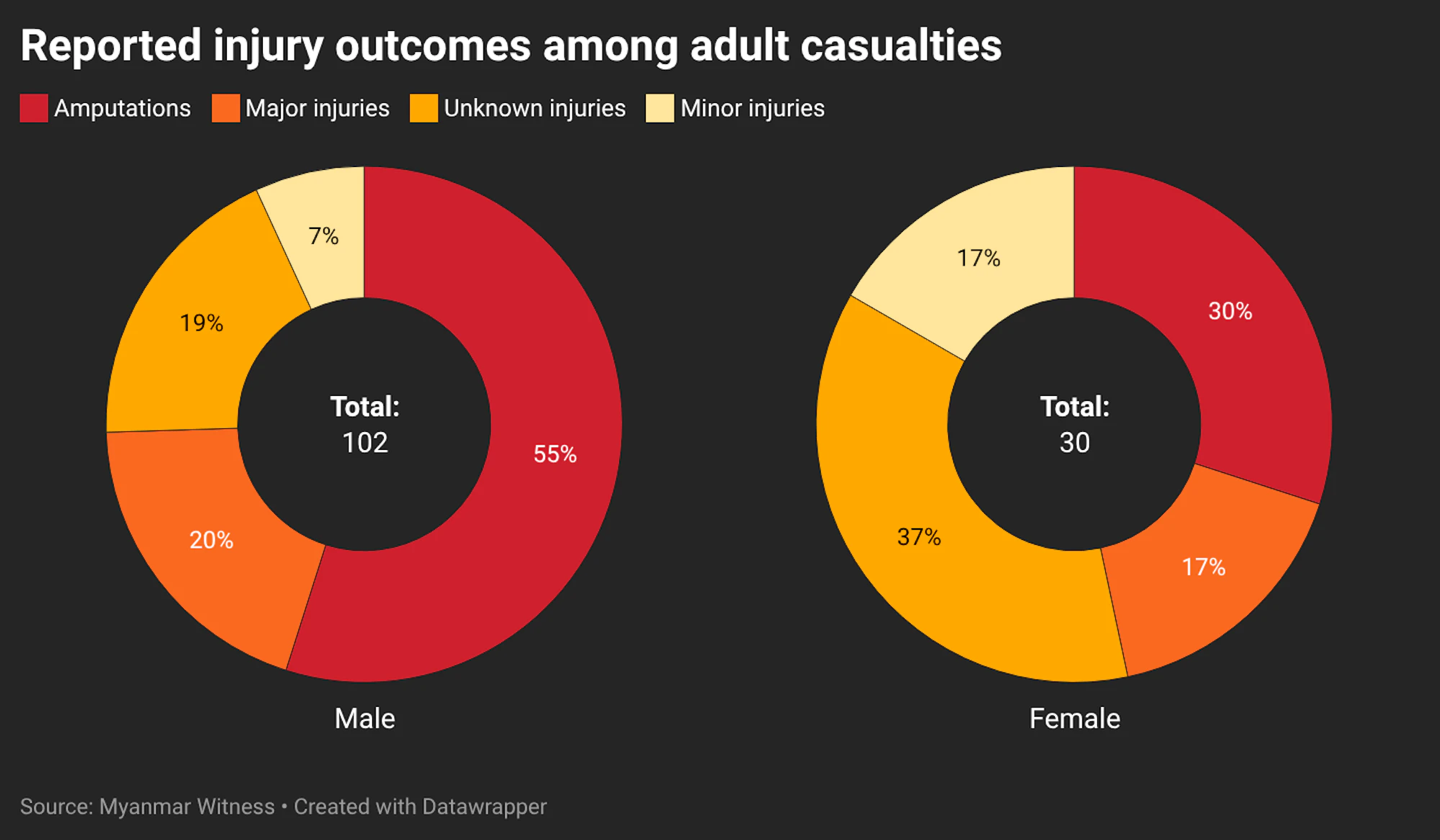
Pie charts showing the reported injury outcomes by gender.
Myanmar Witness stresses that definitive actor attribution remains a challenge; 120 of the 170 incidents could not be assigned to a specific party. Of the remaining cases, 37 incidents were linked by open-source reports to the Myanmar military, and 13 others to various non-state armed groups. However, Myanmar Witness could not verify these claims.
Ultimately, these findings in this report underscore that landmines and ERW represent not only an immediate threat to life, but can also create long-lasting physical, social and economic consequences for survivors, their families and communities. This report uses open-source information to document where these reported incidents occurred, how civilians are affected and what can be established about the circumstances of individual cases.
For our full findings, download our report.