CIR has documented the burning of civilian infrastructure across Kauda, South Kordofan, and at least five surrounding settlements between 2 and 16 May 2026, corroborated by satellite imagery, geolocated footage, and witness testimony.
Key findings
- CIR documented the burning of civilian infrastructure in the town of Kauda, South Kordofan, and five surrounding rural settlements from 2 to 16 May.
- Burn scars visible on satellite imagery began appearing and progressively expanding in the area from 2 to 16 May, indicating sustained violence over a two-week period. This is corroborated by verified footage showing smoke and fire damage, and witness testimony from secondary sources.
- The independent Sudan Doctors Network reported on 13 May, based on witness testimonies, that 61 civilians were killed in the attacks, including women and children. Witnesses reportedly described people with disabilities being left behind in burning buildings and residents being cut off from food and water. CIR could not independently verify these reports.
- The areas damaged were civilian in character, including a market, residential buildings, farmland, and settlements. The destruction of agricultural land poses serious long-term risks to food security and the ability of displaced communities to return.
- Independent media and civil society sources including Darfur24, Sudan Doctors Network, and Sudan War Monitor claimed that the attacks were conducted by forces affiliated with the Sudan People’s Liberation Movement-North (SPLM-N). According to Darfur24, the violence followed an escalation in intercommunal tensions between local Atoro and Shwaya Nuba sub-groups, which SPLM-N forces were ordered to diffuse. Sudan War Monitor reported that these tensions escalated into an internal military mutiny when Atoro-aligned SPLM-N officers refused orders from the movement’s central command to stand down, triggering direct armed confrontation between mutinous fighters and forces loyal to commands.
- The SPLM-N denied its involvement in any human rights violations, claiming it instead deployed forces to reduce tensions that had already escalated into deadly clashes.
- A key underlying driver of the internal fracturing, according to ACLED is local Atoro opposition to the SPLM-N’s tactical alignment with the RSF, including grievances over alleged RSF mining and recruitment on Atoro land.
Fire damage impacting civilians in and around Kauda
Violent clashes in and around Kauda, South Kordofan, between 2 and 16 May resulted in the reported deaths of at least 61 civilians, the burning of residential and commercial buildings in Kauda and at least five surrounding rural settlements, as well as forced displacement. CIR corroborated the scale of the clashes based on verified footage, damage visible in satellite imagery, and witness testimony reported by secondary sources.
On 13 May, the Sudan Doctors Network, an independent volunteer medical organisation, published a statement on X, based on witness testimonies, describing the “direct and indiscriminate” targeting of civilians and “systematic” burning of residential and commercial infrastructure. The Network claimed 61 civilians were killed, including women and children. CIR was unable to independently verify this figure, due to a lack of footage showing casualties following the incidents.
Earlier reporting by Sudan Tribune on 9 May cited local testimonies describing the burning of homes and schools, looting of property, and forced displacement from Kauda since 12 March. The Nuba Mountains Media Executive Office reportedly warned that the acts may constitute war crimes and crimes against humanity. An unverified video posted on 10 May by Nuba Mountains, a page dedicated to sharing news and information from the region, showed displaced civilians from the Kauda area recounting their experiences. One woman stated that residents had been unable to access food or water, that people with disabilities and the sick had been left behind in houses, and that some had burned inside.
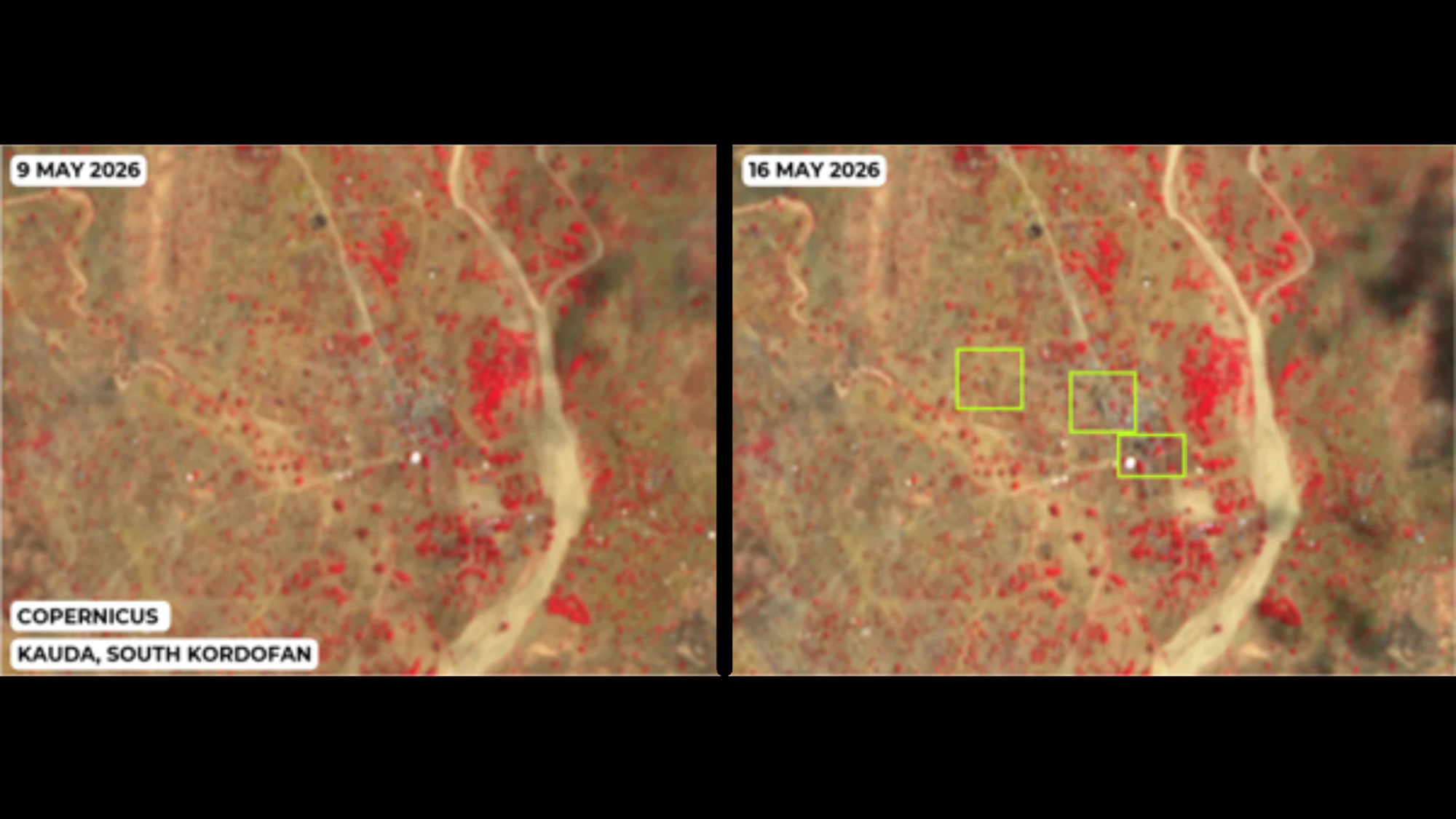
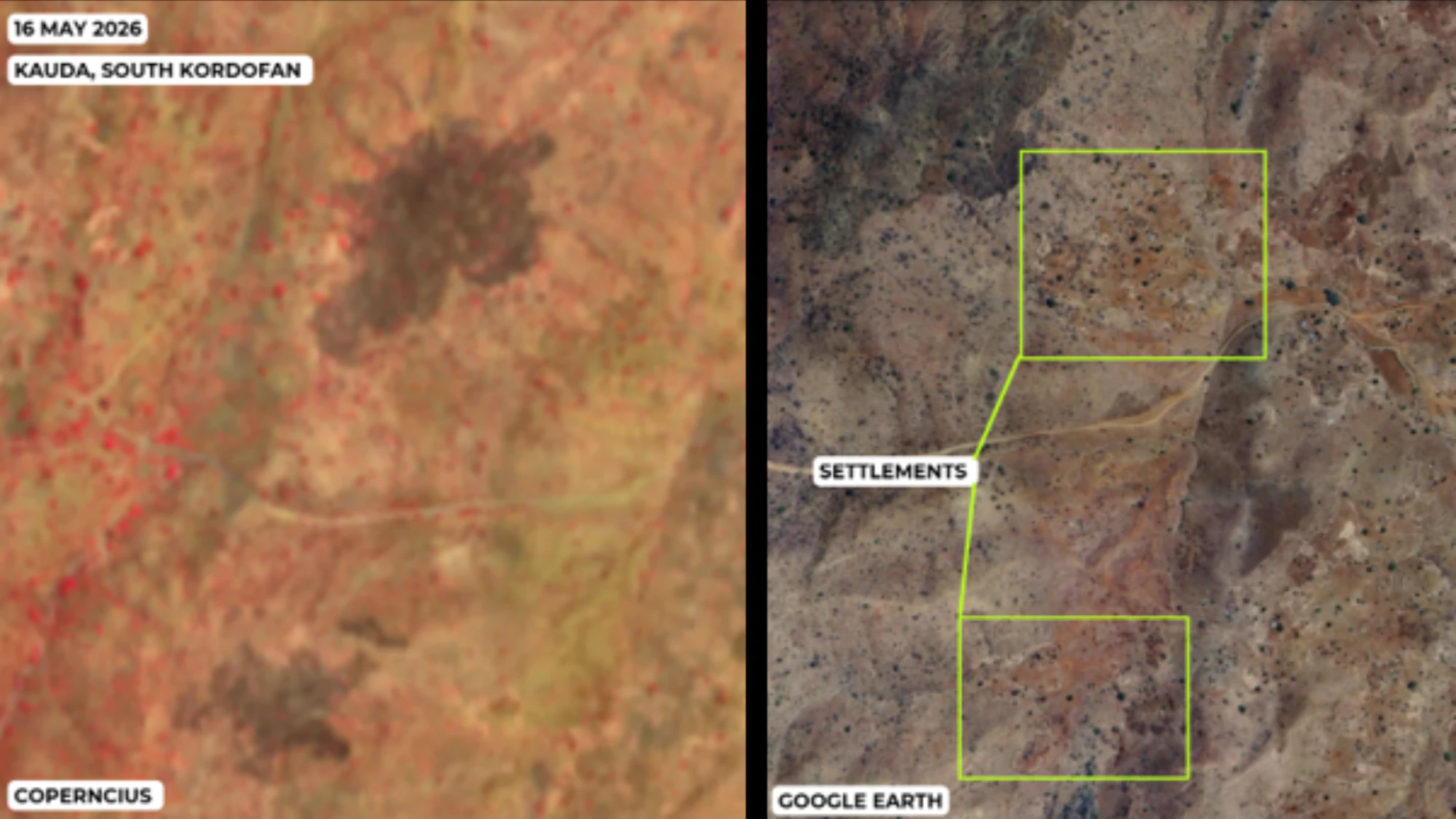
CIR corroborated these reports with satellite imagery and verified footage, documenting fire damage in Kauda’s town centre and at least five surrounding settlements and farmland areas between 2 May and 16 May 2026.
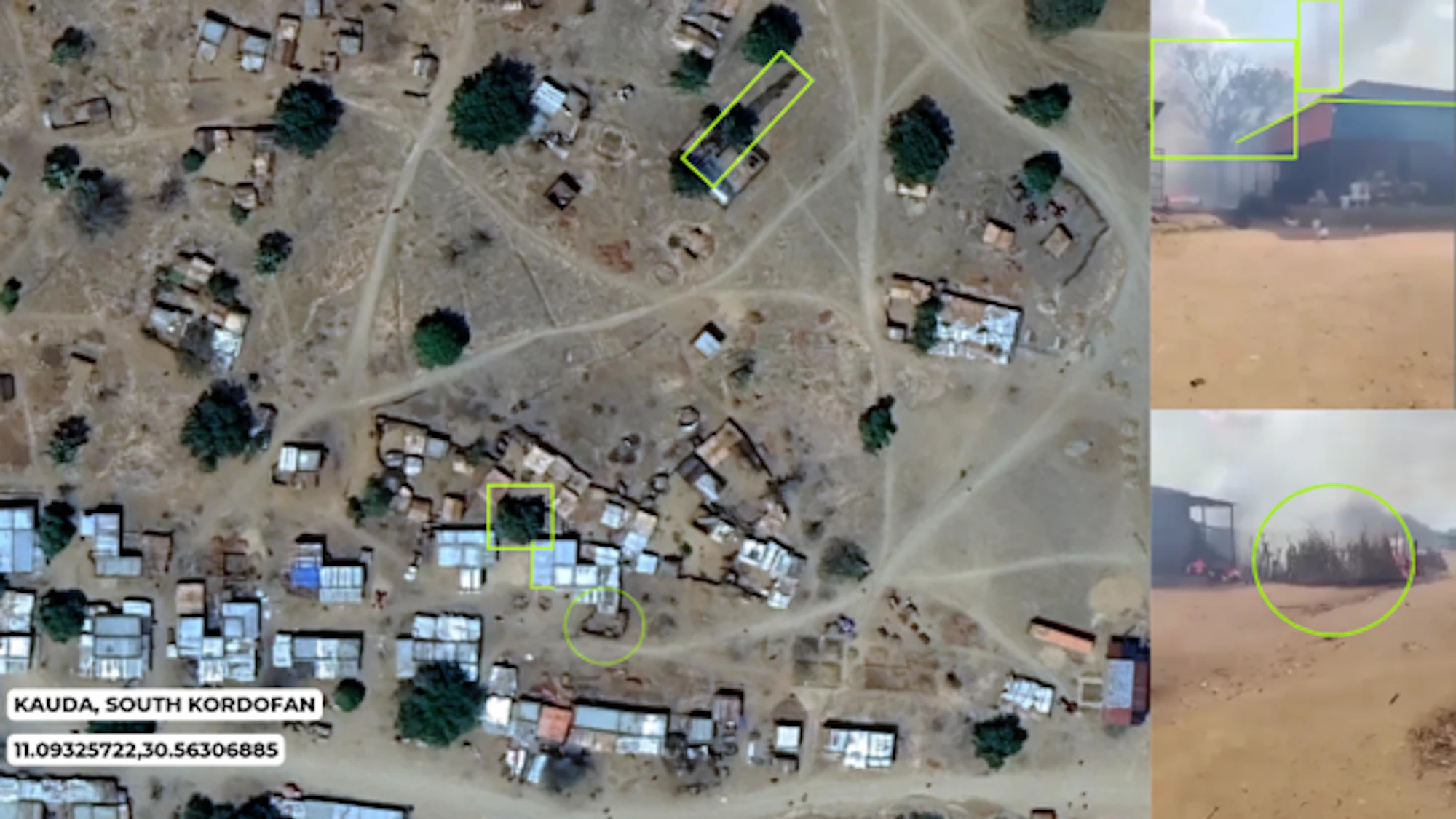
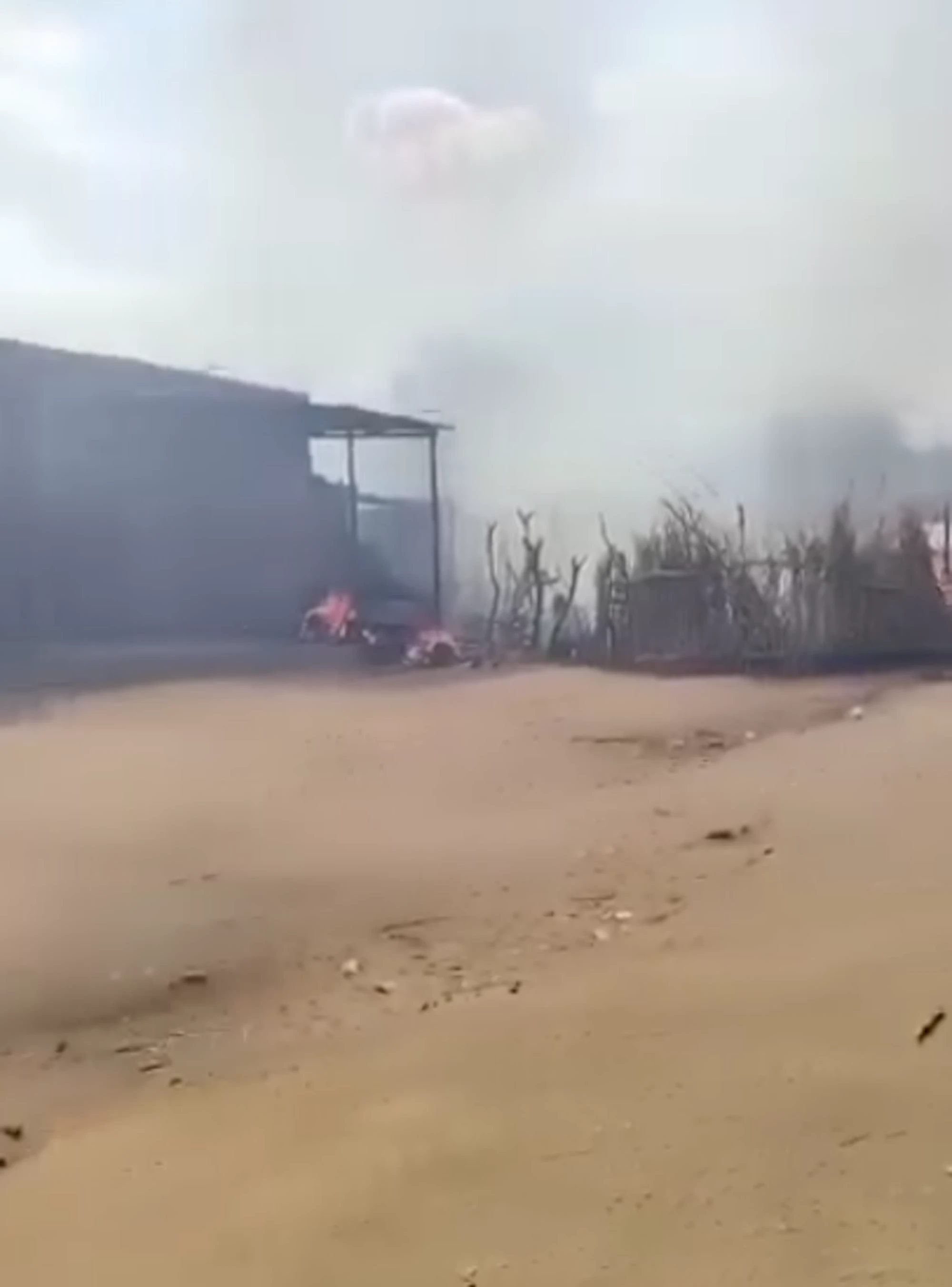
The earliest evidence of fire activity is visible on Planet satellite imagery, which shows a growing number of burn scars developing between 2 and 10 May over sparsely populated farmland approximately 1.5 kilometres (km) west of Kauda airport. Between 9 and 11 May, Planet imagery shows further burn scars appearing at a settlement approximately 4.5 km east of Kauda. By 13 May, fires appear to have reached the town centre; a video posted to a pro-SAF Telegram channel on 14 May, geolocated by CIR, shows active fires and smoke plumes beside buildings in Kauda’s central market [11.09325722, 30.56306885] (figure 1). Heat signature data from NASA’s Fire Information for Resource Management System (FIRMS) confirmed the footage was filmed on 13 May.