Water as a weapon: A fourteen-year pattern in Syria

4 min read

CIR

CIR 's photo

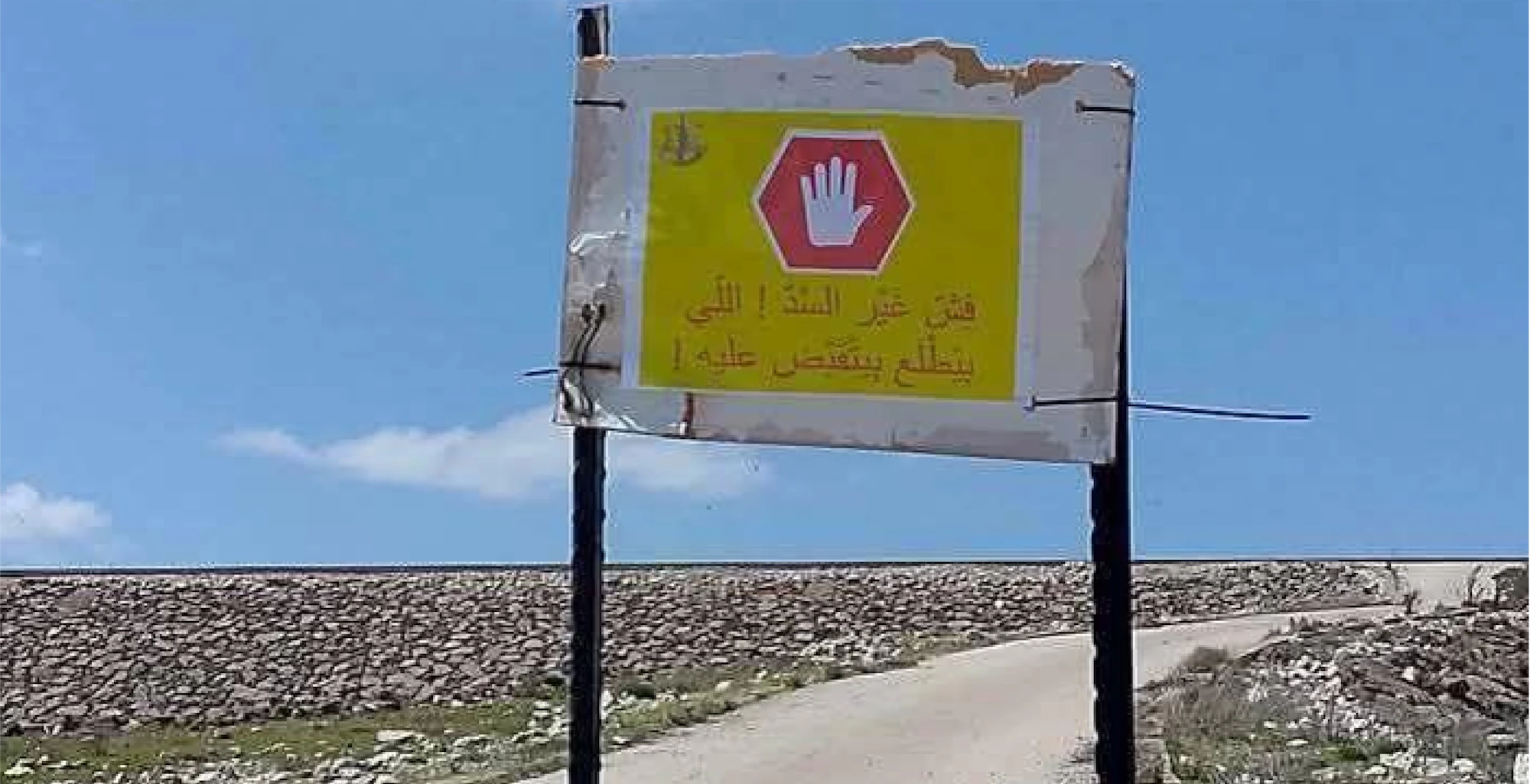
A photo of a sign allegedly placed by Israeli forces near Al-Mantara Dam, prohibiting residents from approaching it under threat of arrest.

Share Article

A new investigation by Syrian Archive and Verify, documenting over 1,000 incidents, show how water has been used as a weapon throughout Syria’s conflict, from sieges and looted infrastructure, to flooding and contamination.


Access to water is a basic requirement for life and a right protected under international human rights law. It is also, throughout the history of armed conflict, one of the first things to be taken away. In Syria, water has functioned as a bargaining chip: cut off to punish civilian populations, seized to generate leverage, and in some cases weaponised directly through flooding or contamination. Evidence of these violations is now substantially documented.

Between March 2011 and December 2025, 1,160 incidents have been recorded in which access to water was restricted, weaponised, or deliberately disrupted across Syria. The findings of this investigation, published by Syrian Archive and Verify, in collaboration with CIR, span the full arc of the Syrian conflict and extend into the period following the fall of the Assad regime.

The investigation draws on open-source records cross-referenced through geolocation, image and video comparison, and corroboration across multiple reporting sources. Three principal patterns emerge from the data: the control of water resources and infrastructure as a tool of siege and collective punishment, including the cutting of supplies, bombing of facilities, and looting of equipment; the conversion of water installations into military positions; and the use of water itself as a weapon, through flooding, the manipulation of water levels, and contamination or poisoning.

Of the 433 incidents documented during the Syrian conflict between 2011 and 2024, the Assad government accounted for the largest share, with 184 incidents attributed to regime forces. The Syrian Democratic Forces were responsible for 119 incidents, the Islamic State for 69, and Syrian opposition factions for 61. Water cuts were the most frequently recorded type of incident, occurring 141 times, with the Assad government believed responsible for 69 of those cases. 
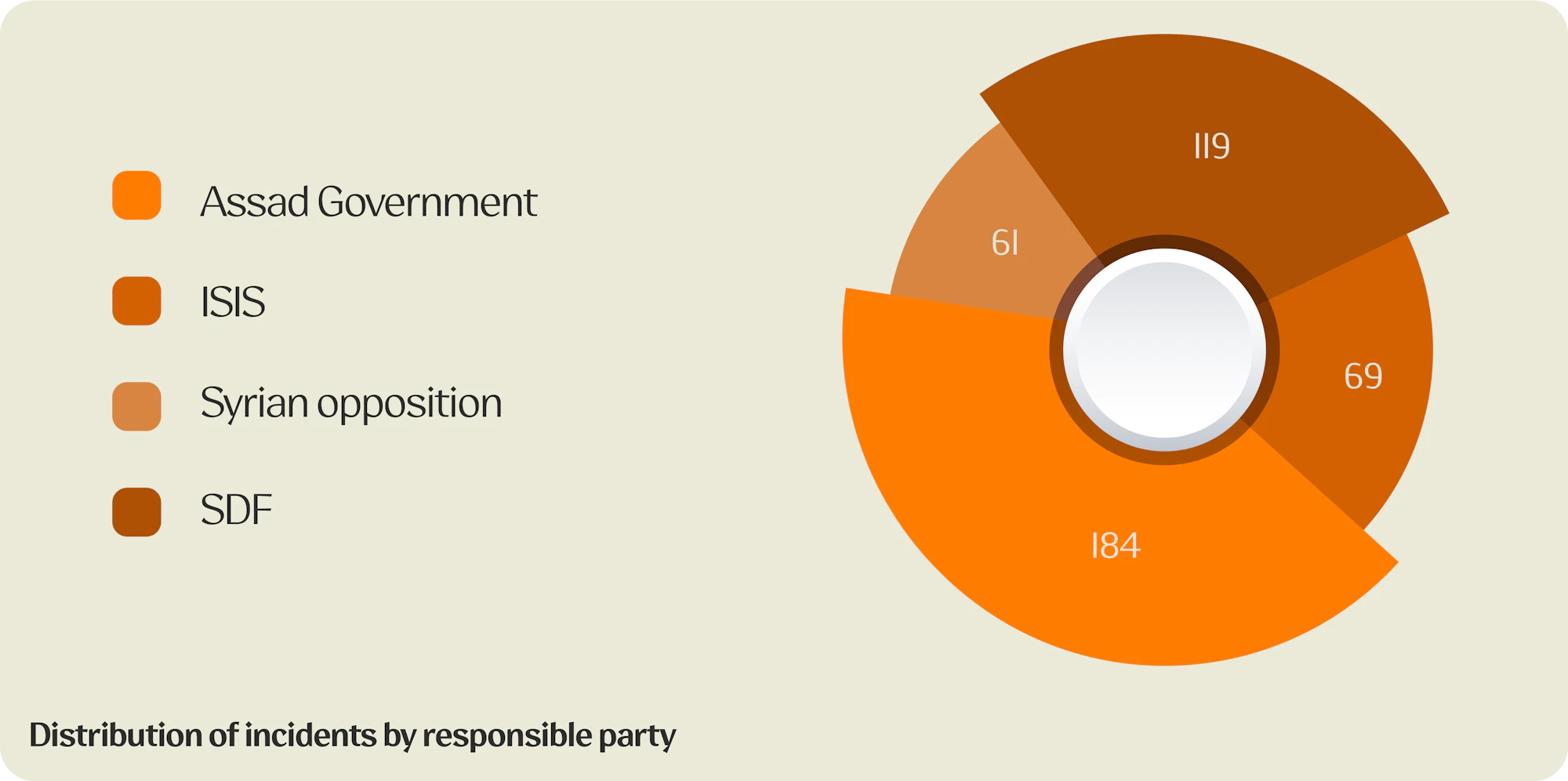
Graph showing distribution of incidents by responsible party

A range of tactics

Through a number of case studies using geolocation, satellite imagery, and social media, Syrian Archive and Verify illustrate the different methods water has been used as a weapon across the conflict. 

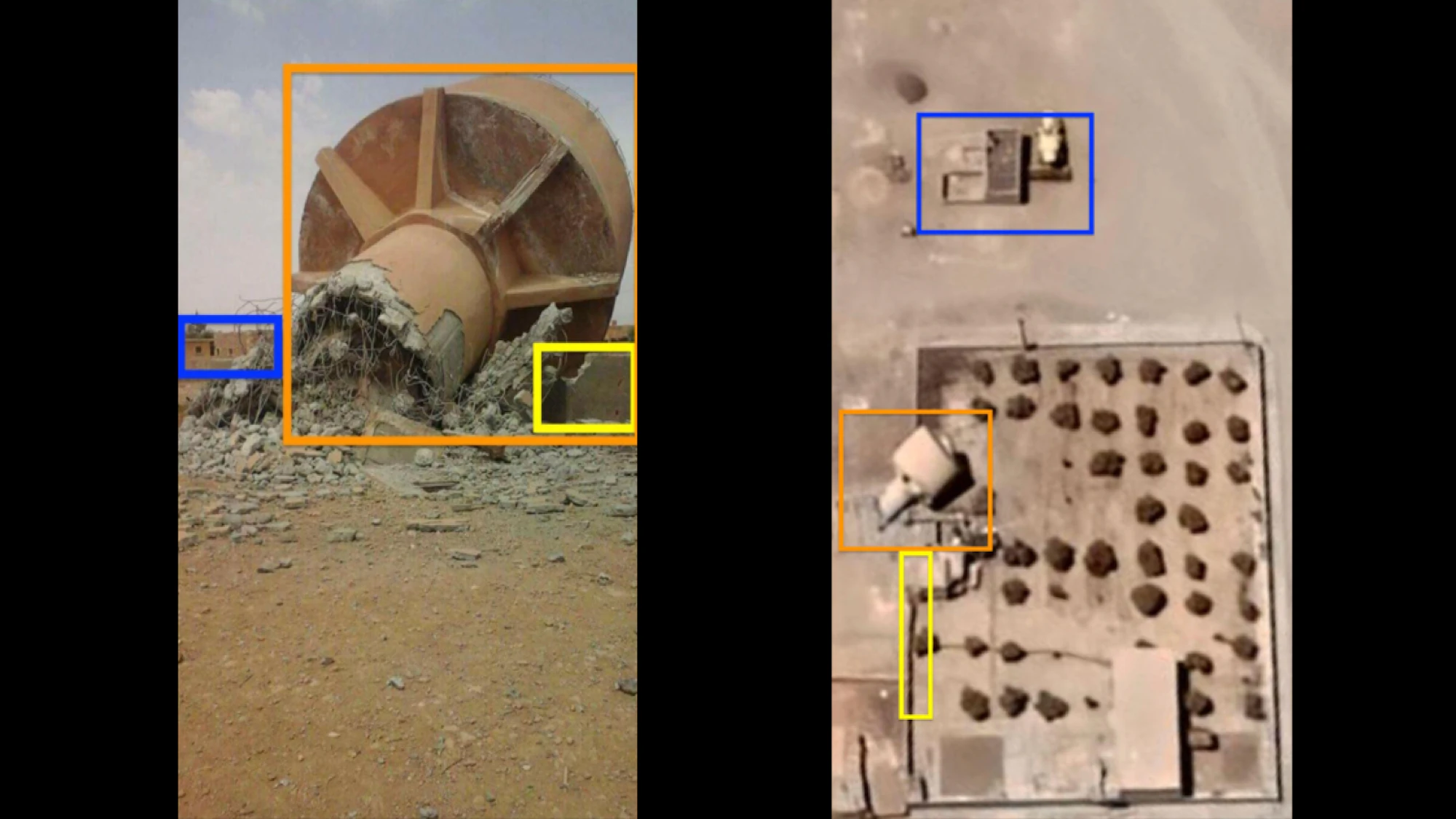
On 30 April 2017, the Islamic State used improvised explosive devices to destroy a water tower serving roughly 644 families in the village of Mazra’at Al-Rafqa, northwest of Raqqa. The tower was the village’s sole drinking water source. The investigation confirmed the bombing by cross-referencing social media posts published on the day of the incident with satellite imagery, which showed the tower standing in January 2017 and collapsed by May of that year. The attack fits a broader IS pattern, showing a recurring usage of IS explosives during incidents involving threats to or attacks on water facilities in the Raqqa area.

Left from Facebook, right from Google Earth Pro [36.039372, 38.846251].

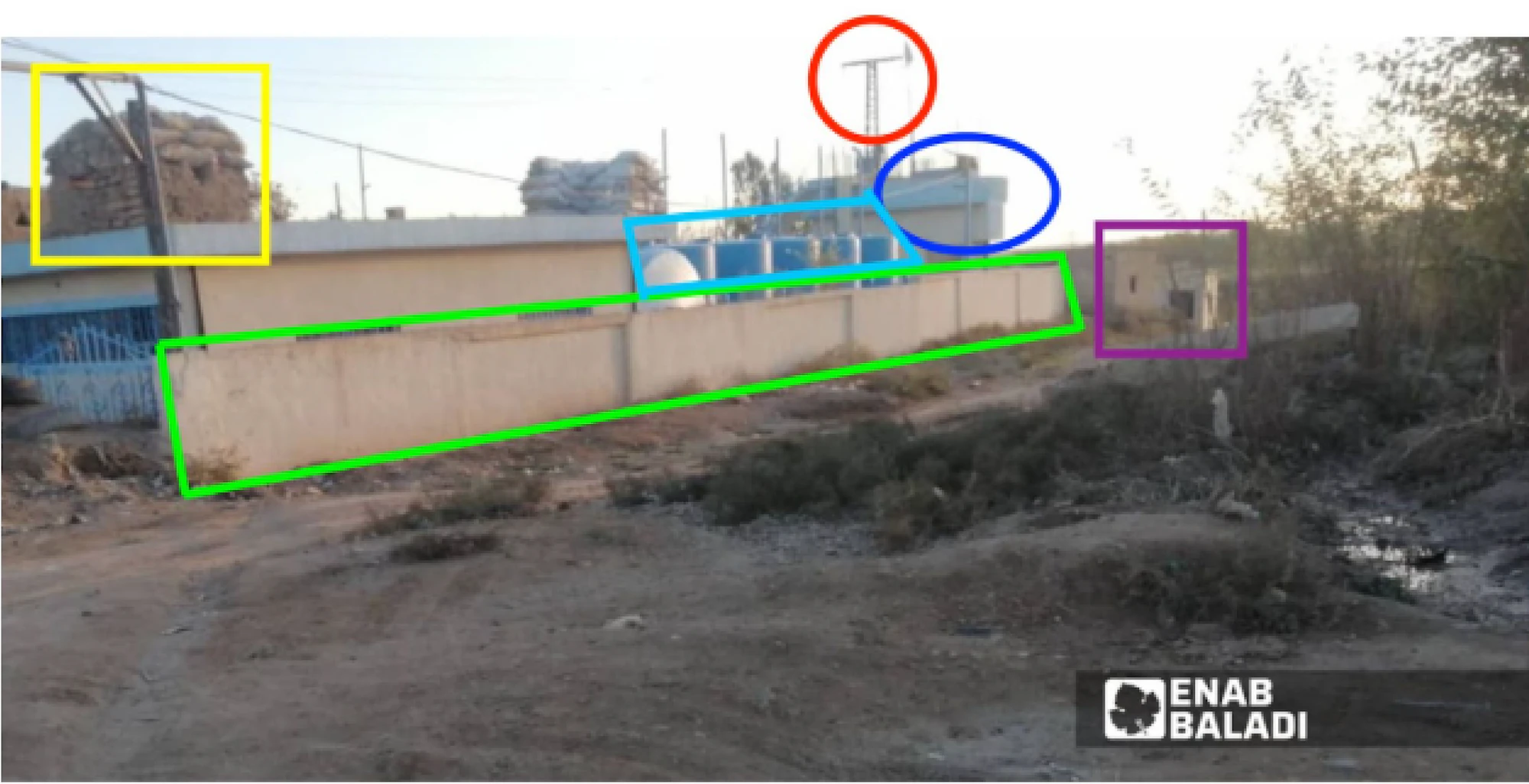
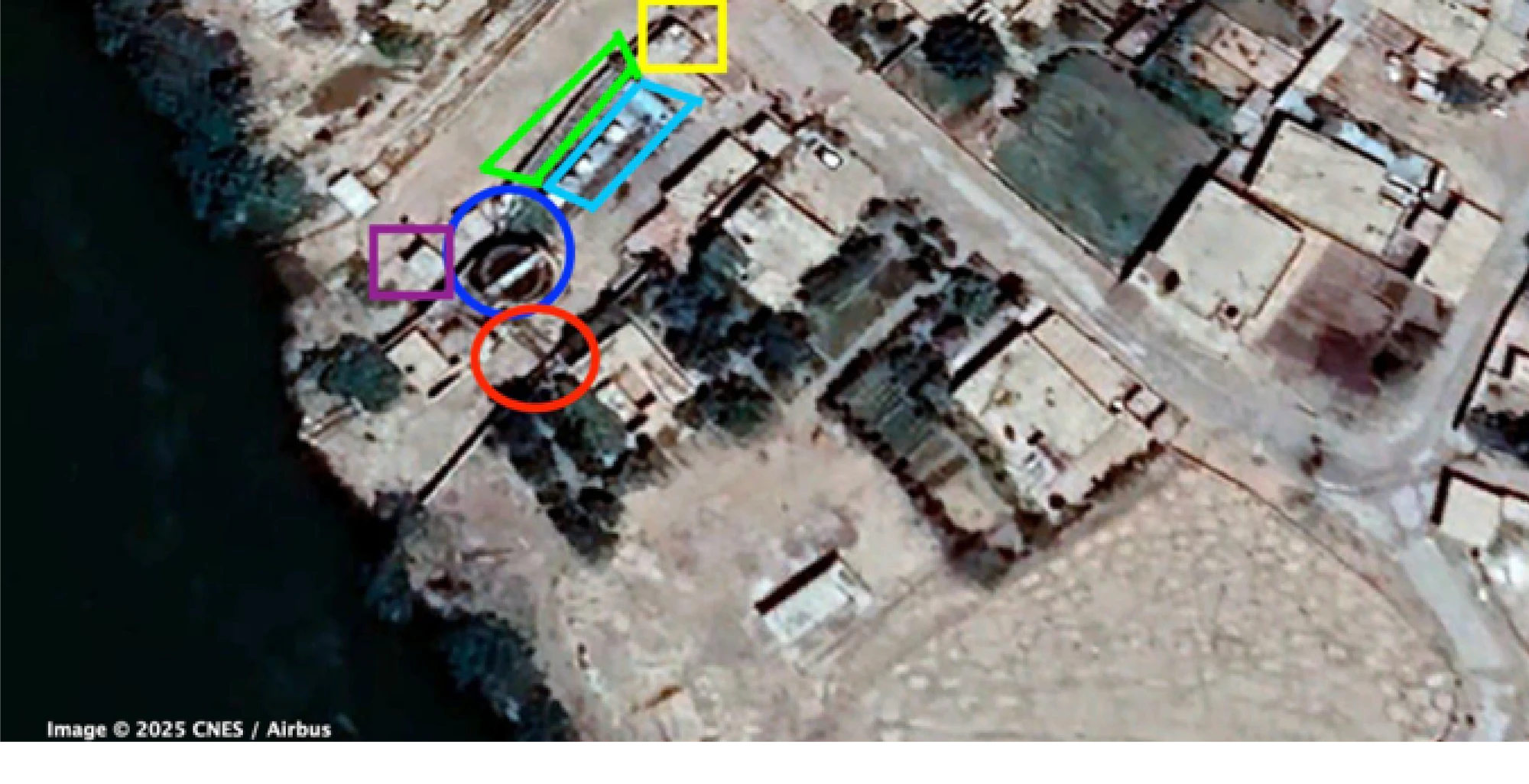
The Al-Sabha Al-Kubra water desalination and disinfection plant in eastern Deir ez-Zor supplies between 10,000 and 22,000 people across six towns. From at least September 2022, the Syrian Democratic Forces converted the plant into a military position, making the facility a target. In August 2024 forces stormed the SDF position there, and subsequent attacks by Assad-affiliated groups put the station out of service. In a separate incident in October 2025, the SDF cut off drinking water to more than 10,000 residents citing unauthorised electricity connections, forcing people to turn to contaminated water sources.

Image claiming to show SDF military fortifications on the roof of a water station in the town of Al-Sabha, east of Deir ez-Zor, on 25 December 2023, published by Enab Baladi. Google Earth Pro showing the Al-Sabha water station [35.201396, 40.412435].

Israeli incursions

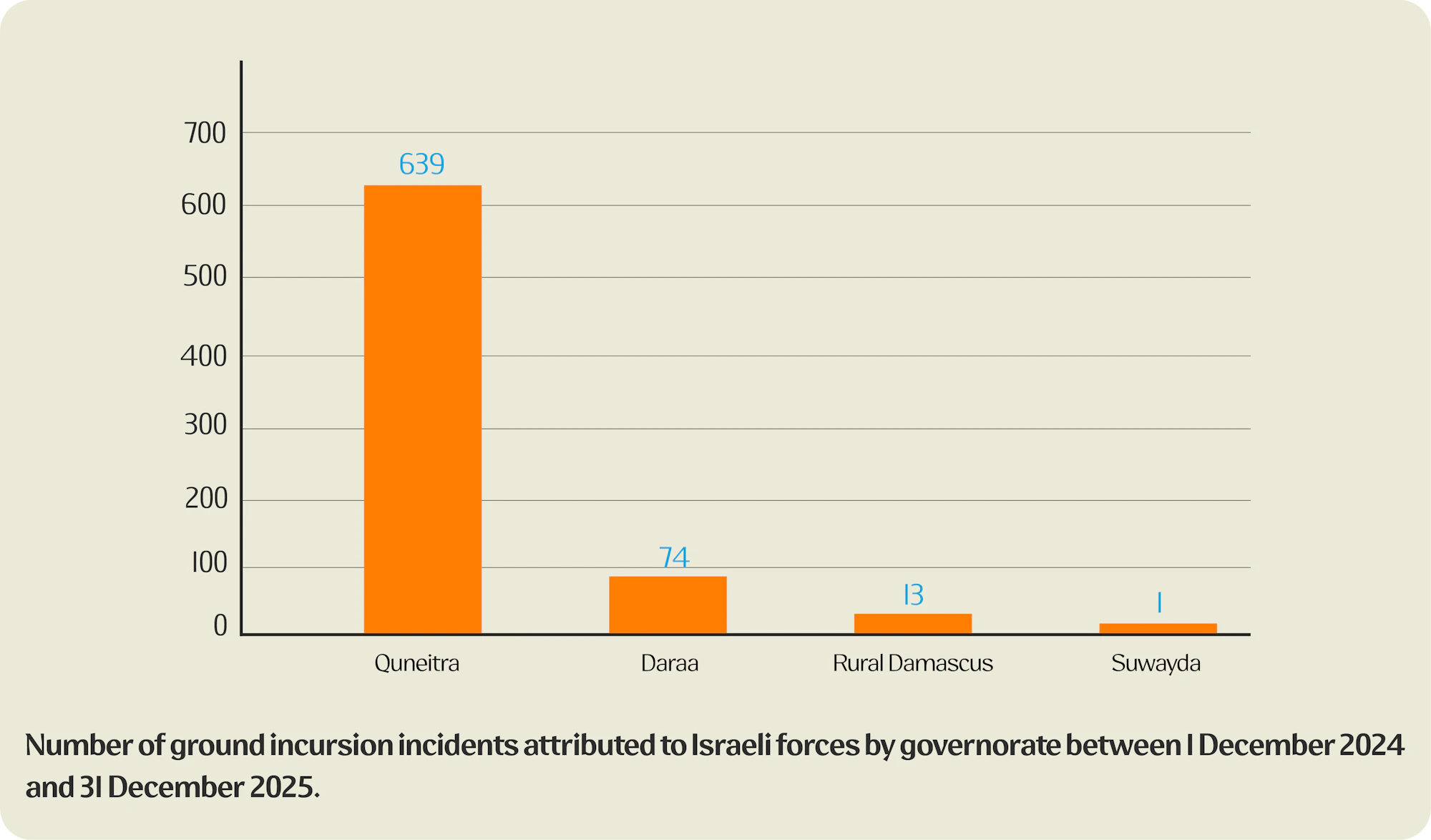
Syrian Archive found 727 incidents of Israeli ground incursions in southern Syria between December 2024 and December 2025. Analysis of these incidents found that water resources were consistently impacted through the establishment of military presence near water facilities, damage to water networks and wells, and the restriction of local residents’ access to drinking and irrigation water.

Number of ground incursion incidents attributed to Israeli forces by governorate between 1 December 2024 and 31 December 2025.

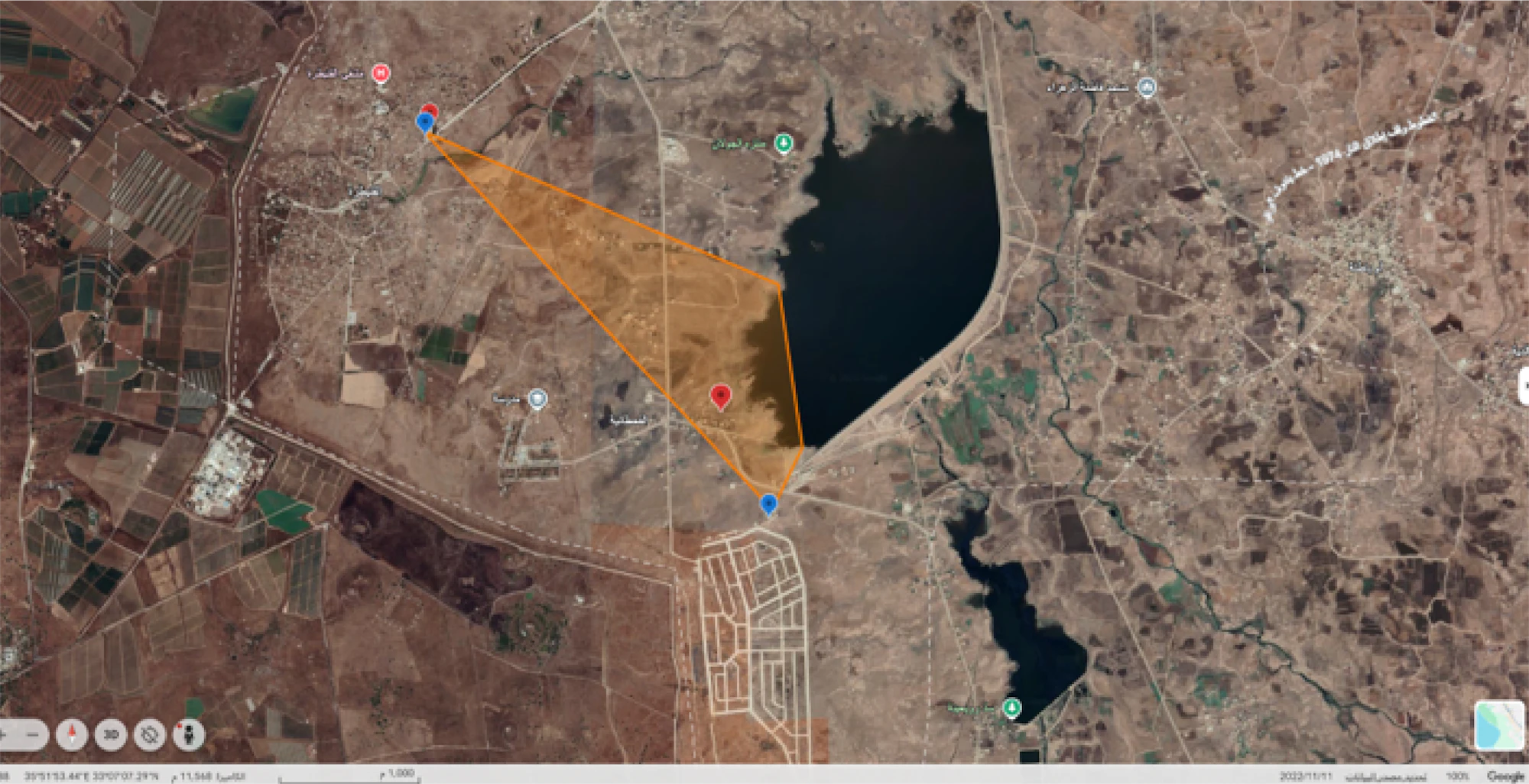
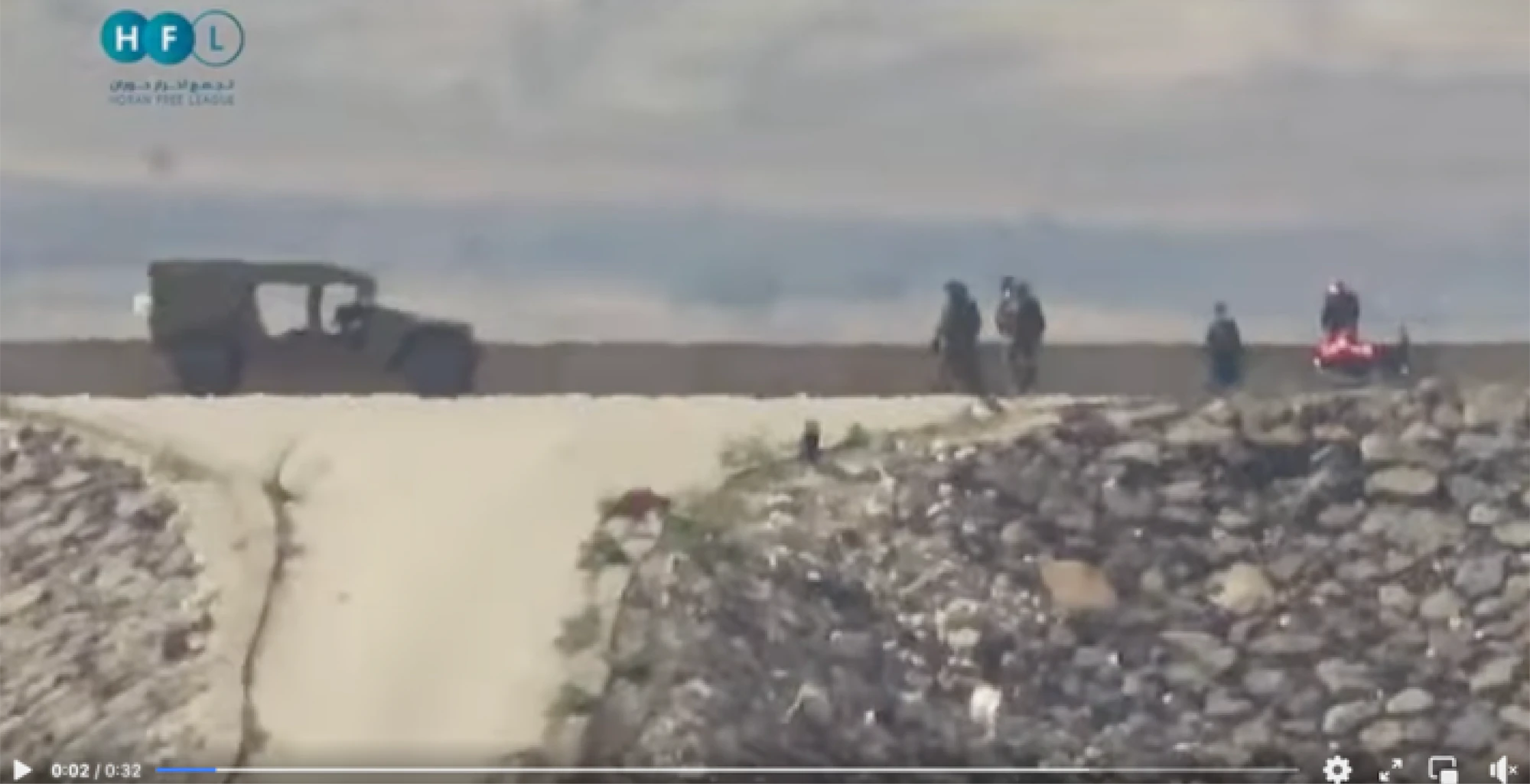
Al-Mantara Dam, the largest dam in the Yarmouk Basin, serves approximately 120 Syrian villages and supports 60% of agricultural land in Quneitra and the western Daraa countryside. Losing control of it would mean the loss of between 30 and 40% of Syria’s water resources and 40% of Jordan’s water supply. Between December 2024 and December 2025, the investigation documented 33 incidents at or around the dam attributed to Israeli forces. Warning signs prohibiting civilians from approaching were photographed at the site and, at the time of publishing, Israeli forces still remain stationed at two positions within 500 metres of the dam. Syria’s UN representative accused Israel of attempting to seize Syria’s water resources at an emergency Security Council session in February 2025.

Screenshot from Google Earth Pro. The blue markers indicate military bases where Israeli forces are stationed in the vicinity of the Al-Mantara Dam [35.857092 ,33.110395]. The red markers indicate military bases from which Israeli forces have withdrawn. The orange icon illustrates the distance and routes leading to the dam.

Screenshot from a video posted by the Horan Free People, showing a checkpoint, a military vehicle, and Israeli soldiers in the vicinity of Al-Mantara Dam.

A photo of a sign allegedly placed by Israeli forces near Al-Mantara Dam, prohibiting residents from approaching it under threat of arrest, captured by the investigation team on 20 March 2026.

The investigation shows that the targeting of water has been a consistent feature of the way Syria’s wars have been fought. In each case, the consequences have fallen on civilians, with communities cut off from drinking water, facilities taken over at a significant cost, and water itself withheld in order to control the population. The evidence displayed in this investigation shows the scale at which the protections of international humanitarian law on water infrastructure have been disregarded.

To read the full report, and find out about other case studies, head to Syrian Archive’s website here.

Latest reports, direct to your inbox

Be the first to know when we release new reports - subscribe below for instant notifications.

Share Article